






Laser Engraving vs Laser Marking: What’s the Difference?
The difference between laser engraving and laser marking becomes quite obvious when you consider the meaning of the words “engrave” and “mark”:
- To “engrave” means to cut or carve (a text or design) on the surface of a hard object.
- To “mark”, on the other hand, means to make a visible impression or stain on a surface.
So, the biggest difference between laser engraving and laser marking lies in the impact they make on the material being engraved or marked.
With laser engraving, the laser physically penetrates the material and removes portions of it to create a deep, permanent, and tactile cavity. With laser marking, the laser does not penetrate the material: it only discolors or burns the surface of the material with very little (almost negligible) penetration.
The differences between laser engraving and laser marking are not limited to the impact the laser creates on the material.
Laser engraving and laser marking are also different in the sense that they follow different processes, are done with different types of laser engraving machines, and each is better suited for different kinds of materials. Each of these matters more than most people realize.

Laser Engraving vs. Laser Marking: All Differences Summarized
1. The Process: Material Removal vs Surface Alteration.
Laser Engraving: Removes Material
Laser engraving removes material. To create depth, the laser beam physically vaporizes or burns away the surface, and the design is cut into the material, leaving a permanent recessed mark. When laser engraving is done, you can literally feel the impact of the laser with your fingers.
Engraving changes the structure of the material; it takes more power, more time, and causes more wear on your machine.
Laser Marking: Leaves the Surface (Basically) Intact.
Laser marking, on the other hand, does not remove material: the heat of the laser only alters the surface, creating a contrast to make your design stand out. Depending on the material, laser marking may:
- Discolor the surface (metal)
- Oxidize the surface
- Create a dark or light contrast
- Change the chemical structure of the surface layer
In this way, marking is faster, cleaner, and (usually) requires less power. It is also often used in industrial applications.
Why This Distinction Is Important
Understanding this difference helps you better meet the needs of clients. If a client wants a deep, carved wedding gift, for example, marking won’t work. If a client wants a permanent serial number on stainless steel without weakening it, engraving may be overkill.

2. The Result: Depth vs Surface Contrast
Laser engraving also produces different results from laser marking. With laser engraving, the results are visible depth, a textured surface, and a strong 3D effect. The engraving is deep enough that you can fill it with paint or resin.
With laser marking, the precise contrast makes the results look clean and visible, but the surface of the material remains smooth, and there is no depth to it.
Why This Difference Matters
When durability is the objective, especially in harsh environments (chemicals, abrasion, heat), deep engraving is better because it will last longer.
But if your objective (or that of the client) is to put it in the design, but maintain the structural integrity of the item (like on aircraft parts or medical tools), marking is safer because it doesn’t remove material.
Laser Engraving vs Laser Marking: Differences in Results Obtainable
| Laser Engraving | Laser Marking |
| Awards | Barcodes |
| Personalized gifts | QR codes |
| Signage | Serial numbers |
| Decorative pieces | Industrial labelling |
| Branding on wood or leather | Medical devices |
3. Suitability to Different Materials: What Works Best?
Laser engraving and laser marking are also different in the material they work best on. Engraving mostly shines in projects that are creative or decorative in nature (usually wood, leather, acrylic, etc), while laser marking is more commonly used for projects that involve metals.
Typical Laser Engraving vs Typical Laser Marking Projects
| Laser Engraving | Laser Marking |
| Wood | Stainless Steel |
| Acrylic | Aluminum |
| Leather | Titanium |
| Glass | Brass |
| Stone | Coated metals |
| Anodized aluminum | Industrial plastics |
For a new business owner or just someone looking to understand laser engravers, this is very important. Not all lasers can mark metal properly. Some types of laser engravers are more suited for laser engraving, while others are better suited for laser marking.
Essentially, here's what to remember:
- A CO₂ laser engraver engraves wood beautifully.
- A fiber laser engraver marks stainless steel extremely well.
If you don’t understand this distinction, you might promise a client something your machine simply cannot deliver. Trying to deeply engrave metal with the wrong laser can waste time and money.
4. Best Uses: Decorative vs Industrial
Generally speaking, laser engraving is more creative and consumer-focused, while laser marking is often more for technical/industrial applications.
- It is most common for custom gifts, wedding decor, home signs, branded merchandise, craft businesses, etc
- Laser marking is often used in the manufacturing sector for automotive parts, medical equipment, and electronics.
Knowing which market you want to serve changes everything about your business strategy.
Choosing Between Laser Marking and Laser Engraving
When you understand the key differences between laser engraving and laser marking, it becomes quite easy to determine which is better for your project or business.
All you need to do is consider the purpose of the project, how durable the results need to be, and the amount of time/units available, and you will be able to decide pretty quickly
1. Purpose of the Project
Is the project more decorative or functional? If it’s a personalized wooden gift, go for laser engraving. If it’s a serial number on stainless steel, go for marking.
2. Durability Requirements
How durable do the results need to be? Engraving is best if you want durable results with physical depth and long-term resistance to wear. If you want to keep a clean surface with no structural weakening, go for laser marking.
4. Equipment Investment
Sometimes, especially for business owners, your available budget determines your entry point and ultimately, whether you will go for laser engraving or marking.
- CO₂ laser machines are typically more common in small businesses and better for engraving on wood, acrylic, and leather. Moreover, there are many affordable laser engravers for small businesses.
- Fiber laser machines are more expensive, but better if you have the funds to start a laser marking business.
Consider that the MOPA 60W Autofocus Fiber Laser, which is the base fiber machine from OMTech, offers an MTTF of over 100,000 hours, and can etch everything from precious metals to intricate designs in vibrant colors thanks to its adjustable pulse frequency and width.
With a machine like this, your possibilities and prospects in business are as wide and varied as can be.
Laser Engraving vs Laser Marking for Business: Which is Better?
Now let’s talk profitability. Generally, it is not simple to determine which is more profitable because the answer mostly depends on your market.
Machine price aside, if you enjoy design, personalization, and small-batch creativity, laser engraving may suit you. If you prefer structured production, industrial contracts, and scalable operations, focusing on laser marking may be more profitable long term.
Laser Engraving Business Model: Advantages, Caveats, and What Matters
With a laser engraving business model, you get high margins on personalized items, there is more room for creative flexibility, and there is a strong market (Etsy, local gift markets) for your designs/products.
However, the barrier to entry into the laser engraving business is extremely low, and the demand can be rather seasonal.
Success all depends on how well you can design, innovate, and put yourself in a position to profit from branding, customization, and emotion-driven purchases.
Laser Marking Business Model: Advantages, Caveats, and What Matters
With a laser engraving model, there is always the potential to gain large industrial contracts, which usually mean high-volume production and repeat bulk orders. You can also create strong B2B relationships, which are usually relatively stable and profitable in the long run.
However, the startup cost for laser marking businesses is a lot higher, and there is a lot of technical knowledge required. The key to profitability in the laser marking business is through volume and repeat contracts rather than high markup per piece.
Why Not Both Laser Cutting and Laser Engraving?
The cost of the machine plays a huge part, and for many people, that is usually the deciding factor. But what if you didn't need two different machines?
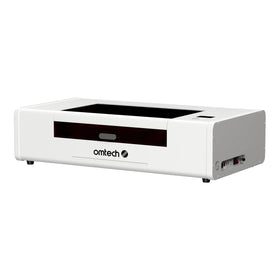
With a modern machine, like OMTech's Pronto 35, you can merge both laser engraving and laser cutting into one business model. The Pronto 35, which is an incredibly affordable model from OMTech, has a 60W power rating and engraves at 1000mm/s (37% faster than competitors).
In the Pronto 35, you have an incredible money maker that will equip you for large-scale laser engraving on pretty much any material, from acrylic to foam, and make a foray into laser cutting with about the same range of materials.
For more options, you can consider the Omtech Pronto 45 and the Omtech Pronto 60, both of which give you even greater power and more possibilities as far as laser engraving and laser cutting are concerned.
Final Thoughts
Laser engraving and laser marking are not interchangeable: engraving removes material and creates depth, while marking alters the surface without cutting into it.
Understanding the distinction doesn’t just make you sound knowledgeable; it protects your business from costly mistakes and helps you position yourself strategically. Whether you choose engraving, marking, or both, the key is this: Don’t just learn how to run the laser: learn which process solves the right problem.
You may also be interested in different materials settings for laser engravers, as you explore the possibilities that open up when you have a laser engraver.