







Laser Cutting vs Plasma Cutting
If you are planning to enter the metal cutting business, one of the most important decisions you will face is choosing the right cutting technology, and it mostly comes down to laser cutting and plasma cutting.
While laser cutting and plasma cutting technologies are capable of cutting metal efficiently, they work in very different ways and serve different purposes. Understanding the differences will guide you as you choose the right equipment, deliver the quality customers expect, and build a profitable cutting business.

Laser Cutting vs Plasma Cutting: 5 Key Differences
Laser cutting and plasma cutting differ in several important areas, the main ones being in the level of precision of the results, the machines required, which materials are suitable for both systems, and how costly they are to operate.
1. Precision and Quality of Cutting Results
Cutting precision is the most obvious visible difference between laser cutting results and plasma cutting results. Laser cuts are extremely narrow (<0.15mm) while plasma cuts are much wider (>3.8 mm).
- Because the laser beam is very small and tightly focused, laser cutting produces extremely fine cuts. The corners are sharper, and the edges are smoother, which means minimal finishing work is required.
- Plasma cutting, on the other hand, produces a wider cut (called the kerf) and tends to leave rougher edges. While it is still effective for many applications, it usually cannot match the fine detail that laser cutting provides.
For projects requiring high precision, intricate jewelry, architectural models, and complex wood art, laser cutting is typically the better choice.
2. Machines Required
Laser cutting machines are usually more advanced and complex than plasma cutters, and they often include complex and sophisticated components like high-powered laser sources, precision optics, computer-controlled motion systems, cooling systems, and assist gas systems
Plasma cutting equipment is generally simpler. A typical plasma cutting system consists of a power supply, a plasma torch, a gas supply, and a ground clamp. Because of this, plasma cutters are often easier to set up and operate, especially in smaller workshops.

Laser Cutting Machines At a Glance
The laser cutting machine you choose depends on the material you are working on and the scale of your work. For laser cutting, you need either diode lasers, CO2 laser cutting machines, or fiber laser machines.
- Desktop diode lasers (for hobbyists cutting thin wood/acrylic)
- CO2 laser cutters (versatile, 40-150W for wood/acrylic/leather)
- Fiber laser cutting machines (for metal cutting)
3. Variety in the Range of Suitable Materials
Laser cutting is versatile and can cut both metals and non-metals, while plasma cutting is limited to electrically conductive metals
- A laser cutting machine may be used to cut metal sheets, acrylic, wood, plastic, and even fabric.
- Plasma cutting, however, cannot cut wood, plastic, or other non-metal materials.
This makes laser cutting a better choice if your business plans to work with a wide variety of materials.
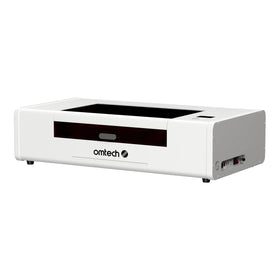
A laser engraving/cutting machine like the OMTECH Pronto 35, with a rated power of 60W, engraves at a maximum recommended speed of 800 m/s, comes with a large 20-inch x 28-inch workspace, extensive software compatibility (Lightburn, RDworks, Corellaser, etc), and a laser Class 1 safety level.
4. Ideal Material Thickness
Another major difference between laser cutting and plasma cutting is how each method handles thick material.
- Laser cutting performs best with thin to medium-thickness materials (typically under 1.5 inches), where precision is most important.
- Plasma cutting excels when dealing with thicker metal plates. It can cut through materials that would be slow or difficult for many laser cutters.
For heavy industrial work involving thick steel plates, plasma cutting is often the preferred solution.
5. Cost and Maintenance Requirements
Cost is another major factor when comparing these technologies.
- Laser cutting machines tend to have higher initial costs because of their advanced technology and precision components. Maintenance can also be more specialized.
- Plasma cutters are typically less expensive to purchase and easier to maintain. Replacement parts such as consumable electrodes and tips are relatively affordable.
However, while plasma cutting may cost less upfront, laser cutting may offer higher profitability for certain high-precision markets.
Laser Cutting vs Plasma Cutting: Differences at a Glance
| Feature | Laser Cutting | Plasma Cutting |
| Cutting Method | Uses a highly focused laser beam to melt, burn, or vaporize material. | Uses an electrically charged gas (plasma) to melt and blow away metal. |
| Precision and Cut Quality | Extremely precise with smooth, clean edges and minimal finishing required. | Less precise with wider cuts and rougher edges that may require finishing. |
| Machines Required | Advanced machines with lasers, optics, cooling systems, and computer controls. | Simpler equipment, including a power supply, plasma torch, and gas supply. |
| Suitable Materials | Works on metals and non-metals such as wood, acrylic, plastic, leather, and fabric. | Only works on electrically conductive metals like steel, aluminum, and copper. |
| Ideal Material Thickness | Best for thin to medium thickness materials where precision matters most. | Excellent for cutting thicker metal plates quickly. |
| Cost and Maintenance | Higher initial cost and more specialized maintenance requirements. | Lower upfront cost and generally easier and cheaper to maintain. |
| Best Business Use | Ideal for precision manufacturing, custom designs, signage, and detailed metalwork. | Best for heavy-duty metal fabrication, construction, and thick metal cutting. |
Choosing Between Laser Cutting and Plasma Cutting for Business
If you are planning to start a metal cutting business, the choice between laser cutting and plasma cutting should be based on your target market, the materials you will be working with, and your overall business goals.
When a Laser Cutting Business Makes Sense
In general, laser cutting is ideal for businesses that rely on high-quality finishes and detailed work. So, laser cutting is a great choice if your business focuses on:
- Precision metal parts
- Custom designs
- Decorative metalwork
- Signage
- Architectural metal pieces
- Engraving and detailed patterns
Laser cutting also allows you to expand into non-metal materials, which can open additional markets such as acrylic signs, wooden decor, custom gifts, and product prototyping.
When a Plasma Cutting Business Makes Sense
Plasma cutting may be the better choice if your business focuses on heavy-duty metal fabrication. This includes work such as:
- Structural steel fabrication
- Automotive repair
- Farm equipment repair
- Industrial construction
- Metal plate cutting
If your primary customers need fast cutting of thick metal, plasma cutting can often provide a more practical and affordable solution.
It also doesn't hurt that plasma cutting businesses tend to require lower startup investment, which can make them attractive for small fabrication shops.
To summarize, choose a laser cutting machine if your work requires precision and clean finishing, and you mostly work on lighter materials. If you work on thicker metals and precision is not as much of a priority, then you can choose plasma cutting.
Laser Cutting vs Plasma Cutting: Understanding the Basics
What Is Laser Cutting?
Laser cutting uses a high-powered laser beam to cut or engrave materials with extreme precision.
The process typically involves creating a digital design file, loading the material into the machine, and using computer-controlled movement to guide the laser along the cutting path.

Here is how laser cutting works:
- The laser beam is generated inside the machine and then focused through a lens onto a very small point on the material.
- This intense concentration of energy heats the material until it melts, burns, or vaporizes.
- A stream of assist gas (often oxygen, nitrogen, or air) then blows the molten material away, leaving a clean cut.
Because the beam is extremely narrow, laser cutting produces very precise cuts with smooth edges and minimal material distortion.
This computer-controlled system makes laser cutting especially popular for complex shapes, intricate patterns, and high-precision manufacturing.
What Is Plasma Cutting?
Plasma cutting is another thermal cutting process, but it works very differently from laser cutting. Instead of using a focused beam of light, plasma cutting uses a high-velocity jet of electrically ionized gas (plasma) to cut through metal.
One of the biggest strengths of this system is its ability to cut thick metal quickly and efficiently. The process works like this:
- Gas (such as air, nitrogen, or argon) is forced through a nozzle.
- An electrical arc passes through the gas.
- The gas becomes superheated and turns into plasma.
- The plasma stream melts the metal and blows it away from the cut.
Unlike laser cutting, plasma cutting only works on electrically conductive metals, including steel, stainless steel, aluminum, etc
Plasma cutting is widely used in industries such as metal fabrication, automotive repair, construction, shipbuilding, and industrial manufacturing.
Laser Cutting vs Plasma Cutting: Ideal Materials
| Laser Cutting Materials | Plasma Cutting Materials |
| Steel | Steel |
| Stainless steel | Stainless steel |
| Aluminum | Aluminium |
| Brass | Copper |
| Copper | Brass |
| Wood | |
| Arcylic | |
| Plastic | |
| Leather | |
| Fiber |
Final Thoughts
Laser cutting and plasma cutting are both powerful tools in the metal cutting industry, but they are designed for different types of work.
Laser cutting offers exceptional precision, versatility, and clean results, making it ideal for detailed designs and high-quality finished products. Plasma cutting, on the other hand, excels at cutting thick metals quickly and economically, making it a favorite in heavy fabrication environments.
If you are starting a metal cutting business, the best choice depends on the type of work you plan to do, the materials you expect to handle, and the customers you want to serve. Understanding these differences can help you invest in the right equipment and build a cutting business that meets the demands of your market.
You might also want to check out laser engraving vs laser marking, as you discover which niche would be most suitable for your business.