







How to Start a Laser Engraving Business
Building a successful laser engraving business is all about putting together three important factors: your skills and interests, the laser engraving machine(s) and tools you need, and the business and marketing strategies that will help you find customers.
Some people approach laser engraving purely as a creative hobby. Others see it as a manufacturing service. The most successful laser engraving businesses tend to combine both mindsets: creativity for designing products people want, and business discipline to turn those ideas into revenue.
So, how do you set up a laser engraving business? And why do so many successful entrepreneurs consider marketing and customer relationships as pivotal in this business?
How to Start a Laser Engraving Business: Step-by-Step Process
Starting a laser engraving business works best when you follow a logical sequence of steps. From learning the basics to setting up your sales channels, here is a step-by-step laser engraver business-building process that will help you reduce mistakes and avoid wasting money.
1. Learn the Basics of Laser Engraving
Before investing in equipment, it is essential to spend some time around laser engraver machines and understand how laser engraving works, especially in a business setting.
Here are the four laser engraver basics you must learn:
- How lasers interact with different materials
- Basic design software (such as vector-based design tools)
- Machine operation and safety
- Differences between engraving, cutting, and marking
When learning the basics of laser engraving, especially for the purposes of starting a business, you are not only building your skill, but also testing your passion for the craft.
 Even a short period of learning and experimenting (2-4 months, depending on how serious you are) will help you decide if this is something you really want to do in the long term, and can dramatically improve your results later.
This step also comes first because everything else depends on your technical understanding. Without basic knowledge, you could easily buy the wrong machine, damage materials, or produce low-quality products.
2. Identify Your Target Market
Once you understand the basics, the next step is to decide who you want to sell to. Laser engraving is used in many markets, including:
- Personalized gifts
- Business branding products
- Wedding decorations
- Custom signage
- Industrial part marking
All of these are potential laser engraving business ideas and areas you can specialize in, at least in the early stages of your business. Choosing a target market early helps you focus your equipment, materials, and marketing strategy.
This step comes before buying equipment because your target market influences the type of machine and materials you need.
3. Choose the Right Laser Engraving Machine
Now that you understand the craft and your market, you can select the right laser engraving machine. The priority, when buying a laser engraving machine, is to get one that best matches your business model and scale.
Your machine should match:
- The materials you want to engrave
- The size of your projects
- Your production volume
- Your budget

Many beginners make the mistake of buying equipment first and trying to figure out a business afterward. Most times, they end up with expensive laser engraving machines that don't match their actual business model.
Buying a Laser engraving Machine
When evaluating machines, the main priorities should be power, material compatibility, workspace size, reliability, and ease of maintenance.
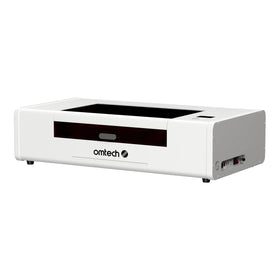
Usually, a 60W laser engraving machine is a great starting point for businesses focused on personalized gifts, small items, and hobby-style production. Explore this detailed comparison of all OMTech 50W-60W CO2 laser machines to see which best fits.
4. Set Up Your Workspace
Laser engraving machines require a safe and efficient workspace. Now, this step comes after purchasing equipment because your machine will determine the space requirements and safety setup you need.
Important considerations include:
- Proper ventilation
- Adequate power supply
- Fire safety
- Worktables and material storage
- Computer workstation for design
A well-organized workspace improves both productivity and safety.
5. Develop Product Samples
Before launching your business, create a variety of sample products, not really for the purposes of making sales yet. These samples are important for your business because:
- They will help you perfect your skill and find your own unique touch.
- They are part of your portfolio material for marketing
- They help you test different materials and settings
This step is crucial because customers want to see examples of your work before placing an order. High-quality samples often become your most powerful marketing tools.

6. Set Up Your Sales Channels
Once you have products and samples ready, the next step is establishing ways for customers to buy from you. In the laser engraving business, the most common sales channels are:
- An online store
- Social media pages
- Local craft markets
- Business partnerships
- Custom order requests
This should be the last step because you need products, skills, and a machine before you can begin selling effectively.
Starting a Laser Engraving Business: Key Factors That Determine Success.
1. Marketing and Customer Relations
Many entrepreneurs in the laser engraving business agree that the biggest hurdle to overcome when starting is marketing and customer relations. In truth, many laser engraving businesses fail not because of poor craftsmanship, but because of weak marketing and poor customer communication.
- Good marketing helps you:
- Reach potential customers
- Show the quality of your work
- Explain what makes your engraving unique
Remember, the laser engraving business is, at the end of the day, a business, and one in which marketing and customer relations are especially important; the buying process involves conversation, feedback, and trust.

Do Not Overlook Customer Relations
Satisfied customers often become repeat buyers and recommend your business to others. For example:
- A satisfied wedding client may refer several friends.
- A local business might return for repeat orders of engraved promotional products.
- Personalized gift buyers often come back for birthdays and holidays.
Responding quickly to messages, delivering consistent quality, and treating every order professionally can make a huge difference in building a long-term business.
2. Develop Marketable Laser Engraving Ideas
One common mistake new entrepreneurs make is assuming that any laser-engraving idea will sell. In reality, there is a big difference between a creative laser engraving idea and a marketable laser engraving idea.
A marketable idea has three characteristics:
- People actually want to buy it
- It can be produced efficiently
- It has clear value for the customer
For example, a very complex engraved artwork may look impressive, but if it takes five hours to produce and few people want it, it may not be profitable.
Examples of Marketable Laser Engraving Ideas that Sell Well
| Personalized Products | Home Decor | Business Products | Wedding and Event Items |
| Engraved tumblers and mugs | Wooden wall art |
Logo-engraved merchandise |
Engraved invitations |
| Keychains | Custom cutting boards |
Desk nameplates |
Table numbers |
| Phone stands | Decorative signs | Award plaques | Personalized gifts for guests |
These products are popular because they combine personalization, practicality, and visual appeal.
When starting a laser engraving business, your goal is not just to create interesting items, but to create products people are actively searching for.
Consider these top 6 laser engraving ideas to sell in 2026.
3. Choosing the Right Laser Engraving Machine
For most beginner laser engraving businesses, the choice is between 60W laser engraving machines and 100W laser engraving machines, both of which we will discuss in more detail later in this article.
60W Laser Engraving Machines: Good Enough, Affordable.
A 60W laser engraver is often considered the entry-level option for small businesses, and that is because it is more affordable and typically good enough for engraving wood, acrylic, leather, and glass, which are the basic materials most small businesses start with.
They are also more cost-efficient to run (consume less power) and easier to operate.
However, it has limitations:
- Cutting speeds tend to be slower
- Limited ability with thicker materials
- Less suitable for high-volume production
Again, a 60W machine is a great starting point if your business is focused on personalized gifts, small items, and hobby-style production.
With a rated power of 60W, the OMTECH Pronto 35 engraves at a maximum recommended speed of 800 m/s, comes with a large 20-inch x 28-inch workspace, extensive software compatibility (Lightburn, RDworks, Corellaser, etc), and a laser Class 1 safety level.
100W Laser Engraving Machine: Can Handle Bulk, More Efficient.
If you have a good reason to expect that you will be handling larger orders or a wider variety of materials soon after you launch your business, then it may be wiser to go for a 100W laser engraver.
A 100W laser engraving machine represents a significant step up in power and versatility from the 60W model. Engraving speed is faster, and it can cut thicker materials. You also get greater production capacity with a 100W laser engraving machine, and more flexibility for different products.
The OMTech Pronto 45 Laser Engraver is an upgraded 100W laser engraving machine with a max speed of 1000 mm/s with a large 24”x40” working area. Designed for both engraving and cutting, it is suitable for acrylic, wood, leather, rubber, and cutting MDF, cardboard, and more.
Many serious small businesses start with a 100W machine because it offers a good balance between cost and capability.
130W Laser Engraving Machine
A 130W laser engraver is designed for high-performance and commercial-scale work, which is why it is best for businesses that plan to scale quickly or handle larger commercial orders.
A good quality 130W laser engraving machine provides extremely fast cutting and engraving, has an enhanced capacity to handle thicker materials, and provides more flexibility for handling large projects.
The OMTech Pronto 60 Laser Engraver engraves at 1000mm/s (37% faster than competitors) and features an upgraded transmission system for superior accuracy, a 3.2X air pump boost, and a 530 cfm diagonal flow duct fan to handle smoke and dust for a clean performance. In many ways, it is a stronger money maker engineered for stable optical performance.
Best Laser Engraving Machines for Small Businesses: A Comparison
| Machine Power | Best For | Advantages | Limitations | Suitability for Starting a Business |
| 60W | Hobby businesses, personalized gifts | Affordable, easy to operate | Limited power and speed | Good for beginners with small budgets |
| 100W | Growing small businesses | Balanced power and versatility | Higher cost than 60W | Excellent starting point for serious businesses |
| 130W | High-volume production | Fast, powerful, highly versatile | Higher investment and space needs | Best for ambitious or scaling businesses |
Important Tips for Starting a Laser Engraving Business
- Specialize and start with a focus: Rather than offering everything, focus on one or two product categories at the beginning. These may be products that you are especially good at, or can produce with the most efficiency and accuracy. This allows you to refine your designs and production process.
- Prioritize quality over quantity. Laser engraving customers care deeply about detail and precision. Investing time in quality control will help your business build a strong reputation.
- Track your costs carefully. Learn how to price your laser engraving products. Many beginners underestimate material costs, machine maintenance, electricity, and packaging and shipping costs. Understanding your true costs ensures you price your products profitably.
- Build a Portfolio Early: Photograph every successful project and build a portfolio. High-quality photos dramatically improve your ability to attract customers online.
- Keep Learning: Laser engraving technology and techniques continue to evolve. Learning new materials, engraving methods, and product ideas helps your business stay competitive.

Final Thoughts
Starting a laser engraving business is both a creative and entrepreneurial journey. Success comes from combining technical skill, smart equipment choices, strong marketing, and marketable product ideas.
By following a structured setup process, investing in the right machine, and focusing on products people truly want, you can build a laser engraving business that grows steadily over time.
Check out some OMTech laser engraver business success stories that will inspire you!