






How Much Should You Charge for Laser Engraving?
When you are new to laser engraving machines and to the world of laser engraving, pricing can feel like the hardest part. Set the price too low, and you will be working long hours for very little profit. Too high, and you risk scaring away customers.
Setting the right price for laser engraving is about understanding and taking into consideration factors that might be unique to you: your costs, your time, your market, and the value you bring to the table.
So, how do you price strategically?

General Guide on How Much is Charged for Laser Engraving
There is no one fixed price for laser engraving. However, most engravers price projects between:
- $10–$25 for small, simple items
- $30–$75 for medium-sized custom projects
- $75–$300+ for complex or large custom jobs
Keep in mind, though, that these prices don't apply to all laser engraving businesses everywhere. The key is to understand what goes into them and how to use them as a baseline for setting your own prices. Here are the key factors you must consider.
How To Set the Appropriate Price for Laser Engraving
The key factors, when it comes to setting the price for laser engraving, are the cost of machine run time (per minute), material cost, setup cost, technical design, and overhead/ business costs.
1. Start with Machine Time (Laser Time)
- Many engravers charge $1–$3 per minute of laser time.
- Some experienced shops charge $60–$120 per hour of machine time.
Keep in mind, though, that the machine time you charge for laser engraving should depend on the machine you are using. To set the machine time, consider how long the engraving actually takes (5 minutes vs 45 minutes is a big difference), the power level and speed settings (deeper engravings take longer), and the setup/positioning time.
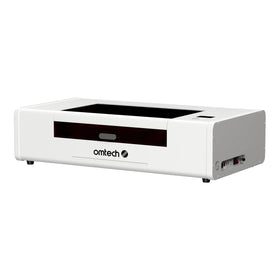
Take, for example, OMTech's Pronto 35 (60W), Pronto 45 (100W), and Pronto 60 (130W) laser engravers. The easiest way to charge is to base your price on machine time per minute or per hour, with more powerful machines costing slightly more because they are faster and more expensive to run.
A simple pricing structure could look like this:
- OMTech Pronto 35 (60W laser): $0.60–$1.00 per minute ($36–$60/hour)
- OMTech Pronto 45 (100W laser): $0.90–$1.40 per minute ($54–$84/hour)
- OMTech Pronto 60 (130W laser): $1.10–$1.70 per minute ($66–$102/hour)
2. Add Design and Setup Time
The general practice amongst laser engraving businesses is to set the design time based on the complexity of the design. Here is an approximate pricing guideline:
- Simple setup: $10–$25
- Custom design work: $30–$75+
- Complex logo recreation: $75–$150+
There is time and skill involved in cleaning up logos, converting files, resizing artwork, and creating mockups, so this is actually your labor cost.
If a design takes 45 minutes of your time, you should charge accordingly. Your time is valuable, especially if you’re skilled with software.
3. Consider the Material Costs
The common practice is to charge approximately 2x-4x the cost of the material for laser engraving, and there is both a precautionary and a profit motive for this:
- There is always the risk of making a mistake the first time, especially if you are new to the business. The extra money helps you get a replacement
- Extra material cost also presents an opportunity to grow your business. With extra material, you can make and sell your own items, bulking up your inventory.
Consider the cost per blank item, shipping costs, waste factor (mistakes happen), and ensure that you are able to cover the cost, account for potential errors, and still make a profit.
4. Take Into Account the Complexity of the Engraving
Engraving complex designs should cost more. More complexity means more time spent, more skill required, and a higher risk of error. Photo engraving, for example, is obviously more expensive than simple text or logo engraving.
Here is a general guideline for how much businesses charge:
- Simple text engraving: $10–$20
- Logo engraving: $25–$60
- Photo engraving: $40–$100+
When setting your prices, consider the depth of the engraving, level of fine detail, photo vs text, and the number of engraving areas.
5. Grant Discounts Depending on the Order Size
Batch production changes everything. The general practice is to charge full price if it is just one item, give a 10-20% discount for 10-20 items, and a bulk discount for 50+ items.
Remember, with batch production, you only do the setup once, but engraving repeats. You still profit because the setup time is distributed.
6. Consider Other Overhead and Business Costs
Most small laser businesses aim for a $50–$100 per hour total revenue to remain profitable. A simple method is to calculate your monthly expenses, divide by expected billable hours, and that gives you your minimum hourly rate.
Electricity, rent, software subscriptions, machine maintenance, insurance, they all add up. If you ignore overhead, you’ll eventually lose money without realizing it. So, factor in your monthly expenses, expected monthly jobs, and desired profit margin
 Laser Engraving Prices: Per Minute or Per Job?
For most small or new engraving businesses, the wiser strategy is to charge per job publicly and calculate per minute privately. This gives you professional pricing without confusing customers.
Option 1: Charging Per Minute: What it Means
Charging per minute works best if you are dealing with industrial clients, repeat business clients, or B2B jobs.
The appeal of charging per job for laser engraving is that it is transparent, easy to calculate, and appears fair for custom jobs. However, many customers do not understand machine time, and it can seem like you are charging for every second, which may turn them off.
How to Establish a Per-minute Rate:
- Determine your desired hourly rate (example: $90/hour).
- Divide by 60: $1,50 per minute, for example
- Round to $1.50–$2.00 per minute.
Make sure this rate covers machine wear, electricity, and your profit margin
Option 2: Charging Per Job
This is usually smarter for small businesses because the pricing is simple, customers (usually) like fixed numbers, and it is easier to market. However, there is always the risk of underestimating the time.
Charging per job for laser engraving mostly works for Etsy shops, personalized gift businesses, and local custom orders.
How to Establish Per-job Pricing:
Most successful engravers use per-job pricing for customers, but calculate it internally using per-minute math.
- Estimate total time (design + setup + laser).
- Multiply by your hourly rate.
- Add material cost.
- Add profit buffer (10–20%).
 Smart Tips for Pricing Laser Engraving Projects
1. Don’t Compete on Price Alone
Cheap pricing attracts cheap clients. Focus on making good quality work, fast turnaround, professional design, and communicating your prices clearly. Customers will not hesitate to pay if you are reliable.
2. Always Price for Mistakes
Every engraver ruins a piece at some point. It’s part of the business, and you may even lose money on a few projects, especially if you are new. Do not be discouraged.
3. Offer Tiered Pricing
Charge depending on the complexity of the design. For example:
- Basic text: $15
- Logo: $35
- Photo engraving: $65
This will make upselling easy and give customers many more options.
4. Raise Prices Gradually
If you’re consistently busy and fully booked, that is generally a good thing, but it may also be a sign that your prices are too low. The wiser strategy is to raise prices slowly (5–10%) and monitor customer response.
5. Know Your Local Market
While there is usually a wider margin for higher pricing if you are in an urban market, small towns generally require competitive rates.
With great subtlety (of course), check the prices of local competitors, Etsy sellers, and Facebook Market listings, and compare your prices.
6. Value Your Skill
Laser engraving looks easy once the machine runs, but it’s not. Keep in mind that you have invested in equipment, software knowledge, trial and error, and multiple materials. Your price should reflect these.
Final Thoughts on Pricing for Laser Engraving
So, how much should you charge for laser engraving? While there is no set price, it must be enough to cover your materials, pay for your time, maintain your equipment, and earn real profit
If you are new, start with a clear hourly goal (for example, $60–$80 per hour), calculate your projects carefully, and charge per job with confidence.
Remember, setting the right laser engraver pricing policy isn’t just about the numbers; it’s also about sustainability. If your pricing doesn’t allow you to grow, reinvest, and pay yourself properly, it’s too low. The goal isn’t to be the cheapest engraver. It’s to build a profitable, long-term business.
You might want to explore our complete guide on how to start a laser engraving business from scratch for more strategic tips and guidance from seasoned pros in the business.