















Roll-to-Roll vs. Roll-to-Sheet DTF Printing

For those getting into DTF printing, you might be wondering what machine workflow makes the most sense for you. Most workflows get the same result: high-quality DTF transfers that can be heat-pressed onto garments. The difference is in how you get there and what will work best for your situation.
Two of the most popular systems are roll-to-roll and roll-to-sheet. In this article, we’ll break down the difference between these two workflows and help you choose a system that matches your production needs.
What Is Roll-to-Sheet DTF Printing?
Roll-to-sheet DTF printing is a sophisticated setup commonly found in advanced entry-level and mid-range systems. Unlike traditional manual methods, this workflow is designed for hands-free operation. Designs are printed onto a continuous roll of film, which the system then automatically processes—cutting the roll into individual sheets, applying adhesive powder, shaking off the excess, and curing them in one seamless sequence.
This approach allows the operator to focus on other tasks while the finished, cured sheets are neatly stacked and ready for heat pressing.
What Is Roll-to-Roll DTF Printing?
Roll-to-roll DTF printing takes automation and efficiency much further. In this setup, the printer feeds film continuously from a roll directly into a powder shaker and curing unit. Once the design is printed, the film moves automatically through powder application, excess powder removal, and curing—without needing to be cut or handled in between steps.
The result is a continuous, production-ready workflow. You load a roll, send your jobs, and the system does the heavy lifting. This makes roll-to-roll DTF especially attractive for businesses running batch jobs, repeat designs, or higher daily output.
Comparing the Workflows Step by Step
To really see the difference, it helps to look at the workflows side by side.
Roll-to-Sheet DTF: Automated Precision
With an automated roll-to-sheet system, the process is remarkably hands-off. The printer outputs onto a roll, but the system takes over immediately—automatically cutting the film into individual sheets, applying and shaking the powder, and curing them in one integrated sequence. Because the machine handles the powdering and drying, it eliminates manual inconsistency and labor. It’s an ideal "set-it-and-forget-it" solution for shops that prefer finished, individual sheets that are ready to be stacked or pressed immediately without manual intervention.
Roll-to-Roll DTF: Maximum Efficiency and Film Economy
With roll-to-roll DTF, the entire process—printing, powdering, and curing—happens as a single, continuous stream. The printed film moves directly into an industrial-sized powder shaker and curing dryer, eventually winding back onto a take-up reel. This workflow is the gold standard for bulk printing efficiency, as it allows for non-stop production over long periods.
A significant advantage of the roll-to-roll method is film economy; by printing designs in one continuous run without the need for margins or space for individual sheet cutting, it minimizes film waste. For high-volume businesses, these small savings per print quickly add up to significant cost reductions over time. It is the most streamlined and cost-effective approach for massive batches where speed and material optimization are the top priorities.
The Verdict
Both workflows now offer high levels of automation and produce consistent, high-quality transfers. The choice comes down to your production style: choose roll-to-sheet if you want the machine to deliver ready-to-stack individual sheets automatically, or choose roll-to-roll if you want to maximize film usage and need the most efficient workflow for high-volume, bulk production.
OMTech Aurora: Roll-to-Roll Power + Single-Sheet Flexibility

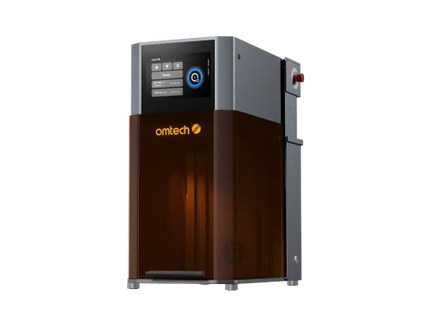
This is where the OMTech Aurora stands out. Unlike many competitors that lock users into a roll-to-sheet workflow, the Aurora is designed as a roll-to-roll DTF printer with the added option for manual single-sheet printing.
In roll-to-roll mode, the Aurora feeds film directly into a powder shaker and curing system, making it ideal for efficient batch production. This automated workflow reduces hands-on time, improves consistency, and helps businesses scale without adding labor.
At the same time, OMTech understands that not every job is a large run. For small orders, test prints, or occasional use, the Aurora allows you to switch to manual single-sheet printing. While powdering and curing are done by hand in this mode, it gives you flexibility without needing a second machine. Please check the video below to know how to print single sheet with OMTech Aurora.
This dual capability means you’re not forced to choose between efficiency and versatility. You can run high-volume jobs on rolls, then switch to sheets when it makes sense.
Which System Is Right for You?
Choosing between roll-to-roll and roll-to-sheet DTF printing ultimately comes down to your production volume and how you manage your inventory.
If you are running a high-volume business focused on maximum throughput and cost optimization, roll-to-roll systems are hard to beat. The continuous workflow is the most efficient for bulk printing, allowing for non-stop production. Moreover, it offers superior film economy, minimizing waste between designs and lowering your cost-per-print—a crucial factor when scaling to large-scale batch production.
If you are a smaller or mid-sized operation that values flexibility and ease of organization, an automated roll-to-sheet system is an excellent choice. It provides the same hands-free benefits of automatic powdering and curing, but delivers finished, individual sheets that are ready to stack and press immediately. This eliminates the need for post-production cutting and is perfect for shops that handle various custom orders throughout the day.
For many professional shops, the ideal solution is a versatile system that can adapt to both needs, ensuring you have the efficiency for big runs and the convenience for smaller, custom jobs.
Final Thoughts
DTF printing is all about efficiency and flexibility, and your workflow plays a huge role in both. Roll-to-sheet systems can get you started, but roll-to-roll printing is where serious productivity gains happen.
The OMTech Aurora offers the best of both worlds: a roll-to-roll DTF printer for high-efficiency production, plus the option for manual single-sheet printing when you need it. It’s a smart choice for businesses that want to grow without outgrowing their equipment.
Ready to upgrade your DTF workflow? Explore the OMTech Aurora and see how roll-to-roll automation—with optional single-sheet flexibility—can help your business print faster, smarter, and more efficiently.