








Can You Laser Engrave Rubber?
Laser engraving rubber is not only possible, but it is also one of the most practical and rewarding laser engraving materials to work with. In fact, some of the most beautiful custom stamps, branded grips, and textured rubber products are made possible courtesy of rubber laser engraving.
However, with laser-engraved rubber, you have to do it right. First, not all rubber is suitable for laser engraving, and you require the right type of laser engraving machine to work efficiently.
 Can you Laser Engrave Rubber? The Basics
Laser engraving rubber is one of the most efficient ways to create precise, repeatable designs on a flexible material. Laser engraving works on rubber because the material reacts well to controlled heat. It has the following characteristics:
- It is soft enough to be removed easily by heat
- It is responsive to laser energy, allowing for clean detail
- It is also flexible, so it maintains its structure even after engraving
Hence, the laser can precisely burn away some of the material without destroying the surrounding surface.
Advantages of Laser Engraving Rubber
If you’re doing anything that requires repeatable impressions or textured rubber surfaces, this is a strong option. There are three main reasons to consider laser engraving rubber: it responds well, allows for speed and consistent work, and is affordable.
- It allows for precision and detail: Rubber responds well to laser engraving, which means you can create fine lines, textures, and intricate patterns. This is especially useful if you are working on stamps or branding tools where detail matters.
- Speed and consistency: Compared to other ways of handling rubber, like manual carving or traditional mold methods, laser engraving is fast and highly repeatable. Once your design is set, you can produce identical pieces over and over.
- There is a lower setup cost for small runs: If you’re doing small batches or custom work, laser engraving is far more cost-effective than creating molds.
These three reasons make rubber laser an attractive and profitable prospect, especially if you are a small business owner (custom stamps, logos, packaging tools), a DIY creator, an Etsy seller, an industrial user (gaskets, seals, labeling), or even a branding-focused business (custom grips, promotional items).
 Choosing the Right Rubber for Laser Engraving
When it comes to rubber laser engraving, it is very important to keep in mind that not all rubber is suitable. Some rubber engraves beautifully. Others can damage your machine or release toxic fumes.
Rubber laser engraving, like wood or metal, works by burning away material. If the rubber melts instead of vaporizing, you get messy edges. If it contains chlorine, for example, it releases harmful gases that can corrode your machine. So choosing the right rubber is critical.
Rubber for Laser Engraving: Compatibility Table
| Rubber Type | Works for Laser Engraving? | Why / Why Not |
| Laser Rubber (Stamp Rubber) | Excellent | Designed specifically for lasers; clean cuts, minimal odor |
| Natural Rubber | Sometimes | Can work, but may produce inconsistent results and more smoke |
| Silicone Rubber | No | Doesn’t engrave cleanly; tends to melt rather than vaporize |
| Neoprene | Limited | Can engrave, but may produce fumes and uneven results |
| EPDM Rubber | No | Poor engraving quality; not recommended |
| PVC Rubber | NEVER | Releases chlorine gas; dangerous and damages your machine |
Bottom Line
The type of rubber you choose directly affects the quality of the engraving, the performance of your machine, the durability of the project, and even your personal safety during the engraving process.
If you want clean, safe, and predictable results, use laser-specific rubber sheets. They are designed for this exact purpose and save you a lot of frustration.

Common Rubber Laser Engraving Projects to Try
-
Custom stamps: business logos, return address stamps, craft stamps, etc. Consider these rubber stamps if you are a small business, a teacher, or a crafter.
-
Industrial gaskets and seals: custom-fit components, prototyping parts, etc. Consider industrial gaskets and seals if you are a mechanic, engineer, or a fabrication shop.
-
Branded products: took grips, promotional items, custom packaging tools, etc. An ideal project for brands and manufacturers
-
Textured surfaces: anti-slip pads, decorative panels, etc. Best if you are a designer or a product developer. You can engrave patterns for both function and aesthetics.
Custom rubber stamps are by far the most common rubber laser engraving projects, but there are many more you can try. Remember, rubber is incredibly versatile, which is why it’s used across so many industries.
Rubber Laser Engraving Machines: What Works Best?
Not all laser engravers handle rubber equally well, and the type of laser matters a lot. For rubber engraving, the best laser engraving machines are CO₂ laser engravers and diode lasers. Fiber lasers are great for other materials, but not recommended for laser engravers.
1. CO₂ Laser Engravers (Best Option)
CO₂ laser engravers are, by far, the best option for laser engraving. You get clean engraving with good depth control. If you’re serious about engraving rubber, go with a CO₂ laser engraver.
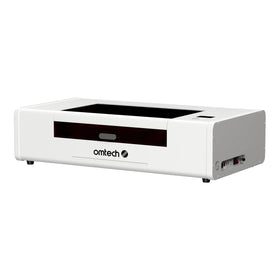
From 60W to 130W CO2 laser engraver models, the Omtech Pronto series contains some of the most versatile laser engravers for rubber. These laser engravers are known for their robust laser output, speedy and efficient performance, and their expansive work areas for tackling wood projects of every kind.
Consider the Omtech Pronto 35 Laser Engraver and Cutter, a beginner model, which has become a favorite for small businesses dealing with rubber.
2. Diode Lasers (Limited)
Diode lasers can engrave rubber, but they work at a slower pace than CO₂ lasers do. Also, you don't get as much depth control (working on rubber). However, they are safe and effective, though maybe not ideal for production. If you are a hobbyist trying to get into rubber laser engraving, a diode laser is sufficient.
OMTech diode and fiber lasers combine fiber and diode technology, giving makers the flexibility to personalize not just rubber, but also metal, wood, and more—all in a single machine built for creativity.
Consider the Solis Duo 30W Fiber & 20W Diode Dual Laser Engraver. With dual-laser flexibility in a single compact machine, you can switch between projects effortlessly and bring every creative idea to life with professional results.
How to Laser Engrave Rubber (Step-by-Step)
When engraving rubber, your goal is to get clean edges, proper depth (especially for stamps), and minimal melting or residue. Getting good results comes down to settings, setup, and expectations.

Recommended Rubber Laser Engraving Settings (Starting Point)
The recommended settings for engraving rubber vary from machine to machine, but the general idea is that you want high power and moderate- slow speed, especially if you are working with a lower-wattage machine.
- Power: Medium to high
- Speed: Moderate
- DPI: 300–600
- Passes: 1–3 depending on depth
Always run a test grid first. Rubber behaves differently depending on the type.
Laser Engraving Rubber: Step-by-Step Process
- Choose the right rubber: Remember to use laser-safe rubber only
- Prepare your design: Mirror the image if you are making stamps
- Set up your machine: Adjust the focus properly, and secure the rubber sheet
- Run a test engraving: Dial in the power/speed settings
- Engrave your final design: Monitor the process
- Clean the surface: Remove residue using mild soap or alcohol
Tips for Safe and Efficient Rubber Engraving
- Ventilation is non-negotiable: Rubber produces fumes when engraved. Always use a proper exhaust system and work in a well-ventilated workspace
- Avoid unsafe materials: Never engrave PVC rubber or unknown rubber types. If you’re unsure, don’t risk it.
- Keep your machine clean: Rubber residue can build up quickly, and it often has a bad smell. Clean your lens regularly, and wipe down your work area.
- Use test pieces: Before committing to a final piece, test different settings, and check engraving depth and clarity.
- Avoid overpowering the laser: Too much power burns edges and reduces detail quality. Dial it in rather than max it out.
Final Thoughts on Laser Engraving Rubber
You can absolutely laser engrave rubber, and in many cases, it’s one of the best materials to work with. But success comes down to three things: using the right type of rubber, choosing the right machine (CO₂ is king), and dialing in your settings and process.
Get those right, and you’ll be able to create everything from professional-grade stamps to custom industrial components, quickly, cleanly, and consistently.
Explore our comprehensive guide on how to engrave rubber stamps, and explore more projects you can try with your laser engraver.


![[Latest] Diode Laser vs. CO2 Laser vs. Fiber Lasers - Complete Guide](http://omtech.com/cdn/shop/articles/diode-vs-co2-vs-fiber-lasers_cad89d19-589c-4837-a019-48d69698f6f5.jpg?v=1789898499&width=200)

