








Educational Tech Tools for Schools: Essential STEM Machines

STEM education has become increasingly important in today’s classrooms as schools look for better ways to prepare students for a technology-driven world. Instead of relying only on lectures and textbooks, many programs now introduce students to everything from coding and engineering to digital design and hands-on building. This approach helps students move beyond abstract ideas and formulas, turning what they learn into real projects and practical skills they can actually use.
The right educational tech tools make a big difference in this process. When students work with real machines and modern systems, they naturally build problem-solving skills, creativity, and confidence. Whether it’s rapid prototyping, robotics, electronics, or programming, these tools encourage students to experiment, think critically, and create their own work.
Below, we’ve compiled some of the most impactful machines and platforms schools can invest in to build meaningful, future-ready STEM classrooms. If you’re serious about upgrading your STEM classroom, these are just some of the tools to prepare your students.
1. 3D Printers
3D printers are often the first advanced machine introduced into a school makerspace, and for good reason. They provide a direct bridge between digital design and physical creation, allowing students to watch their ideas materialize layer by layer.
In engineering and technology classes, students learn computer‑aided design (CAD), geometry, scaling, and material properties by creating functional parts and prototypes. In science courses, 3D printers can be used to produce molecular structures, lab tools, geological models, or anatomical components that make complex topics easier to visualize. Art and history classes also benefit, as students can recreate sculptures, artifacts, and architectural elements.
Perhaps most importantly, 3D printing teaches iteration. Students quickly discover that early designs often fail or need improvement. They learn to measure results, identify flaws, revise their models, and try again. This process mirrors real engineering workflows and builds persistence, critical thinking, and design literacy.
2. Laser Cutting and Engraving Machines

Laser machines are among the most versatile educational tools available today. They use focused light to cut and engrave materials such as wood, acrylic, leather, cardboard, and many plastics with exceptional precision.
In a classroom setting, laser cutters introduce students to digital manufacturing concepts, including vector design, scaling, kerf compensation, and material behavior under heat. Students can create architectural models, mechanical components, signage, custom packaging, puzzles, and electronics enclosures—all from digital files they design themselves.
Unlike traditional shop equipment, laser machines offer high accuracy and repeatability while maintaining a relatively small physical footprint. With proper safety enclosures and supervision, they are well-suited for school environments. They also naturally support interdisciplinary learning, blending physics, design, computer science, and art into a single project workflow.
3. CNC Milling Machines and Routers
CNC (Computer Numerical Control) machines expose students to the foundations of modern industrial manufacturing. These machines remove material using rotating cutting tools controlled by computer instructions, teaching students how digital designs become precise physical parts.
Through CNC projects, students learn how tool paths are generated, how cutting speed and depth affect results, and how tolerances influence whether parts fit together correctly. These concepts are central to industries such as aerospace, automotive manufacturing, construction, and product design.
Even compact desktop CNC routers can cut wood, plastics, and soft metals, making them practical for educational use. They give students experience with subtractive manufacturing, complementing the additive approach of 3D printing and providing a broader understanding of production technologies.
4. Robotics Kits
Robotics kits combine mechanics, electronics, and programming into one powerful learning platform. Students assemble physical robots, wire sensors and motors, and write software that brings their creations to life.
This hands‑on process teaches how sensors collect data, how motors translate electrical signals into motion, and how logic governs behavior. Students also develop teamwork skills by collaborating on designs, troubleshooting problems, and refining performance.
Classroom robotics challenges and competitions add motivation and real‑world constraints, such as limited time, specific goals, and performance benchmarks. These experiences help students understand that engineering is not just about technical skill, but also communication, planning, and adaptability.
5. Coding Kits and Microcontrollers (Ozobot, Raspberry Pi, Arduino)
Small programmable devices such as Ozobot, Raspberry Pi, and Arduino boards introduce students to computing in a tangible, interactive way. Instead of learning code only on a screen, students see their programs control lights, motors, sensors, and displays.
Younger students often begin with visual, block‑based coding using small robots like Ozobot, which teaches logical thinking and sequencing in an approachable format. As students advance, platforms like Raspberry Pi and Arduino allow them to write real programs in languages such as Python or C++, while learning how software interacts with physical hardware.
This progression helps schools build a structured learning pathway from introductory coding to embedded systems development, preparing students for careers in software engineering, electronics, automation, and data science.
6. Electronics Workstations
Electronics workstations give students direct experience with the building blocks of modern technology. Equipped with power supplies, multimeters, breadboards, and soldering tools, these benches allow students to design and assemble real circuits.
By working hands‑on with resistors, capacitors, microchips, and sensors, students reinforce classroom lessons about voltage, current, resistance, and signal flow. They also learn systematic troubleshooting, which builds patience and analytical thinking.
These skills are foundational for robotics, renewable energy systems, telecommunications, and consumer electronics design. An electronics station turns abstract electrical theory into practical engineering knowledge.
7. Virtual Reality and Simulation Systems
While physical machines are essential, virtual tools also play an important role in modern STEM education. Virtual reality (VR) and simulation platforms allow students to explore environments and systems that would otherwise be too dangerous, expensive, or inaccessible.
Students can conduct virtual chemistry experiments, explore human anatomy, simulate engineering stress tests, or walk through architectural designs before construction begins. These experiences deepen understanding while reducing material costs and safety risks.
VR does not replace hands‑on fabrication, but it complements it by providing visualization and experimentation tools that enhance conceptual learning.
Why Hands‑On Technology Matters in Education
Modern careers demand more than memorization. Employers increasingly seek graduates who understand systems, can solve open‑ended problems, and are comfortable working with technical tools.
When students regularly use fabrication machines, robotics platforms, and computing systems, they become active learners. They test hypotheses, learn from mistakes, and develop confidence in their ability to build functional solutions. Classrooms shift from passive instruction to environments of experimentation and innovation.
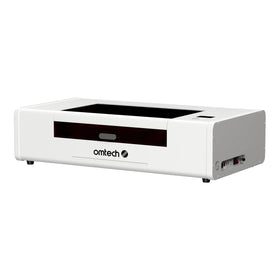
Why OMTech Laser Machines Are Ideal for Schools and Makerspaces
Among all educational technology investments, laser machines often deliver one of the highest returns due to their versatility and ease of use. OMTech laser machines are especially well-suited for educational environments.
OMTech offers reliable CO₂ laser systems compatible with industry‑standard software such as LightBurn, allowing students to learn professional design workflows while working in a controlled classroom setting. Many models feature enclosed designs and built‑in safety systems, making them appropriate for supervised student use.
Beyond equipment, OMTech actively partners with schools and makerspaces to support STEM education initiatives, curriculum development, and hands‑on technical training. Numerous classrooms already rely on OMTech systems to teach digital fabrication, product design, and engineering fundamentals.
To further support educators working on limited budgets, OMTech also offers professional-grade machines at discounted prices. This makes advanced manufacturing tools accessible to more schools and helps expand makerspaces without excessive capital investment.
Final Thoughts
Investing in educational technology is essential for preparing students to thrive in a technology‑driven world. Machines such as 3D printers, laser cutters, CNC routers, robotics kits, and coding platforms give students practical experience that textbooks alone cannot provide.
By building diverse STEM labs and partnering with experienced equipment providers like OMTech, schools can empower the next generation of engineers, designers, programmers, and innovators. The classroom of the future is hands‑on, creative, and technology‑driven—and the right tools make all the difference.
Explore OMTech today and find out what machines are best for your classroom. Check out our top picks for the classroom and discover why most educators go with OMTech.


![[Latest] Diode Laser vs. CO2 Laser vs. Fiber Lasers - Complete Guide](http://omtech.com/cdn/shop/articles/diode-vs-co2-vs-fiber-lasers_cad89d19-589c-4837-a019-48d69698f6f5.jpg?v=1789898499&width=200)

