







Top Laser Engraving Projects for Automotive Shops
My neighbor Marco has been building a 1972 Chevy C10 for three years. Last spring he brought me a billet aluminum valve cover — a $400 part — and asked if I could put his initials and his grandfather's birth year on it. I set the file up in LightBurn, ran it on the fiber laser, and 90 seconds later handed it back to him. He stood there turning it in the light for a full minute. 'That's the most personal thing on the whole truck,' he said. That 90-second job was $75. I've done four more for his build since then, and he's sent three other builders my way.

Custom car engraving has become one of the most consistently profitable add-on services for auto shops and custom fabricators. Laser engraving turns stock parts into personal statements, creates car show-ready details, and produces revenue from equipment a shop already owns for other work. This guide covers the top projects — which parts to engrave, what laser type handles each material, and what to charge — backed by the real economics of adding this service line to an automotive shop.
What Is Custom Car Engraving?

According to Wikipedia's laser engraving overview, laser engraving uses a focused beam to vaporize material and create permanent, recessed marks. For custom car work, this means logos, names, dates, racing numbers, club insignia, and intricate designs permanently integrated into the part surface — not stickers, not paint, not vinyl — but marks that are as permanent as the metal or plastic itself.
The difference between laser engraving and every other customization method is permanence and precision. A vinyl wrap can be removed in a parking lot. A painted design fades in direct sunlight within two years. A laser-engraved valve cover looks the same the day it's installed as it does a decade later, after engine heat cycles, oil exposure, and cleaning. That permanence is exactly what car enthusiasts are willing to pay for.
🏆 WHY AUTO SHOPS ADD THIS SERVICEMarcus runs a performance shop in Arizona that specializes in LS engine swaps. He added a 30W fiber laser to his shop two years ago primarily for part serial number marking. Within six months, custom engraving for his own clients became the bigger revenue source. His most popular item: custom valve covers with shop logo + build name for customers picking up completed builds. Average price: $120 each. Average time on machine: 4 minutes. He now does 8–12 per month alongside the engine work, generating $1,000–$1,400 in pure service revenue from a machine he bought to mark parts. |
The Top Custom Car Engraving Projects by Category

Under-Hood Custom Engraving
The engine bay is the showcase area for car show builds and performance vehicles. Parts here get the most attention when the hood opens, and they're also the parts that see the harshest conditions — heat, oil, and vibration. Fiber lasers handle all of them.
|
⚙️ Valve Covers & Cam Covers Material: Aluminum, chrome-plated steel Laser: Fiber / MOPA Price Range: $60–$150 per cover One of the most popular custom car engraving items at car shows and custom builds. Shop logos, owner initials, build names, engine specs, or intricate tribal and mechanical designs. Anodized aluminum valve covers respond particularly well to fiber laser ablation, producing sharp black-on-silver contrast. Chrome-plated steel requires more laser power but produces excellent contrast. Size typically allows for multi-element designs combining logo, text, and graphics. |
|
🔧 Intake Manifolds & Engine Covers Material: Aluminum, bare or coated Laser: Fiber laser Price Range: $80–$200 per piece Large, flat or gently curved aluminum surfaces ideal for bold logo engraving, engine displacement text, or full-surface pattern work. The visible upper surfaces of intake manifolds are highly visible from above and from the side at shows. Laser etching on bare aluminum produces high-contrast marks that survive engine heat and cleaning. Complex logos with fine detail engrave at much higher quality than traditional pantograph or hand engraving methods. |
|
🔋 Battery Boxes & Coolant Tanks Material: Aluminum, powder-coated Laser: Fiber (ablation) Price Range: $40–$100 per piece Performance builds often relocate batteries or add custom coolant catch tanks — these functional parts become design elements when laser-engraved with shop branding or custom graphics. Powder-coated aluminum surfaces ablate cleanly: the laser removes the coating to reveal bright aluminum beneath, creating high-contrast designs without engraving the metal itself. Fast process — a simple logo on a powder-coated surface takes 30–60 seconds. |
Interior Custom Engraving

Interior engraving projects command premium pricing because they're touched daily by the driver. A shift knob with a custom design, door sills with the owner's name, or gauge faces with custom graphics turn the interior from stock to personal on every drive.
|
🕹️ Shift Knobs & Gear Shift Handles Material: Aluminum, stainless, wood Laser: Fiber / CO2 Price Range: $45–$120 per piece Shift knobs are small-format but high-touch — every gear change interacts with the engraving. Custom logos, racing patterns, shift gate diagrams, and owner initials all work well. Aluminum and stainless use fiber laser; wood shift knobs use CO2 laser at low power for clean, detailed marks. Rotary attachment or V-block fixture required for cylindrical knobs to maintain consistent focal distance on curved surfaces. |
|
🚗 Door Sill Plates & Entry Scuff Plates Material: Stainless, aluminum Laser: Fiber / MOPA Price Range: $50–$130 per set Door sill plates are flat stainless or aluminum — ideal laser engraving surfaces. Custom builds use these for owner name, build name, engine spec, or year of completion. The most popular car show detail for interior-focused builds. Fiber laser etching on brushed stainless produces dark, high-contrast marks that don't require coating or treatment. MOPA adds color options for anodized aluminum sill plates. |
|
🏁 Custom Gauge Faces & Dash Panels Material: Aluminum, acrylic Laser: Fiber / CO2 Price Range: $35–$90 per piece Custom gauge faces for older vehicles that have moved to aftermarket instrument clusters. Laser engraving aluminum gauge faces with custom scales, logos, and numbering produces professional-looking results that hand-painting or printing cannot match for precision. Acrylic gauge overlays use CO2 laser for clean cutting and frosted engraving. Popular for hot rod builds updating 1950s–1970s instrument clusters. |
Exterior Custom Engraving

Exterior engraving takes more durability planning — UV exposure, car washes, and weather mean different material and coating considerations than interior work. The right approach varies by part.
|
🔵 Wheel Center Caps Material: Aluminum, chrome plastic Laser: Fiber laser Price Range: $25–$60 per set (4) Wheel center caps are one of the highest-volume custom engraving items because they're changed frequently with wheel swaps and they're visible from 20 feet at car shows. Simple billet aluminum center caps with owner initials, shop logo, or club emblem. A set of four takes 10–15 minutes total on the laser. Extremely popular at car show vendor setups where shops can demo and sell on-site. |
|
⛽ Fuel Door & Gas Cap Covers Material: Aluminum, chrome-plated Laser: Fiber laser Price Range: $40–$100 per piece Custom fuel door covers and billet gas caps are popular personalization items for classic car restorations and performance builds. Often engraved with octane rating, engine displacement, car club name, or custom logo. Small footprint — typically 3"–4" diameter — allows for intricate detail work. Chrome-plated aluminum requires careful power calibration to engrave through plating cleanly. |
Accessories and Shop Revenue Items
Beyond the vehicle itself, custom car engraving creates revenue from merchandise — items that don't require buying car parts at all. These are pure-margin items made from laser engraving materials that shops can stock and engrave on demand.
|
ITEM |
MATERIAL |
LASER |
PRICE RANGE |
|
Custom keychains (car make/model) |
Aluminum, acrylic |
Fiber / CO2 |
$15–$35 per piece |
|
License plate frames |
Aluminum, stainless |
Fiber laser |
$30–$65 per frame |
|
Build plaques & dash placards |
Aluminum, brushed steel |
Fiber laser |
$45–$120 per piece |
|
Car show trophies & awards |
Acrylic, aluminum |
CO2 / Fiber |
$25–$85 per unit |
|
Parking / garage signs |
Aluminum, acrylic |
CO2 / Fiber |
$35–$90 per sign |
|
Build spec cards (frame + text) |
Aluminum |
Fiber laser |
$40–$80 per set |
Choosing the Right Laser for Custom Car Engraving

The two laser types that cover the full range of automotive custom engraving are fiber and CO2. A shop adding engraving as a revenue stream should think about their primary material — if it's mostly metal parts, fiber is the right first machine. If they're serving the car show and accessories market with mixed materials, CO2 covers a wider range.
Fiber lasers at 1,064nm are efficiently absorbed by metals — the Wikipedia fiber laser overview explains how ytterbium-doped optical fiber produces the wavelength that interacts with metal surfaces to create high-contrast permanent marks. OMTech's fiber laser engraving machines handle steel, stainless, aluminum, brass, titanium, and coated metals — the full range of automotive metal parts.
💡 CO2 FOR LEATHER, ACRYLIC, AND INTERIOR MATERIALSFor shops doing interior leather engraving, acrylic gauge faces, wooden interior trim, and soft-touch panel work, OMTech's CO2 laser engraver machines handle these non-metal materials efficiently. A 60W–80W CO2 machine covers leather seats, wood trim, acrylic panels, and carbon fiber composites. Some shops run both a fiber laser for metal work and a CO2 for interior/accessory work, serving a wider range of customer requests. |
What to Charge for Custom Car Engraving
Pricing custom car engraving is easier than most shops expect. The variable cost of laser engraving is essentially zero — no consumables, no materials beyond electricity. The pricing model is based on time, complexity, and market rate.
|
JOB TYPE |
MACHINE TIME |
SUGGESTED PRICE |
MARGIN NOTE |
|
Simple logo/initials on keychain |
1–2 min |
$20–$35 |
High margin, volume item |
|
Logo on valve cover |
3–6 min |
$65–$120 |
Top custom engraving item |
|
Full design — intake manifold |
8–15 min |
$120–$200 |
Premium one-off work |
|
Door sill plate set (pair) |
5–10 min |
$80–$130 |
Popular show car item |
|
Wheel center caps (set of 4) |
10–15 min |
$60–$100 |
Good volume at shows |
|
Build plaque (complex design) |
12–20 min |
$100–$180 |
Great for completed builds |
💰 THE CAR SHOW REVENUE MODELSeveral OMTech users run a laser at local car shows and cruise nights. Setup: one 30W fiber laser in a small enclosed trailer or canopy, a laptop with LightBurn, and a display of sample work. Common items: keychain blanks ($4 cost → $25 sale), license plate frames ($8 cost → $55 sale), and custom center cap sets (customer provides caps, $60 service fee). Average car show revenue for a full-day event runs $600–$1,400 in direct sales, with several follow-up orders for more complex work. The machine pays for itself in 3–5 shows. |
OMTech Machines for Custom Car Engraving

|
Galvo Fiber 20/30/50W — Metal Car Parts • Logos • Valve Covers • Sill Plates High-speed galvo scanning head for custom car engraving on aluminum, steel, stainless, and brass automotive parts. Autofocus handles height variation across irregular part surfaces. Compatible with LightBurn for design import, including SVG and DXF vector files of logos and custom graphics. The standard choice for auto shops adding custom metal engraving as a revenue service. Handles keychains, valve covers, manifolds, sill plates, fuel doors, and wheel centers. |
|
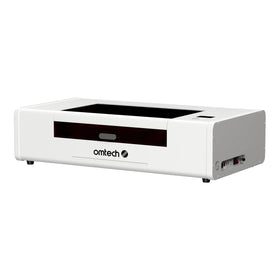
MOPA 60 60W Integrated Fiber — Anodized Aluminum • Color Marking • Chrome Parts MOPA pulse control for color marking on anodized aluminum automotive accessories — producing gold, blue, red, and black marks that command premium pricing at car shows. Also handles chrome-plated steel parts cleanly, and produces corrosion-safe marks on stainless steel exhaust and brake hardware. Used by custom shops offering premium color personalization on anodized accessories, shift knobs, and billet aluminum parts. |
For cylindrical automotive parts like shift knobs, exhaust tips, and round billet covers, OMTech's rotary attachments for lasers maintain consistent focal distance while the part rotates — enabling 360-degree engraving on cylindrical automotive components. Pair with laser engraving accessories for fixturing and positioning irregular automotive shapes accurately in the laser work area.
Ready to add custom car engraving to your shop? |
Frequently Asked Questions
What is custom car engraving?
Custom car engraving is the process of permanently marking automotive parts and accessories with personalized designs, logos, names, dates, or graphics using laser engraving technology. The laser permanently integrates the design into the part surface — it cannot fade, peel, or be removed without damaging the part. Custom car engraving covers everything from valve covers and intake manifolds to shift knobs, door sill plates, wheel center caps, and build plaques for car show vehicles.
What automotive parts can be laser engraved?
Nearly any metal automotive part can be laser engraved with a fiber laser: valve covers, intake manifolds, battery boxes, shift knobs, door sill plates, wheel center caps, fuel door covers, exhaust tips, billet accessories, and engine bay dress-up parts. Interior trim in wood uses CO2 laser. Leather seats and headrests use CO2 at low power. Acrylic gauge faces and panels use CO2 for cutting and frosted engraving. The material determines which laser type is required.
How much does custom car engraving cost?
Custom car engraving pricing typically ranges from $20–$35 for small items like keychains and center caps to $80–$200 for larger parts like valve covers and intake manifolds. The pricing reflects machine time, design complexity, and the value the customer places on the personalization — not consumable material costs, since laser engraving has essentially no consumables. Shops doing this as a service typically charge $45–$80 per hour of machine time as a baseline.
What laser machine is best for custom car engraving on metal?
A fiber laser is the right choice for engraving bare metal automotive parts. Fiber lasers at 1,064nm are efficiently absorbed by aluminum, steel, stainless, brass, and titanium — the metals used in automotive custom parts. A 20W–30W galvo fiber system handles most automotive custom engraving applications at good production speeds. MOPA fiber lasers add color marking capability on anodized aluminum and produce corrosion-safe marks on stainless, which commands premium pricing in the custom market.
Can you engrave a car part without damaging it?
Yes — laser engraving is a non-contact process that does not apply mechanical force to the part. The laser beam removes a very small amount of surface material through vaporization, creating the mark without bending, deforming, or stressing the part. For precision-machined automotive components, laser etching (shallow surface modification) is preferred over deep engraving because it minimizes dimensional change. For decorative billet and dress-up parts where depth adds tactile quality, deeper engraving is appropriate and adds perceived value.
What is the difference between custom engraving and custom laser engraving?
Traditional custom engraving uses a mechanical rotary cutter or pantograph machine with a rotating bit to physically carve the design — limited to simpler shapes and text, with visible tool paths and minimum practical line widths of around 0.5mm. Custom laser engraving uses a focused beam to vaporize material at the point of contact, with no physical tooling involved. Laser engraving achieves finer detail (line widths under 0.1mm), handles curved surfaces better, produces consistent marks without tool wear, and completes designs in a fraction of the time.
How do you prepare an image for custom car engraving?
Vector files (SVG, DXF, AI) produce the sharpest results for laser engraving because the design scales without loss of quality. Convert raster photos to vector art using tracing software (LightBurn has a built-in trace function) before sending to the laser. Remove fine gradients and replace with solid fill areas — engraving works in binary: engraved or not engraved. Keep text at minimum 4mm character height for legibility at normal viewing distance on small automotive parts. Curved surfaces require confirming the design fits within the flat area accessible without repositioning.
Can you engrave cylindrical car parts like shift knobs?
Yes — a rotary attachment (also called a rotary axis) holds the cylindrical part and rotates it at the same rate the laser head moves along the part, maintaining consistent focal distance around the full circumference. This allows 360-degree engraving on shift knobs, exhaust tips, round billet caps, and other cylindrical automotive accessories. OMTech's rotary attachment collection covers both roller-style and chuck-style rotary fixtures for different part diameters and materials.
How do auto shops add custom engraving as a revenue service?
Auto shops typically add custom engraving as a zero-inventory, high-margin service line. The laser machine is already in the shop for other work (part marking, fabrication). Custom engraving orders come through word of mouth, social media showing engraved builds, and car show connections. Pricing is set at 3–5x the cost of the blank material (for accessories) or as a flat service fee for customer-provided parts. The most successful shops develop a signature product — usually a build plaque or valve cover design — that becomes associated with their brand. Completed builds are the highest-value marketing: when a customer shows their build at a show, the engraved parts generate inquiries.