













Laser Marking for Traceability in Manufacturing: A Complete Guide
We had a recall notice land on our production manager's desk on a Thursday afternoon. The affected batch was a six-month-old run of valve bodies. Without traceable part marks, we had to pull everything from that period — not just the suspect lot. The whole exercise cost us roughly $80,000 in labor and inventory write-off. Six weeks later we had a fiber laser marker inline. We haven't had a traceability failure since.

Part traceability isn't optional in modern manufacturing. Automotive, medical device, aerospace, and food processing sectors all operate under compliance frameworks that require permanent, machine-readable marks on components. A laser marking machine produces those marks faster, more reliably, and at lower long-term cost than any competing technology.
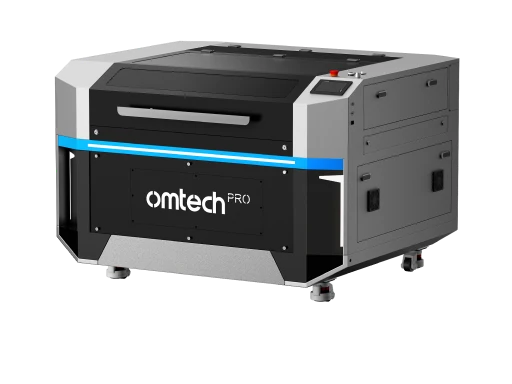
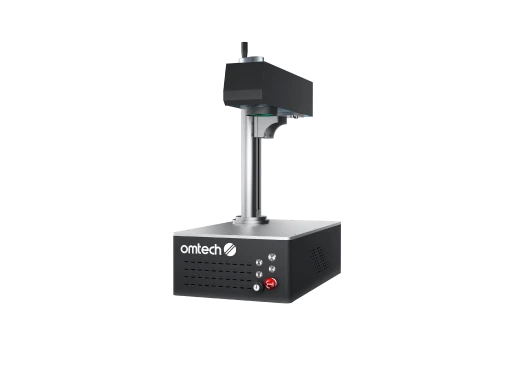
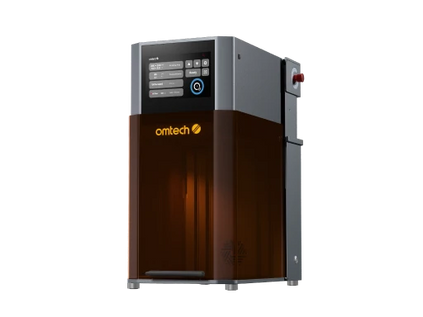
This guide covers how to choose the right laser marking machine for your production environment, which marking processes apply to which materials, how traceability requirements shape machine selection, and which OMTech machines are used in manufacturing settings today. OMTech's fiber laser engraving machines cover the most common industrial marking applications from serial numbers and barcodes to data matrix codes and brand logos.
What Is a Laser Marking Machine?

A laser marking machine uses a focused, high-intensity laser beam to alter the surface properties of a material, creating a permanent visible change. According to Wikipedia's fiber laser overview, fiber laser systems produce light at approximately 1,064nm — a wavelength efficiently absorbed by metals. This absorption is what drives the marking process without requiring inks, coatings, or chemical treatments.
The marking process falls into four categories, each producing different results on different materials: engraving (deep material removal), etching (surface melt), annealing (subsurface chemical change without material removal), and ablation (coating or paint removal). The right process for your application depends on the material, required mark depth, downstream surface treatments, and compliance standards.
🏭 REAL OPERATOR EXPERIENCEChen, who manages quality control at a custom metal fabrication shop in Michigan, describes the transition from inkjet to fiber laser marking this way: 'The inkjet worked fine until parts went through shot blast. After that, you couldn't read the marks at all. Every time we had a quality audit we were scrambling to explain gaps in our traceability records. The fiber laser marks survived everything we threw at them — shot blast, e-coat, heat treat. I wish we'd done it five years earlier.' |
The Four Laser Marking Processes Explained

Laser Engraving
The laser beam removes material through vaporization, creating a recessed mark with measurable depth (0.05mm to 0.5mm+). This is the most durable marking process for parts that undergo abrasive post-treatments. According to Wikipedia's laser engraving overview, the vaporization process creates high-contrast, tactile marks that survive aggressive environments. Engraving is the standard process for automotive foundries marking parts at the start of the manufacturing process.
Laser Etching
The laser melts the surface layer to create raised textured marks without significant material removal. It is significantly faster than engraving and produces high-contrast black/white marks. Etching is the preferred process for high-speed production lines where mark depth is less critical than cycle time — typically for parts that don't undergo abrasive treatment.
Laser Annealing
The laser heats the material below its melting point, causing a subsurface chemical change that alters color without removing material or changing surface roughness. Annealing is the standard process for stainless steel in medical and food-contact applications because it produces dark marks without disturbing the chromium oxide layer that gives stainless steel its corrosion resistance.
Laser Ablation
The laser removes a coating, paint, or anodized layer from a base material surface to create a high-contrast mark by revealing the material underneath. Ablation is used for anodized aluminum, painted metals, and coated surfaces where the coating-to-metal contrast creates a readable mark without engraving the base metal.
|
PROCESS |
MATERIAL EFFECT |
BEST FOR |
SPEED |
DURABILITY |
|
Engraving |
Material removed (recessed) |
Post-abrasive parts, VINs |
Slower |
Highest |
|
Etching |
Surface melted (raised) |
High-speed lines, barcodes |
Fastest |
Good |
|
Annealing |
Color change (no removal) |
Medical / food stainless |
Medium |
Very Good |
|
Ablation |
Coating removed |
Anodized aluminum, painted |
Fast |
Good |
Laser Marking Machine Types: Which One Do You Need?

The three primary laser types used in manufacturing marking applications each have a specific material affinity determined by their wavelength. Choosing the wrong laser type for your material produces poor marks regardless of wattage.
|
⚡ Fiber Laser Marking Machine Wavelength: 1,064nm (Near-IR) Materials: Steel, stainless steel, aluminum, brass, copper, titanium, coated metals The standard for direct metal part marking. Fiber lasers are air-cooled, have no consumables, and produce permanent marks on the full range of metallic materials. Used in automotive, aerospace, medical, and industrial manufacturing for serial numbers, data matrix codes, barcodes, and part identification. Typical wattage range: 20W–100W for marking applications. |
|
🔵 MOPA Fiber Laser Marking Machine Wavelength: 1,064nm (tunable pulse) Materials: Stainless steel, anodized aluminum, titanium, specialty alloys MOPA (Master Oscillator Power Amplifier) systems add pulse duration control to standard fiber laser marking capability. This enables high-contrast annealing on stainless steel without thermal damage, color marking on anodized aluminum, and fine detail marking on sensitive alloys. Required for medical device UDI marking where surface corrosion resistance must be preserved. |
|
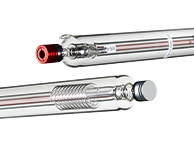
🟤 CO2 Laser Marking Machine Wavelength: 10,600nm (Far-IR) Materials: Wood, acrylic, plastics, glass, leather, cardboard, coated metals CO2 lasers mark and engrave organic and non-metal materials. They cannot mark bare metals directly — the 10,600nm wavelength passes through metal without absorption. For mixed-material production environments requiring both metal and non-metal marking, CO2 and fiber systems run in parallel. CO2 systems require water cooling in production environments. |
Material Compatibility: Matching Laser Type to Material

Material-laser wavelength matching is the most critical decision in specifying a marking system. OMTech's MOPA fiber laser engraving machines and standard fiber systems cover all metallic materials. OMTech's CO2 laser engraver machines handle organic materials, plastics, and coated surfaces.
|
MATERIAL |
RECOMMENDED LASER |
BEST PROCESS |
MARK QUALITY |
NOTES |
|
Carbon steel |
Fiber 20W–50W |
Etching / Engraving |
High contrast |
White marks possible |
|
Stainless steel (304/316) |
MOPA Fiber |
Annealing |
Black, corrosion-safe |
Medical/food grade |
|
Aluminum (bare) |
Fiber 30W–100W |
Etching / Engraving |
Good — needs power |
High reflectivity |
|
Anodized aluminum |
Fiber or MOPA |
Ablation |
Very high contrast |
Fast process |
|
Titanium |
MOPA Fiber |
Annealing / Engraving |
Excellent |
Color marking possible |
|
Brass / Copper |
Fiber 30W–50W |
Etching |
Good |
Higher reflectivity |
|
Plastics / Polymers |
CO2 or Fiber |
Ablation / Etching |
Material-dependent |
Check chemical compatibility |
|
Wood / Acrylic / Glass |
CO2 |
Engraving / Etching |
High contrast |
CO2 only |
Traceability Requirements: What Your Marking System Must Deliver

Manufacturing traceability is not a single standard — it varies by industry and regulatory framework. Understanding which requirements apply to your products determines what mark type, depth, and readability your laser marking machine must produce.
-
Automotive (AIAG / VDA) — Data matrix codes, 2D barcodes, and serial numbers on structural components. Marks must be readable after e-coating, shot blast, and paint. DPM grade C or better typically required.
-
Medical devices (FDA 21 CFR Part 830) — UDI (Unique Device Identification) codes on all Class II and III devices. Marks must survive sterilization (autoclave, gamma, EtO) without degrading. MOPA annealing on stainless is the standard approach.
-
Aerospace (AS9100 / FAA FAR 45.13) — Permanent part identification from manufacture through end of service life. Marks must be legible under all operating conditions including extreme temperatures and chemical exposure.
-
Food & beverage processing — Equipment identification on stainless steel surfaces that contact food. Marks must not create crevices for bacterial growth — annealing is preferred over engraving for this reason.
-
General industrial (ISO 9001) — Component traceability for quality management. Specific marking requirements depend on customer and sector standards rather than a single regulatory framework.
✅ TRACEABILITY CASE STUDYA precision machining shop in Texas runs a fiber laser marker on their CNC cell for tool steel components. Every part receives a data matrix code within the CNC cycle, before it leaves the cell. The code links to the job number, operator, machine, material heat number, and inspection results in their ERP system. When a customer called with a field failure, they traced the part to the specific material batch within 15 minutes and issued a corrective action the same day. The quality manager said the laser marker was the most valuable quality investment they had made in a decade. |
How to Choose the Right Laser Marking Machine

Here's the decision framework most manufacturing engineers use when specifying a laser marking system:
|
REQUIREMENT |
SPECIFICATION FACTOR |
OMTECH SOLUTION |
|
Mark bare steel, aluminum, brass |
Fiber laser 20W–50W minimum |
Galvo Fiber 20/30/50W |
|
Medical UDI on stainless (no corrosion) |
MOPA fiber with annealing capability |
MP6969 60W MOPA / MOPA 60 |
|
Color marking on anodized aluminum |
MOPA fiber with pulse duration control |
MOPA 60 / MP6969 |
|
High-speed inline marking |
Galvo head, autofocus, batch software |
Galvo Fiber with EzCad / LightBurn |
|
Mixed metal + non-metal |
Fiber (metal) + CO2 (non-metal) parallel setup |
Fiber collection + CO2 collection |
|
Mark wood, acrylic, glass, plastic |
CO2 laser 40W–100W |
CO2 Laser Machines collection |
OMTech Machines for Manufacturing Traceability
|
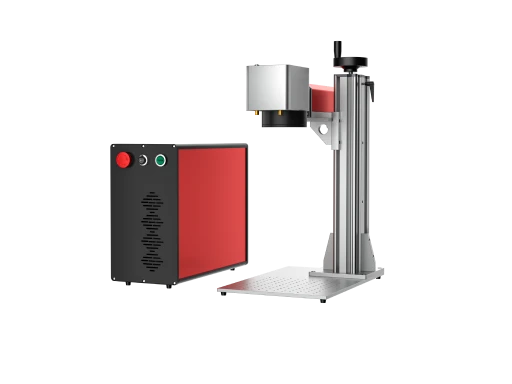
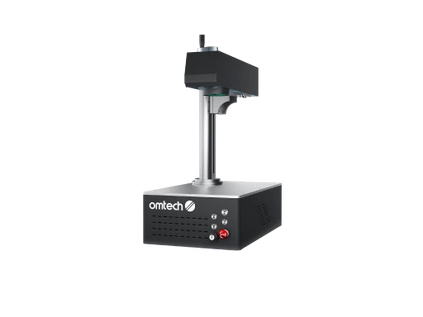
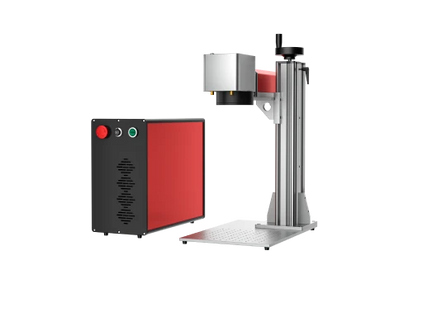
Galvo Fiber 20/30/50W — General Metal Marking • High Speed • Barcodes / Serials Galvo scanning head marks at up to 10,000 mm/s with 0.01mm accuracy. Autofocus adjusts to part-to-part height variation automatically. Compatible with LightBurn and EzCad for batch marking and variable data. Handles steel, aluminum, brass, copper, and most metallic materials. Used by metal fabricators, job shops, and small manufacturers for part identification, serial number marking, and corporate logo engraving on metal components. |
|
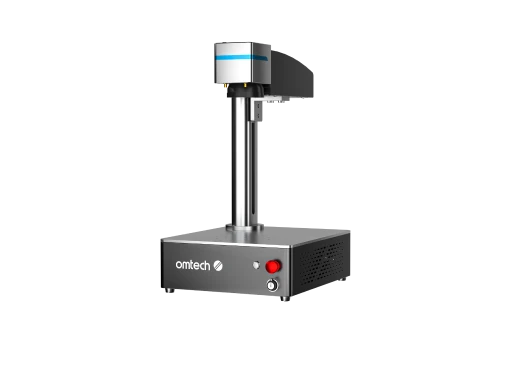
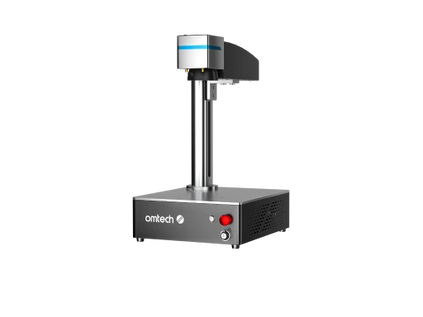
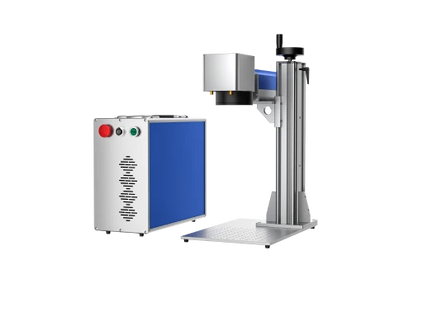
MP6969 60W MOPA Fiber Laser — Medical / Stainless / Color • Corrosion-Safe • Annealing MOPA pulse control enables annealing-quality marks on stainless steel without surface damage — required for medical device UDI marking and food-contact equipment identification. The 6.9" × 6.9" working area handles most component sizes. Pulse duration control produces color marking on anodized aluminum and fine detail on titanium. Used by manufacturers requiring compliance with FDA UDI, AIAG DPM, and similar traceability standards. |
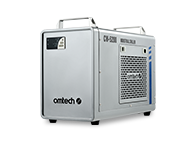
💡 CO2 + FIBER FOR MIXED-MATERIAL SHOPSManufacturing shops handling both metal and non-metal materials typically run a fiber laser for metal components and a CO2 machine for plastics, acrylic signage, and wood-based materials. OMTech's CO2 laser engraver machines complete the mixed-material marking capability alongside the fiber and MOPA machines. OMTech's professional laser setup support and laser cooling systems (for CO2 systems) are available for production environments requiring complete installation. |
Ready to add a laser marking machine to your production line? |
Frequently Asked Questions
What is a laser marking machine?
A laser marking machine uses a focused, high-intensity laser beam to permanently alter the surface appearance of a material — by removing material (engraving), melting the surface (etching), changing subsurface chemistry (annealing), or removing a coating (ablation). The result is a permanent, machine-readable or human-readable mark with no ink, no consumables, and no ongoing material cost. Laser marking machines are used in manufacturing for part traceability, compliance marking, branding, and product identification.
Which laser marking machine is best for stainless steel?
A MOPA fiber laser is the recommended choice for stainless steel in food-contact and medical applications because MOPA annealing produces dark, high-contrast marks without removing material or disturbing the chromium oxide layer that gives stainless steel its corrosion resistance. Standard fiber lasers can also mark stainless steel effectively for non-food-contact applications where corrosion resistance of the mark area is not a critical requirement.
What is the difference between a laser marking machine and a laser engraving machine?
The terms are often used interchangeably, but there is a technical distinction. A laser marking machine is optimized for surface-level permanent marking — etching, annealing, ablation — where speed and mark legibility are the priority. A laser engraving machine emphasizes deeper material removal for high-durability marks that survive aggressive post-processing. In industrial manufacturing, the term 'laser marker' typically refers to fiber galvo systems optimized for fast, accurate part identification.
What materials can a fiber laser marking machine mark?
Fiber lasers mark all metallic materials including carbon steel, stainless steel, aluminum, brass, copper, titanium, bronze, nickel, and most metal alloys. They also mark some plastics and polymers that absorb near-infrared light, including ABS and certain engineering plastics. Fiber lasers cannot effectively mark clear plastics, glass, wood, acrylic, leather, or other organic materials — those require CO2 laser systems.
How much does a laser marking machine cost?
Entry-level benchtop fiber laser markers start at approximately $1,500–$3,000 for 20W–30W systems. Mid-range 50W–100W galvo fiber systems with autofocus and software run $4,000–$8,000. MOPA systems with full pulse control capability typically run $5,000–$12,000. Industrial automated inline systems with PLC integration and custom fixturing are custom-quoted. The total cost of ownership advantage of laser marking over inkjet or dot peen becomes significant within the first 12–24 months through eliminated consumable costs.
What power laser marking machine do I need?
20W–30W is sufficient for most standard metal etching and barcode marking applications on steel and aluminum. 50W provides faster cycle times and better results on harder alloys, highly reflective metals like copper and brass, and deeper engraving applications. 100W+ is required for very high-speed inline production, deep engraving in production foundry environments, or thick-wall component marking. For MOPA applications, 60W–100W provides the power range needed for color marking and medical-grade annealing.
Does a laser marking machine require consumables?
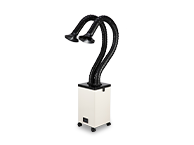
No. This is one of the primary operational advantages of laser marking over inkjet, pad printing, and chemical etching. Fiber laser systems are air-cooled and require no inks, solvents, needles, or replacement parts under normal production conditions. CO2 laser systems require water cooling — OMTech's water chiller collection covers cooling systems for CO2 production environments. The only ongoing maintenance items are periodic lens cleaning and air filter replacement for the fume extraction system.
Can a laser marking machine integrate into a production line?
Yes. Industrial fiber laser markers connect to PLC and MES systems through standard protocols (Ethernet, serial, digital I/O). The laser receives marking data — serial number, date code, batch number, barcode content — from the production system and marks each part automatically. Galvo-head systems can mark parts in under 2–4 seconds per part for typical data matrix codes, making them practical for inline integration on moderate-speed production lines without becoming the bottleneck.
What is the typical lifespan of a laser marking machine?
Fiber laser sources have a rated diode lifespan of 100,000+ hours under normal operating conditions. In practice, fiber laser marking systems commonly run for 8–15 years in production environments with minimal maintenance. CO2 laser tubes have shorter lifespans (approximately 10,000 hours for glass tube systems) and require replacement, but RF-excited CO2 tubes used in industrial systems last significantly longer. The key factor in machine longevity is consistent lens maintenance and proper ventilation to prevent contamination of optical components.