







How to Choose the Best DTF Printer for Your Small Business

Choosing the right direct-to-film (DTF) printer is one of the most important decisions a small apparel business can make. Whether you're starting your first custom t-shirt line or expanding into high-volume on-demand printing, your printer is the heartbeat of your operation. Unlike traditional screen printing, DTF offers vibrant, long-lasting prints on a wide range of fabrics with less setup and faster turnaround times. But not all DTF printers are created equal—and with so many options on the market, it can be overwhelming to know what truly matters for a small business.
Instead of chasing brand names or the latest tech, focus on the real-world performance factors that drive profitability: quality, reliability, efficiency, and growth potential. In this guide, we’ll break down the most important criteria to consider when choosing the best DTF printer for your small business so you can make a smart investment with confidence.
Things to Consider When Choosing the Best DTF Printer for Your Small Business
Print Quality & Versatility
Your prints must pass both the visual and wear tests. Look for a machine that delivers high resolution—sharp lines, rich colors—and durable output that resists wash‑fade, peeling, or cracking. Equally important is its compatibility across fabrics: cotton, polyester, blends, and even non‑traditional materials. A versatile DTF printer ensures you’re not locked into one niche and can pivot with market demand.
Speed & Production Capability
How many garments can you realistically produce daily? If your printer churns out only a couple, higher-volume jobs will take too long or require multiple machines. Choose one whose throughput aligns with your short‑term growth plans. Also consider the finish time: faster print heads, integrated curing or powder systems, and efficient workflows translate into quicker turnarounds and happier customers.
Footprint & Space Requirements
Small businesses often operate out of compact shops or shared spaces. Printers that require large floor plans or additional external equipment may hinder operations. Evaluate width, depth, and required clearance—including access for media rolls, ventilation, and maintenance zones. A space‑smart DTF printer can launch your business without demanding a warehouse.
Cost Structure & Sustainability
Beyond the purchase price, the cost per print is critical. Factor in toner or ink cost, powder adhesives, media films, maintenance parts, and electricity usage. Printers with efficient white ink circulation or bulk‑ink compatibility can dramatically reduce running cost. A machine may look affordable, but if supplies are expensive or maintenance frequent, your margins tighten fast.
Ease of Use & Support Network
Startups and small shops often operate with fewer staff and tighter timeframes. Choose a printer with intuitive software, clear maintenance routines, and reliable support. Availability of spare parts, onboarding tools, and training resources matters just as much as check‑box specs. When you hit a problem mid‑run, responsive help keeps you moving and preserves client trust.
Scalability & Future‑Proofing
Your printing business will evolve, and your equipment should evolve with it. Look for modular or upgrade‑friendly designs: expand print widths, switch heads, integrate automatic powder removal, or connect to finishing systems. Investing in growth‑capable gear today means fewer replacements down the line. A flexible DTF printer is built for where you’ll go next—not just where you are right now.
Environmental & Compliance Factors
Consider ventilation requirements for powder and cure‑zones, noise levels, and waste‑material handling. Small operations especially must meet local air‑quality or facility standards. A layout that ensures worker safety and minimal downtime under regulatory scrutiny is a smart long‑term investment.
Decision Checklist
When thinking about your ideal DTF printer, consider the following:
-
Does the printer meet the quality expectations of your end‑users?
-
Can you process the volume needed without bottlenecks?
-
Will it fit into your workspace without disrupting existing operations?
-
Are the supply expenses affordable and predictable?
-
Is the machine straightforward enough for your team to run without expert technicians?
-
Can you grow with this printer as orders increase?
-
Will it comply with local facility and environmental requirements?
If you answer yes to all of these, you’re well‑positioned to select a DTF printer that supports both current demands and future growth.
Smart Pick for Small Businesses: The OMTech Aurora

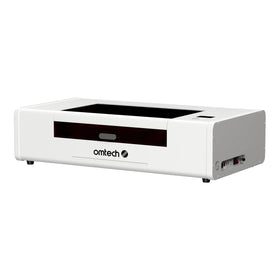
If you're looking for a DTF printer that checks all the boxes—print quality, efficiency, scalability, and ease of use—the OMTech Aurora is one of the strongest options on the market for small and growing apparel businesses. Designed specifically for production-ready workflows, the Aurora combines professional-grade output with an accessible footprint and user-friendly setup.
Why the OMTech Aurora Stands Out
-
Dual I1600 Printheads for fast, high-clarity output at 720 × 1800 DPI
-
14-inch printing width, ideal for T-shirts, hoodies, and medium-format designs
-
Integrated curing & powder-handling workflow, reducing manual steps
-
Consistent white-ink circulation to prevent clogging and reduce maintenance
-
Compact 3.44 ft² vertical footprint, perfect for small shops and tight workspaces
-
Reliable, stable color output for photo-quality graphics and gradients
-
Business-ready build, engineered for continuous production
-
Supports popular RIP software, enabling streamlined setup and color management
Best For:
-
New apparel startups needing reliable production speed
-
Growing businesses upgrading from entry-level DTF printers
-
Creators who want consistent results without constant recalibration
-
Shops that need a compact, high-performance solution
The Aurora offers a strong combination of speed, efficiency, and cost-control, making it a smart long-term investment for shops that want to scale without replacing equipment in a year.
Final Thoughts
For small‑business owners, the right DTF printer is the foundation of a scalable, profitable custom‑apparel business. Skip the brand comparisons and focus instead on the structural fit: quality, speed, cost, usability, space, scalability, and compliance. These criteria will consistently guide you toward a smart buy that serves your goals.
When you combine the right hardware with efficient processes, reliable clients, and dialed-in finishing, your investment quickly becomes a revenue engine rather than a cost center.
If you’re ready to invest in a DTF printer built for real small-business growth, explore the OMTech Aurora. Its precision, reliability, and production-friendly design make it the ideal next step for apparel creators looking to upgrade or launch their printing operation.