














How Laser Engraving Is Used in Medical Device Traceability
I watched a surgeon stop mid-procedure to check the serial number on a bone plate. The instrument had already been sterilized twice that week. He held it up to the OR light, tilted it slightly, and read the data matrix code off the surface. The mark was as legible as the day it was engraved. That's the job: not to be impressive in a brochure, but to still be readable in a sterile field two years after production.

Every medical device that touches a patient — implanted, reused, or disposable — needs a permanent, machine-readable identifier. Labels peel. Ink washes away. Adhesives contaminate. Only laser marking consistently produces identifiers that survive the full lifecycle of a medical device: through manufacturing, sterilization, surgical use, and decades inside the human body.
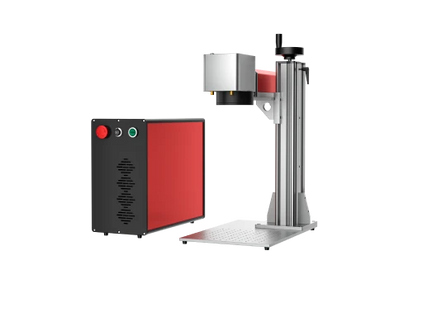
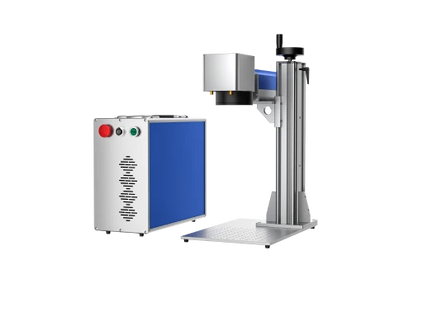
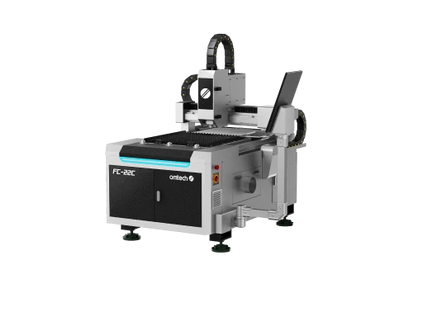
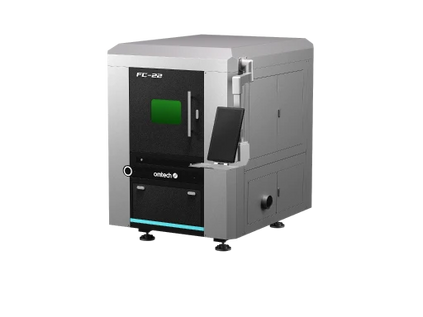
This guide covers how laser marking medical devices works in practice — the regulatory framework that makes it mandatory, the laser processes suited to different medical materials, and which machine types deliver the mark quality, depth, and biocompatibility that FDA and ISO 13485 require. OMTech's fiber laser engraving machines and MOPA systems are used by contract manufacturers and medical device suppliers to produce compliant, sterilization-resistant marks on stainless steel, titanium, and medical-grade alloys.
Why Laser Marking Is Mandatory in Medical Device Manufacturing

The FDA's Unique Device Identification (UDI) system, described in detail on FDA.gov's UDI system page, requires that medical devices carry a permanent, machine-readable code linking each device to its manufacturer, model, production batch, serial number, and expiration date. For reusable devices that are separated from their packaging during use — surgical instruments, orthopedic implants, endoscopes — the mark must be on the device itself, not on the box it came in.
This is where adhesive labels and inkjet printing fail. A label on a scalpel handle won't survive a single autoclave cycle. An inkjet code on a titanium hip implant won't survive twenty years inside a patient. Laser marking is often the only technology that can produce a UDI code with the permanence, precision, and biocompatibility that FDA Class II and Class III device requirements mandate.
🏥 REAL MANUFACTURING CONTEXTA contract manufacturer in New England producing stainless steel surgical retractors switched from inkjet date codes to laser annealing after three consecutive FDA inspection findings related to mark legibility post-sterilization. The inkjet codes were fading within 15–20 autoclave cycles. After installing a MOPA fiber laser and validating the process to ISO 13485, they passed their next inspection with zero observations on part marking. The quality manager described the laser system as the single change that resolved their largest recurring compliance gap. |
The Four Laser Marking Processes Used on Medical Devices

Medical device marking isn't a single process — it's four distinct techniques, each suited to different materials and clinical requirements. Selecting the wrong process can compromise corrosion resistance, create bacteria-trapping surface features, or produce marks that fail sterilization testing.
|
🔲 Laser Annealing Process: Subsurface chemical change — no material removal Post-Sterilization: Dark mark survives autoclave, EtO, gamma radiation intact The standard process for stainless steel and titanium surgical instruments. Controlled heat creates a dark oxide layer without disturbing the passivation or surface finish. No crevices, no surface roughness increase, no contamination risk. Required for food-contact and implant-grade surfaces where surface integrity must be preserved. The preferred UDI marking method for reusable stainless instruments under ISO 13485. |
|
⬜ Laser Ablation Process: Coating or surface layer removed — reveals substrate Post-Sterilization: High contrast survives sterilization — coating removal is permanent Used on anodized aluminum, PEEK, coated polymer components, and cannulas. The laser selectively removes a surface layer to reveal a contrasting substrate, creating a high-contrast mark without thermal damage to the underlying material. Also used for depth markings on catheters — banding marks that indicate insertion depth during surgery. |
|
📝 Laser Etching Process: Minimal surface melt — slight raised/recessed texture Post-Sterilization: Good durability — not for fluid-contact implant surfaces Fast, high-contrast marks on metal and hard polymer components. Surface modification at low depth. Suitable for components that don't contact body fluids or undergo abrasive sterilization methods. Not recommended for implant surfaces where surface topography affects tissue integration or fluid contact. |
|
⬛ Laser Engraving Process: Deep material removal (0.05–0.5mm+) Post-Sterilization: Excellent — survives all sterilization methods Deep marks for components in extremely abrasive environments. Creates tactile, highly durable marks resistant to physical wear. Used for orthopedic implants and components subject to shotblasting or aggressive surface treatment. Caution: deep features can trap debris on fluid-contact surfaces — evaluate surface design before specifying for implantable components. |
|
PROCESS |
MATERIAL REMOVAL |
MEDICAL APPLICATION |
SURFACE CHANGE |
BIOCOMPATIBLE |
|
Annealing |
None |
Surgical instruments, implants |
Color only |
Yes |
|
Ablation |
Surface layer only |
PEEK implants, catheters |
Coating removed |
Yes |
|
Etching |
Minimal (µm) |
Metal housings, hard polymers |
Slight texture |
Case-by-case |
|
Engraving |
0.05–0.5mm+ |
Orthopedic implants, durable tools |
Deep recess |
Material-dependent |
Laser Types for Medical Device Marking

Fiber Laser — The Standard for Metal Instruments
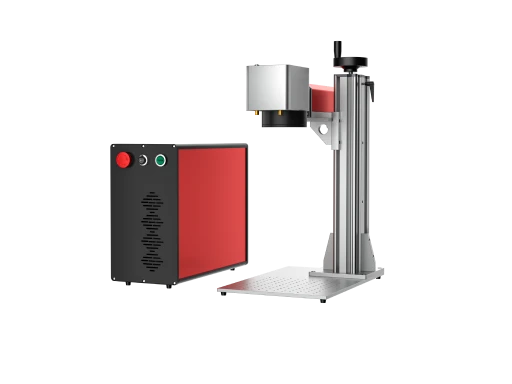
Fiber lasers at 1,064nm are efficiently absorbed by metals, making them the standard for marking stainless steel, titanium, cobalt-chrome, and aluminum medical components. Standard fiber lasers deliver fast, high-contrast etching and annealing on common medical instrument alloys. OMTech's fiber laser engraving machines cover the 20W–50W range commonly specified for medical instrument marking applications.
MOPA Fiber Laser — Required for Corrosion-Critical Stainless
MOPA (Master Oscillator Power Amplifier) fiber lasers add pulse duration control to standard fiber laser marking capability. This enables true laser annealing on stainless steel — a subsurface oxide formation that produces a dark, high-contrast mark without disturbing the passivation layer that gives stainless steel its corrosion resistance. Standard fiber lasers applied incorrectly can compromise passivation, creating corrosion initiation sites at mark boundaries. MOPA systems eliminate this risk through precise thermal control. OMTech's MOPA fiber laser engraving machines are the appropriate choice for medical device manufacturers requiring ISO 13485-compliant marking on stainless steel Class II and Class III devices.
UV Laser — Plastics and Sensitive Polymers
UV lasers (355nm) produce marks through photochemical reaction rather than thermal ablation. This 'cold marking' process creates high-contrast marks on medical plastics, PEEK implants, polycarbonate tubing connectors, and cannulas without thermal damage. Surface temperature during UV marking is so low that marks can be applied without risk to heat-sensitive polymer structures.
|
LASER TYPE |
BEST MEDICAL MATERIALS |
UDI PROCESS |
PASSIVATION SAFE |
|
Standard Fiber (1,064nm) |
Steel, aluminum, titanium alloys |
Etching, ablation |
With correct params |
|
MOPA Fiber (1,064nm) |
SS 304/316, titanium, cobalt-chrome |
Annealing (preferred) |
Yes — optimized |
|
UV Laser (355nm) |
PEEK, PVC, polycarbonate, ceramics |
Ablation / photochemical |
N/A — non-metal |
|
CO2 (10,600nm) |
Packaging, cardboard, polymers |
Ablation (coated surfaces) |
N/A — limited on metals |
What UDI Compliance Requires From Laser Marking Systems

A UDI code contains two data elements: the Device Identifier (DI), which identifies the specific version or model, and the Production Identifier (PI), which includes the lot/batch number, serial number, manufacturing date, and/or expiration date. Both must be permanently marked in human-readable and machine-readable formats on the device itself for Class II and III devices under FDA 21 CFR Part 830.
-
Data Matrix Code (2D) — The preferred machine-readable format for small medical devices. Can encode more data in less space than a barcode, reads reliably even on small or curved surfaces.
-
Linear Barcode — Used on larger devices and packaging. Easier to read with older scanning equipment in hospital inventory systems.
-
Serial Number (human-readable) — Required alongside machine-readable codes for Class II and III devices. Minimum character height 1.5mm on most instruments.
-
Lot/Batch Number — Links individual devices to production records for recall and adverse event investigation.
⚠️ COMPLIANCE NOTE: THE MANUFACTURER VALIDATES, NOT THE LASERThe FDA holds medical device manufacturers — not laser equipment suppliers — responsible for UDI compliance. This means the manufacturer must validate that their specific laser settings, on their specific device material, produce marks that remain legible after all specified sterilization cycles, surface treatments, and handling conditions. Once a marking process is validated, any change to laser parameters, software, or machine model requires revalidation. This is why some manufacturers still run decade-old systems on legacy software — the validated process is locked. |
OMTech Machines for Medical Device Marking Applications
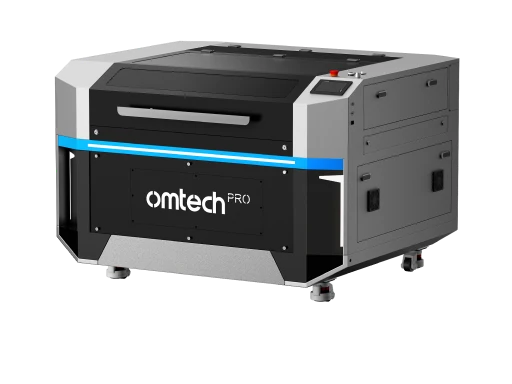
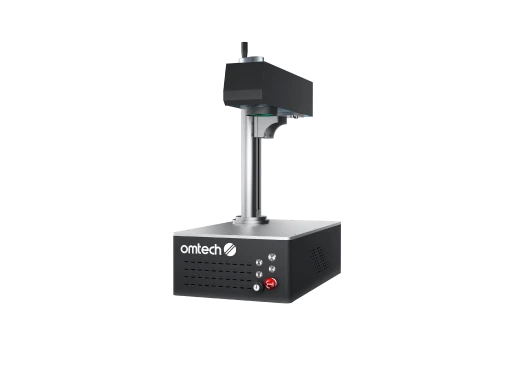
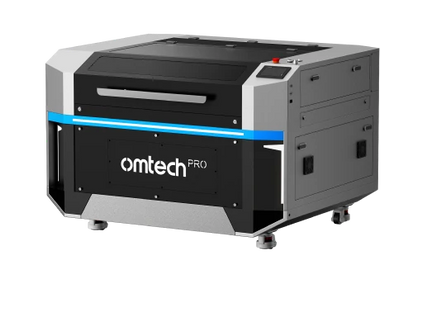
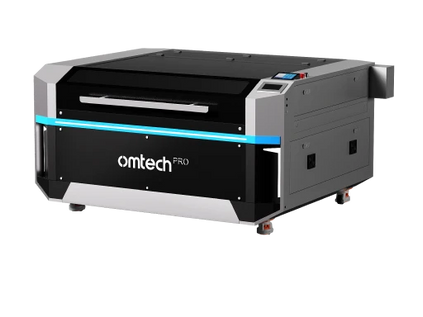
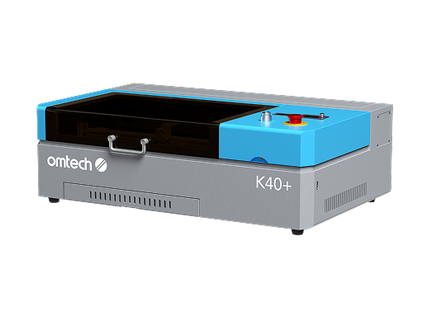
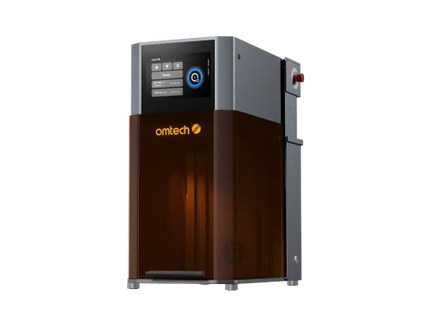
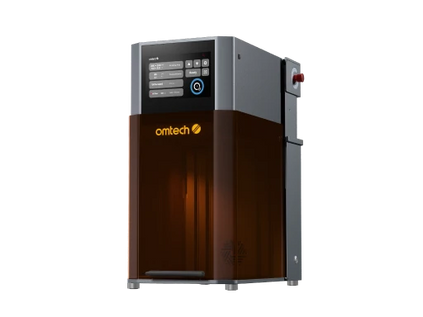
Medical device contract manufacturers and component suppliers typically specify systems from OMTech's Galvo Fiber Laser Marker collection and MOPA series for their precision, speed, and marking quality on stainless and titanium alloys.
|
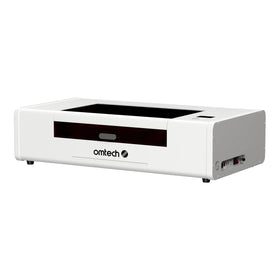
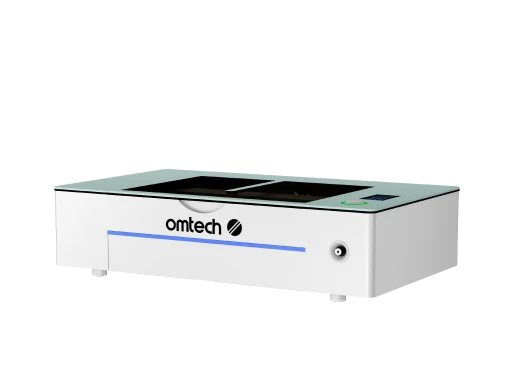
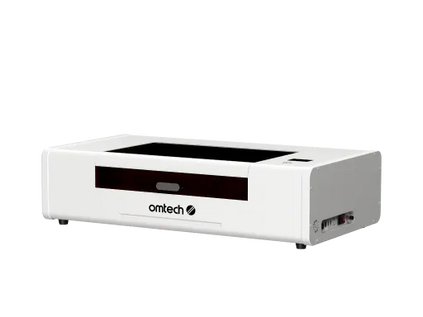
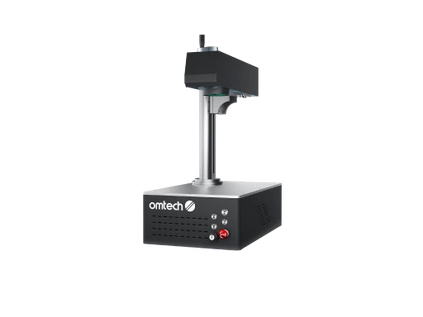
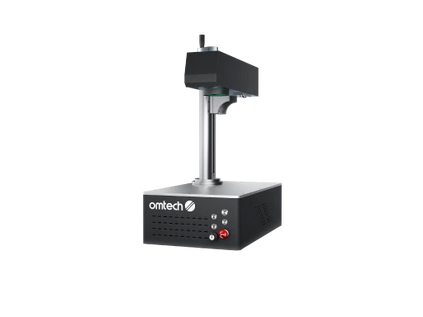
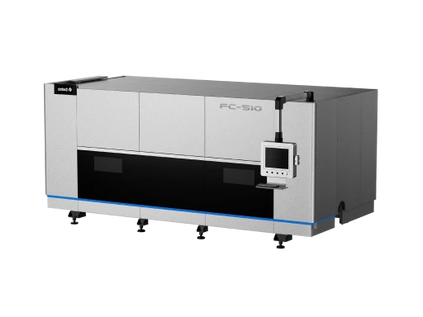
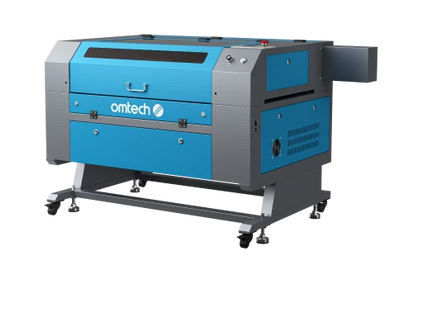
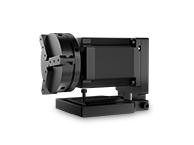
Galvo Fiber 20/30/50W — High-Speed Part Marking • Serial Numbers • Barcodes Galvo scanning head marks at up to 10,000 mm/s with 0.01mm positioning accuracy. Autofocus maintains consistent mark quality across part-to-part height variation. Handles stainless steel, titanium, aluminum, and cobalt-chrome at production marking speeds. Used by contract manufacturers for serial number marking, UDI barcode production, and part identification on surgical instruments and small medical components. |
|
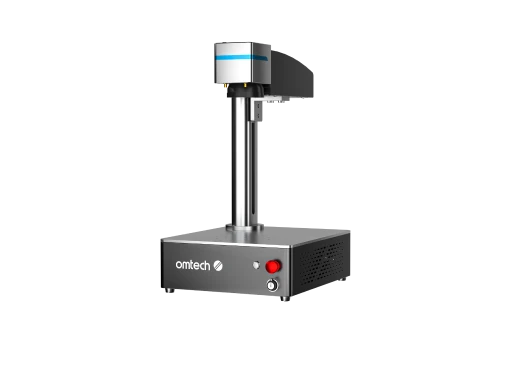
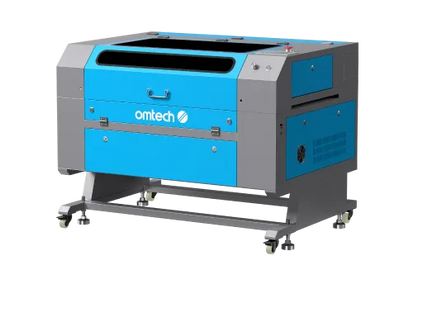
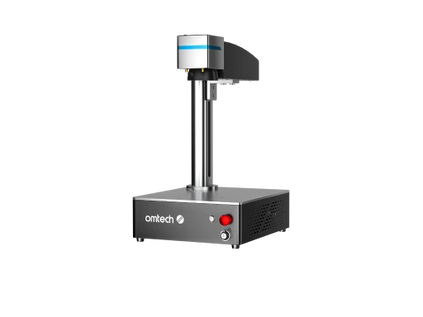
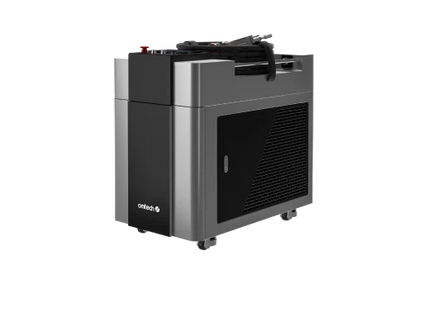
MOPA 60 60W Integrated Fiber — Medical-Grade Stainless • Annealing • No Passivation Damage MOPA pulse duration control enables true annealing on stainless steel 304/316 without thermal damage or passivation compromise — the critical requirement for FDA UDI compliance on reusable surgical instruments. Produces dark, high-contrast marks readable through repeated autoclave cycles. Used for Class II device marking where corrosion resistance of the stainless surface must be preserved alongside mark legibility. |
|
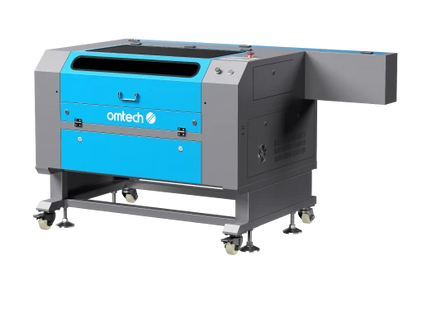
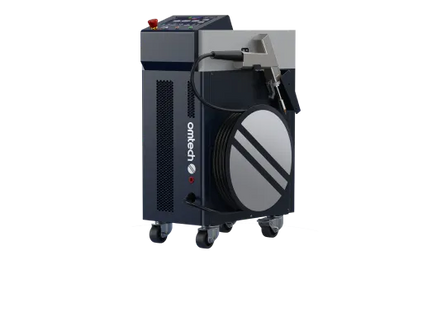
MP6969 100W MOPA Fiber Laser — Orthopedic Implants • Titanium • Small Character High Resolution 100W MOPA power with 6.9" × 6.9" working area. Used for UDI marking on orthopedic implants, spinal fusion components, and titanium bone plates where small character heights (down to 1.5mm) and high mark contrast are required within limited marking surface areas. The MOPA pulse control system produces consistent annealing quality on titanium alloys used in Class III implantable devices. |
💡 SETUP AND VALIDATION SUPPORTMedical device manufacturers require documented process validation for their laser marking systems. OMTech's professional laser setup support includes on-site installation and parameter calibration. Manufacturers are responsible for process validation under their own quality management system, but a properly installed and calibrated machine is the necessary starting point for validation testing. |
Ready to specify a laser marking system for medical device production? |
Frequently Asked Questions
What is laser marking medical devices?
Laser marking medical devices is the process of using a focused laser beam to permanently mark medical instruments, implants, and devices with identification codes, serial numbers, barcodes, and other traceability information. The marks are produced without inks, adhesives, or chemical treatments, making them biocompatible, sterilization-resistant, and compliant with FDA UDI and ISO 13485 requirements. Laser marking is the preferred method for Class II and Class III devices because it produces permanent, machine-readable marks that survive the full lifecycle of the device.
Why is laser marking required for medical devices?
The FDA's Unique Device Identification (UDI) system requires medical device manufacturers to permanently mark Class II and Class III devices with a machine-readable code that enables traceability from manufacturing to patient use. For reusable devices separated from their packaging during use, the mark must be directly on the device. Labels, ink printing, and adhesives cannot survive repeated sterilization, surgical use, and long-term implantation, making laser marking the only technically viable option for most metal and polymer medical device applications.
What is the difference between laser annealing and laser etching for medical devices?
Laser annealing uses controlled heat to create a subsurface dark oxide layer without removing material or changing surface roughness — the preferred process for stainless steel surgical instruments because it preserves passivation and creates no bacteria-trapping surface features. Laser etching melts the surface slightly, creating a shallow mark with minimal material removal. Annealing is the medically preferred process for fluid-contact and implant surfaces. Etching is used for components where surface integrity is less critical and faster marking speed is the priority.
What laser is best for marking stainless steel surgical instruments?
A MOPA fiber laser is the recommended system for marking stainless steel surgical instruments requiring UDI compliance. MOPA's pulse duration control enables true annealing — a subsurface color change without material removal that preserves the chromium oxide passivation layer critical to stainless steel's corrosion resistance. Standard fiber lasers can mark stainless steel but require careful parameter optimization to avoid compromising passivation at mark boundaries, which can lead to corrosion initiation sites.
What is UDI marking and which devices require it?
A Unique Device Identifier (UDI) is a permanent, machine-readable code that the FDA requires on most medical devices sold in the United States under 21 CFR Part 830. It consists of a Device Identifier (DI) identifying the device model and a Production Identifier (PI) including serial number, lot number, and expiration date. Class III devices (highest risk, typically implantable) have had UDI requirements since 2014. Class II devices (medium risk) since 2015. Class I labeling requirements apply to most other devices. Reusable devices separated from packaging must carry the UDI on the device itself.
Can laser marks on medical devices survive autoclave sterilization?
Yes — properly applied laser marks on metal medical devices survive repeated autoclave cycles (steam sterilization at 121–134°C under pressure) without loss of legibility. MOPA annealing marks on stainless steel are particularly autoclave-resistant because the marking process itself creates a stable oxide layer. UV laser marks on PEEK and medical plastics also survive autoclaving. The specific survival rate must be validated by the device manufacturer as part of their process validation under ISO 13485.
What materials can be laser marked in medical device applications?
Stainless steel (304, 316L) and titanium alloys are the most common medical device laser marking materials — both handled by MOPA fiber lasers via annealing. Cobalt-chrome alloys (used in joint replacement implants) require fiber or MOPA laser marking. PEEK (polyetheretherkone), used for spinal implants and dental components, marks via UV laser ablation. Medical tubing, catheters, polycarbonate connectors, and drug delivery components use UV laser for clean photochemical marking without thermal damage.
What is the minimum mark size for medical device UDI codes?
The FDA requires Data Matrix codes to be legible by standard 2D barcode readers throughout the device's expected use. For surgical instruments and small implants, Data Matrix codes as small as 3mm × 3mm can encode a full UDI. Character height for human-readable serial numbers is typically 1.5mm minimum. The exact minimum size depends on the available marking surface area, the device material, and the scanning equipment used for verification — all determined during manufacturer process validation.
How does ISO 13485 relate to laser marking medical devices?
ISO 13485 is the international quality management standard for medical device manufacturing. It requires manufacturers to control and validate production processes that affect product quality — which includes marking and traceability. Under ISO 13485, a manufacturer must validate that their laser marking process consistently produces marks meeting their specified acceptance criteria (legibility, depth, contrast, sterilization survival) and must document that validation. Changes to the marking process — including machine upgrades or parameter changes — require revalidation, which is why some manufacturers maintain stable legacy systems even as newer equipment becomes available.