






What I Learned Before Choosing a CO2 Laser Engraver
Before I bought anything, I was confused. Not in a vague way. Specifically confused about things that seemed like they should have clear answers and didn't.
Like, why do some 60W machines cost three times more than others? What does "working area" actually mean for real-world use? Is CO2 actually better than diode, or is that just what CO2 people say online?
Took a while to sort through it. Here's the version that would have saved me time.

The Diode vs CO2 Question
Diode machines are cheaper. Lighter. They fit on a small table. For someone who just wants to burn a logo into a pine board or make a few test pieces, diode is fine.
But diode has real limits. It can't cut acrylic. The beam passes straight through clear material. It struggles with anything reflective. Cut speed on wood is slower than CO2 at comparable optical wattage.
A CO2 laser engraver runs at a different wavelength, around 10,600nm. Organic materials and soft plastics absorb that wavelength efficiently. Wood burns clean. Acrylic cuts with a polished edge right off the machine. Leather engraves without fraying.
If acrylic is any part of your plan, diode is the wrong tool. Full stop. If you're only ever burning dark images into pine boards, diode might be enough and cheaper. But the moment your product list includes acrylic, clear plastic, or anything you want to cut cleanly at decent speed, CO2 is what you need.
That one realization settled the comparison for me pretty fast.

CO2 vs Fiber: Different Tools, Not a Contest
People sometimes ask this like one is better. They're not better or worse. They do different things.
CO2 is for soft materials. Wood. Acrylic. Leather. Fabric. Glass (with the right settings). Rubber. These are the materials most sign shops, custom gift businesses, and small craftspeople work with daily.
Fiber is for metal. Stainless steel. Aluminum. Brass. Titanium. If you mark metal parts, fiber is the machine. If you don't, it's not.
The mistake I kept seeing was people asking "CO2 vs fiber" when they should have been asking "what am I making." The answer to that question tells you which machine category you need. Most of the CO2 vs fiber debate is noise if you start from materials rather than machine specs.
Wattage: The Number That Gets Overfocused
Everyone wants to know what wattage to buy. It matters, but not in the way most newcomers think.
Higher wattage doesn't mean better engraving. It means faster cuts and deeper capability on thicker material.
A 40W CO2 laser engraver cuts 1/4 inch plywood. Slowly. One pass at medium speed. Fine for hobby work.
A 60W cuts the same piece faster. Maybe in two-thirds of the time. And it can handle 3/8 inch material that a 40W would struggle with.
At 100W, you're cutting 1/2 inch stock confidently in one pass and running through daily production without throttling down to compensate for the beam not keeping up.
So if you're cutting wood all day every day for a sign business, 80W to 100W is worth it. If you're doing occasional custom pieces two or three days a week, 60W is plenty and cheaper.
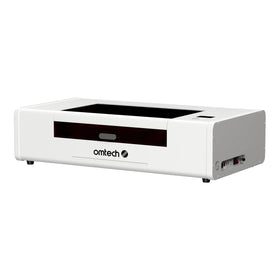
The 90W CO2 Laser Engraver Cutting Machine 20x28 sits right in that production range. 20 x 28 inch table with autofocus. The work area fits standard sheet material without trimming.
The Table Size Problem Nobody Talks About Enough

I got this wrong in my research phase. I looked at machine specs without thinking about what I'd actually be loading onto the table.
Standard craft plywood comes in sheets. 12 x 24, 18 x 24. If your machine table is 12 x 8, you're trimming every piece before it fits. Every time. That's waste and extra steps on every single job.
Match your table to your most common material size. Not your biggest project ever. Your typical project. The one you'll run dozens of times.
For most sign and gift shops, a 20 x 28 inch work area covers standard sheet sizes without constant trimming. If your jobs are consistently larger than that, scale up. But 20 x 28 is a practical number that fits real workflows.
CO2 Laser Engraver for Wood: What the Machine Actually Needs
Wood engraving and wood cutting need different settings. Engraving runs at high speed and moderate power. Cutting runs slower with more power to get through the material.
Plywood is the main material for most shops. Quality varies enormously. Cheap plywood with voids and adhesive inconsistencies causes problems. The beam hits a void and the cut doesn't go through. You get a partial cut and a ruined piece.
Baltic birch is the standard recommendation for a reason. Consistent core. Even glue distribution. Cuts predictably. Worth the small price premium over basic hardware store plywood.
MDF cuts very cleanly. Dense and consistent. Edges are smooth. Downside is MDF dust, which is genuinely bad to breathe. Good exhaust is mandatory for daily MDF work.
According to Wikipedia's overview of laser engraving, CO2 laser wavelengths are strongly absorbed by organic materials because these materials contain molecules that interact efficiently with infrared light in the 10,600nm range. That's why wood and acrylic cut so cleanly while metals reflect most of the energy.
CO2 Laser Engraver for Small Business: The Size Question
There's a real difference between a machine for occasional use and one built for daily production.
Consumer-grade CO2 machines exist. They're cheap. They have smaller tables, lower-quality components, and limited support options. For someone doing three jobs a week as a hobby, that's fine.
For a small business where the machine runs several hours daily, those tradeoffs show up fast. Slower cut speeds affect your throughput. Smaller tables force material trimming. Weaker frames drift out of alignment over time. Support becomes important when something breaks and you have orders due.
The Pronto 60 130W CO2 Laser Engraver and Cutter is built for production use, not weekend hobby work. 130W output. Real work area. Designed to run. OMTech has US-based support, which matters when you depend on the machine for income.
Browse the full CO2 laser machines collection to see the range across wattage and table sizes.
Cooling: The Thing That Kills Machines Early
CO2 laser tubes need water cooling. Run a tube hot and it degrades faster. Sometimes much faster.
Some machines have built-in chillers. Others need an external unit. Both work. The important thing is that you have some form of active cooling before you start running production jobs.
Tap water in a bucket is a workaround people use short-term. It's not a solution for daily use. Coolant temperature matters. Hot summer days can push tap water temperature above where you want it for the tube.
A proper chiller holds a consistent temperature. OMTech's water chiller collection has options sized for different machine wattages. Budget for this if your machine doesn't include it.
FAQs
What's the difference between a CO2 laser engraver and a diode laser engraver?
CO2 cuts acrylic, handles thicker wood, and runs faster on most soft materials. Diode is cheaper and more compact but can't cut clear acrylic and is slower on wood. If acrylic is part of your plan, CO2 is the right category.
Is a CO2 laser engraver good for wood?
Yes. It's one of the best tools for wood cutting and engraving. Clean cuts, sharp detail, and consistent results across different wood species. Baltic birch and quality plywood give the best results.
What wattage CO2 laser do I need for small business production?
60W handles light production. 80W to 100W covers most small business needs without struggling on thicker materials. 130W makes sense for shops running heavy volume or cutting thick stock regularly.
Does a CO2 laser work on metal?
Not on bare metal. CO2 wavelength reflects off most raw metal surfaces. You can mark metal with a CO2 laser using a marking spray or coating, but for actual metal marking, fiber is the right machine.
How long does a CO2 laser tube last?
Typically 1,000 to 3,000 hours depending on power level, cooling quality, and usage patterns. Keep the coolant clean and at the right temperature and you'll stay toward the higher end of that range.