













CO₂ vs Diode Laser Engravers: What’s the Difference?
Choosing between a CO₂ laser engraver and a diode laser engraver really comes down to one thing: what you plan to engrave and how often you plan to do it.
Your objective shouldn’t be to pick the “best” laser overall. It should be to choose the one that handles the materials you primarily work with, matches your workflow (hobby vs business), and can deliver the results you actually need
Once you look at it that way, the differences become much clearer.
 CO₂ Laser Engravers: Key Features, Primary Uses, and Pros/Cons
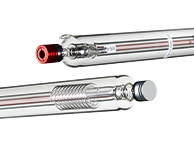
CO₂ laser engravers are the industry standard for a reason: they’re powerful, versatile, and reliable across a wide range of materials. The key feature of a CO₂ laser engraver is that it uses a CO₂-filled tube to generate an infrared laser beam, which is highly effective at interacting with organic materials.
Pros of CO₂ Laser Engravers: Where They Shine
CO₂ laser engravers shine in three main aspects: cutting and engraving non-metal materials, speed/accuracy, and depth control/ clean results.
1. Cutting and Engraving Non-Metals
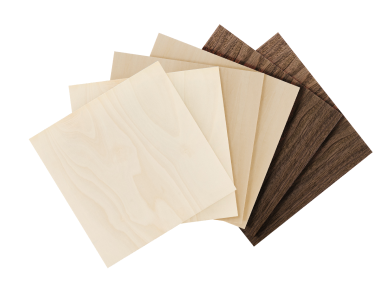
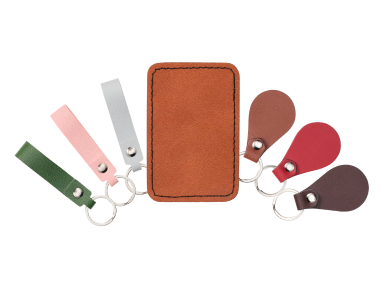
CO₂ lasers are extremely versatile, as they can engrave a variety of non-metallic materials such as wood, acrylic, leather, glass, and even rubber.
Not only is a CO₂ laser engraver compatible with these materials, but it also handles them efficiently. Because they absorb CO₂ wavelengths extremely well, the cuts are cleaner, and the engraving goes deeper.
2. Operating at High Speed and Efficiency
CO₂ machines are generally faster at engraving large areas and better for batch production. This has made them the go-to laser engravers for small businesses, production shops, and Etsy sellers looking to scale up.
3. Depth Control and Clean Results
CO₂ lasers also excel at depth control and providing clean results. If you need deep engraving, clean edges, and consistent output, CO₂ is hard to beat.
Where CO₂ Lasers Usually Fall Short
There are three main limitations with CO₂ laser engravers: cost, space requirements, and compatibility with bare metal. They usually:
- are more expensive upfront
- require more space and ventilation
- and are not ideal for engraving bare metals (without coatings)
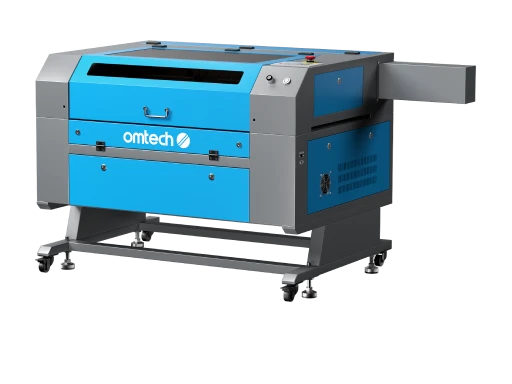
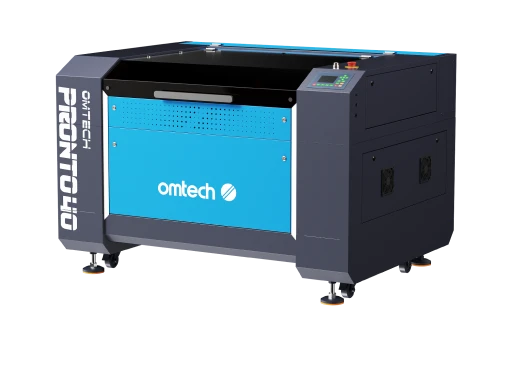
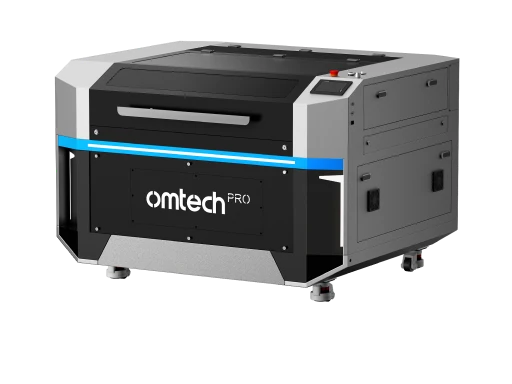
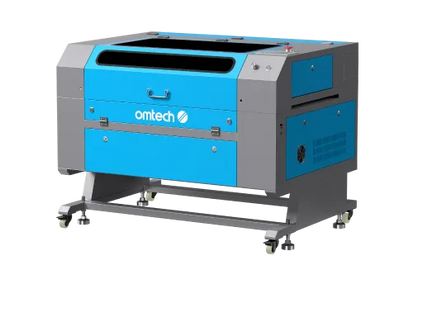
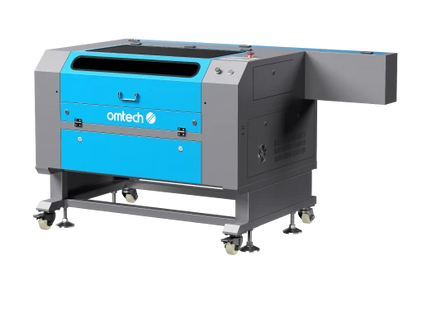
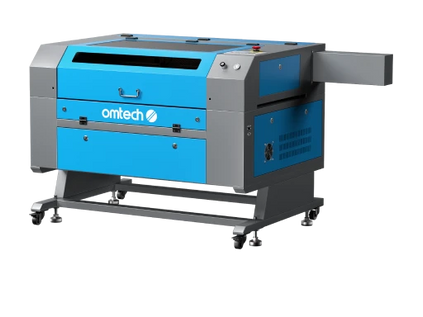
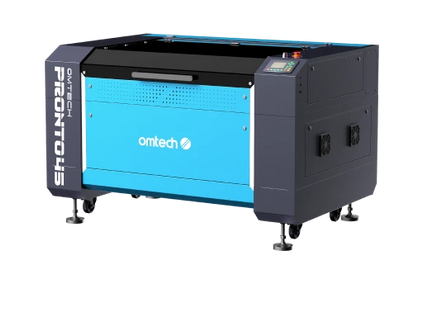
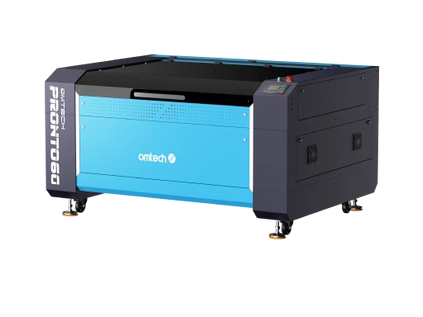
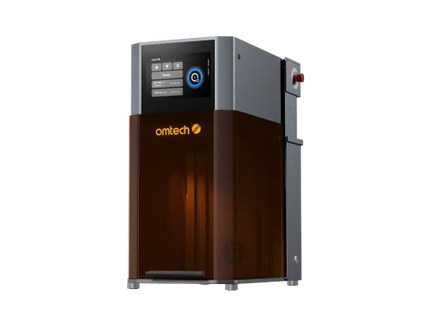
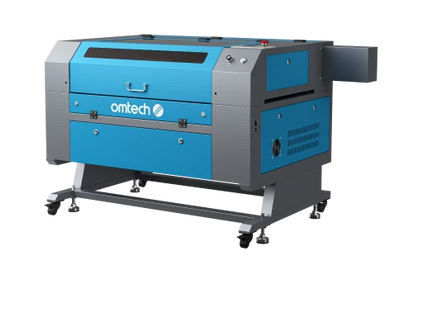
 From 60W to 130W CO2 laser engraver models, the Omtech Pronto series contains some of the most versatile laser engravers for rubber. These laser engravers are known for their robust laser output, speedy and efficient performance, and their expansive work areas for tackling wood projects of every kind.
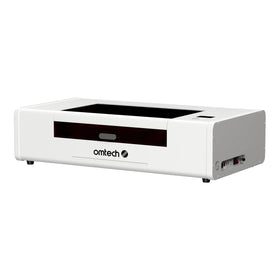
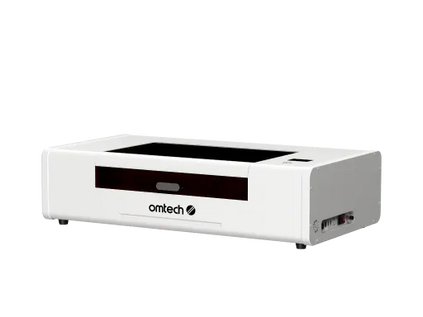
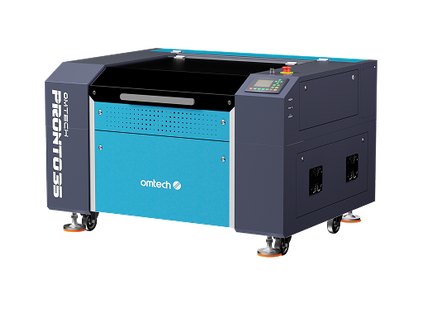
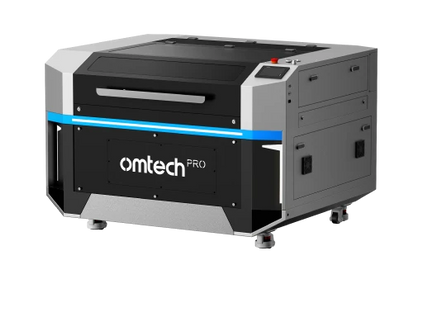
Consider the Omtech Pronto 35 Laser Engraver and Cutter, a beginner model, which has become a favorite for small businesses dealing with rubber.
Diode Laser Engravers: Key Features, Primary Uses, and Pros/Cons
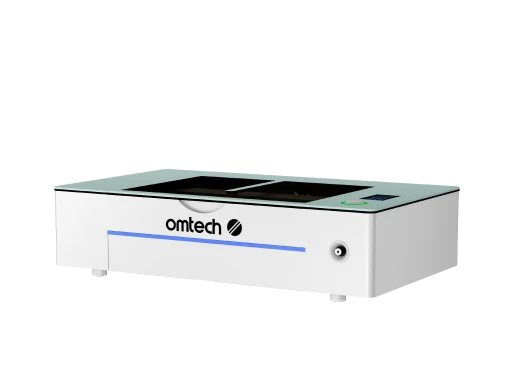
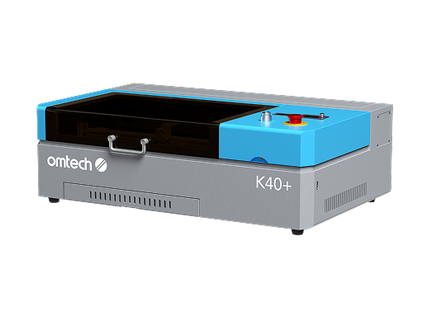
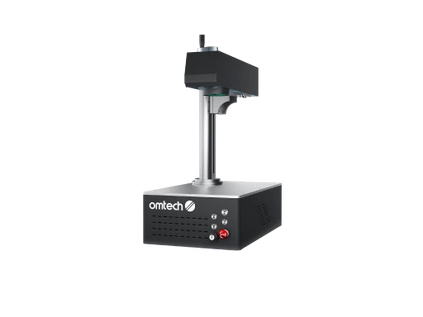
Diode laser engravers are the go-to option for beginners and hobbyists, and for good reason. The key feature of a diode laser is that it uses semiconductor technology to generate a visible (blue) laser beam. This makes them more compact and affordable.
Pros of Diode Lasers: Where They Shine
The key advantage of diode lasers is that they are affordable, compact/portable, and compatible with metal engraving.
- They are affordable and accessible. Diode lasers are affordable in that the upfront cost is lower, and accessible in that the entry point is lower. They are ideal if you are a beginner, a hobbyist, or just a casual user.
- They are also compact and portable. They have a smaller footprint, and they are generally easier to set up at home. Great if you are a DIY creator or trying to set up a laser engraving workspace at home.
- Compatible with metal engraving (surface marking): diode lasers can mark coated metals and even engrave anodized aluminum. Without additional tools and accessories, a CO₂ laser struggles here.
Where Diode Lasers Usually Fall Short
Diode lasers have their own limitations: speed, limited cutting power, and consistency. They tend to have:
- Slower engraving speeds
- Limited cutting power (especially on thick materials)
- Less consistency in demanding materials like acrylic
CO₂ vs Diode Lasers: Key Differences at a Glance
| Feature | CO₂ Laser Engraver | Diode Laser Engraver |
| Laser Type | Gas tube (infrared) | Semiconductor (blue light) |
| Best Materials | Wood, acrylic, rubber, glass | Wood, leather, coated metals |
| Cutting Power | High | Low to moderate |
| Engraving Speed | Fast | Slower |
| Detail Quality | High precision | Good, but less consistent |
| Metal Engraving | Limited (needs coating) | Good for anodized/coated |
| Price | Higher | More affordable |
| Size | Larger | Compact |
| Ease of Use | Moderate | Beginner-friendly |
Choosing Between a CO₂ Laser and a Diode Laser: Key Deciding Factors
There are five main deciding factors to consider if you find yourself torn between choosing a CO₂ laser engraving machine and a diode laser engraving machine:
- The type and nature of the material you intend to work with
- Whether you are mainly cutting or engraving
- Your available budget
- The size/ nature of the workspace you have available
- The volume of the laser engraving work you are dealing with.

1. What Materials Are You Working With?
CO₂ and diode lasers interact differently with materials.
- Choose a CO₂ laser if you mainly work with acrylic, rubber, or glass
- Choose a diode laser if you mainly work with coated metals or light wood engraving.
Generally, CO₂ lasers are great for versatility over different materials, and diode lasers are best for light-duty or niche use.
2. Assess Your Cutting vs Engraving Needs
CO₂ lasers and diode lasers are not equally efficient when it comes to laser cutting. While both can handle laser engraving, a diode laser can only handle it.
- Choose a CO₂ if you need to cut thick materials
- If you are only engraving surfaces, a diode laser is fine
So, choose a CO₂ laser engraver if you do both laser engraving and cutting, and choose a diode laser if you do laser engraving only.
3. Your Budget
Budget, very often, is the main deciding factor, especially for a beginner or a startup. Go for a diode laser if you are on a tight budget, and a CO₂ laser if you are investing in a business with an eye for long-term success. Diode for affordability, CO₂ for long-term ROI
4. Check Your Workspace and Setup Space Requirements
CO₂ laser engraving machines need more space, ventilation, and effort to set them up. Diode lasers are much simpler and are great if you have limited space available.
5. Your Production Volume
Time is money if you’re producing at scale, and you will need a laser engraving machine that is capable of handling bulk production.
- CO₂ lasers are faster and more consistent; ideal for high-volume production
- Diode lasers are ideal for occasional use or small personal (rather than commercial) applications.
If you are a business owner, a CO₂ laser is better for scaling. Diode lasers are preferable for hobby use.
CO₂ vs Diode Lasers: Quick Decision Table
| Factor | Choose CO₂ Laser | Choose Diode Laser |
| Material Variety | Wide range (acrylic, rubber) | Limited range |
| Cutting Needs | Yes | No / minimal |
| Budget | Higher budget | Lower budget |
| Workspace | Dedicated area available | Limited space |
| Production Volume | High | Low to moderate |
| Ease of Use | Moderate learning curve | Beginner-friendly |
Final Thoughts on CO₂ vs Diode Lasers
Objectively speaking, there is no “better” when it comes to CO₂ and diode laser engravers, and that is certainly the wrong approach to take. It is about finding the right tool for your specific needs.
If you want power, speed, and versatility, go with a CO₂ laser. If you want affordability, simplicity, and flexibility for small projects, a diode laser is a solid choice. The key is to make your decision based on what you’ll actually use the machine for, not just specs, and you’ll avoid one of the most common mistakes beginners make.
Consider this detailed comparison of Omtech's best laser engravers and what matters most when choosing a laser engraver.