





Can You Laser Cut MDF?
Not only is it entirely possible to laser cut MDF (Medium-Density Fiberboard), but it is also one of the most commonly used materials for laser cutting. What makes MDF suitable for laser cutting is that it is made from compressed wood fibers bonded with resin, and this compact structure gives it a few advantages:
- It is uniform in density: Unlike natural wood, MDF has no grain. This means consistent laser cutting with no surprises.
- The surface is smoother. A smooth surface is ideal for both laser cutting and engraving, especially if you want clean edges and detailed designs.
- Its is more predictable to work with: Once you dial in your settings, you can replicate the cutting results easily.
This unique structure and suitability for laser cutting and engraving are why you see MDF used in everything from Etsy crafts to commercial product prototypes.
Moreover, it is affordable (cheaper than hardwoods), easy to source, paint-friendly, and extremely versatile for several projects: signs, crafts, prototypes, and more.
What Types of MDF Are Best for Laser Cutting?
As good as MDF generally is, not all MDF is created equal, and the type of MDF you use makes a big difference in how clean and neat your results will be.
Standard MDF sheets, laser-grade MDF, and thin MDF boards are considered by many in the industry as the best for laser cutting and engraving. You get minimal issues working with these, and the cuts are clean and neat.
Best MDF For Laser Cutting
- Standard MDF sheets (1/8" to 1/4"): These are the most commonly used thicknesses and cut easily on most machines.
- Laser-grade MDF: Specifically designed for laser use. It has lower glue content, fewer impurities, and an overall better consistency
- Thin MDF boards (3mm–6mm): Ideal for diode lasers and hobby machines.
MDF That is Not Ideal For Laser Cutting
- Thick MDF (over 1/2"): These are going to be harder to cut cleanly and usually require multiple passes. There is also a higher risk of burning.
- Moisture-resistant MDF: Moisture-resistant MDF usually contains additional chemicals and tends to produce a lot of fumes. Overall, it may not cut as cleanly as standard MDF.
- Low-quality MDF: Low-quality MDF tends to have an inconsistent density with more glue pockets. The edges of your cuts may end up rough or charred.
These MDF types are not impossible to cut, but they are generally harder or not as consistent as the first category. Ideally, you want to stick with thinner, high-quality MDF for the best results, especially if you're just starting out.
 Choosing the Best Laser Cutter for MDF
When it comes to cutting MDF, choosing the right laser cutting machine is crucial. MDF is generally very forgiving, but not every laser machine handles it equally well. Generally, CO₂ laser cutters are best for cutting MDF, and should be the first choice for your MDF projects. However, diode laser cutters can also work, but to a limited extent.
1. CO₂ Laser Cutters: Best for MDF
If you’re serious about cutting MDF, a CO₂ laser cutter/engraver is the gold standard. CO₂ lasers work best for MDF because of their high power output (usually 40W–150W+), and their ability to produce clean, single-pass cuts. They also handle thicker MDF easily and produce smoother edges with less charring. This explains why most businesses and advanced users working with MDF rely on CO₂ lasers.
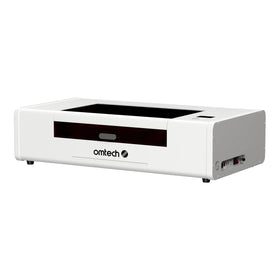
From 60W to 130W CO2 laser engraver models, the Omtech Pronto series contains some of the most versatile laser engravers for wood. These laser engravers are known for their robust laser output, speedy and efficient performance, and their expansive work areas for tackling wood projects of every kind.
Consider the Omtech Pronto 35 Laser Engraver and Cutter, a beginner model, which has become a favorite for small wood businesses.
2. Diode Lasers: Can Handle MDF, but Limited
Diode lasers are generally not the first choice for handling MDF, but they can work if the MDF material is really thin (usually up to ~3–5mm). Take note, however, that the cutting speed will be really slow, and you will certainly have to do multiple passes. There might be some burning at the edges, too.
Generally, diode lasers are used for engraving MDF, not cutting it. But they can do a decent job on smaller, thinner MDF material, especially if you are just a hobbyist.
Explore more on MDF laser cutters.
How to Laser Cut MDF
When cutting MDF with a laser cutting machine, your goal should be to get clean cuts with minimal burn marks and a consistent depth throughout. The good news is that this is generally not complicated to achieve, but you need a good strategy. The key is to focus on airflow, proper settings, and material prep.
General Settings for Laser Cutting MDF
| Power | High (70–100% for cutting) |
| Speed | Moderate to slow |
| Passes | CO₂: usually 1 passDiode: 2–5 passes depending on thickness |
| Air assist | Strongly recommended (reduces burning) |
Notes:
- As with wood, acrylic, and other laser cutting materials, the best settings for cutting MDF vary depending on the machine you are using, but here’s a solid starting point.
- Remember to always run a test cut first before committing to a full project.
Laser Engraving MDF: Step-by-Step Process
- Prepare the MDF: Wipe off dust from your material, and secure it flat on the bed.
- Set the focus correctly: Proper focus is essential for cleaner cuts. Remember, you want the beam to converge into the smallest, most intense point
- Prepare your assist: It helps reduce smoke and char
- Run a test cut: adjust speed/power as needed
- Start cutting: monitor for excessive flames or smoke
- Post-process: Light sanding for edges, and wipe off residue or soot
Best MDF Laser Cutting Ideas and Projects to Try
Once you get comfortable, MDF opens the door to a ton of creative and profitable projects. From custom signs to boxes and shelves, there is pretty much nothing you cannot do with MDF. Here are some of the best MDF laser cutting projects to try:
- Custom signs: The smooth surface of the MDF makes the engraving pop. They are also easy to paint or stain. Great if you are an Etsy seller or a small business owner.
- Layered wall art: MDF cuts clean, which makes it perfect for stacked designs. It creates depth and a premium look, which is great if you are a gift maker or just a creative hobbyist.
- Prototypes and product mockups: With MDF laser cutting, prototypes and product mockups are cheap and fast to produce. Do not underestimate the value of these, as they are used for testing designs before final materials are made. Perfect for entrepreneurs or product designers.
- Jewelry and accessories: MDF is lightweight and thin, easy to paint and seal. Consider jewelry and accessories projects if you are a beginner looking to sell items or a craft-focused creator.
- Boxes and storage organizers: MDF laser cutting is precise and allows tight-fitting joints, which means you can make boxes that are strong enough for structural purposes. This is a great project for small packaging businesses or workshop organizers.
MDF vs Plywood For Laser Cutting
| Feature / Factor | MDF (Medium-Density Fiberboard) | Plywood |
| Cutting Ease | Very easy | Moderate (varies by quality) |
| Edge Quality | Smooth but slightly charred | Can be uneven due to grain/glue |
| Consistency | Highly consistent (no grain) | Inconsistent layers and grain |
| Detail Capability | Excellent for fine detail | Good, but can splinter |
| Strength | Moderate | Strong and durable |
| Thickness Handling | Best at thin–medium sheets | Handles thicker cuts better |
| Burn/Char Risk | Medium (dark edges) | Higher (glue layers burn unevenly) |
| Fume Concerns | Moderate (resins/glue) | Moderate–high (adhesives) |
| Finish Options | Excellent for painting | Good for staining/finishing |
| Cost | Low | Medium |
| Best Use Cases | Crafts, signs, prototypes | Furniture parts, structural items |
- Overall, MDF is better if you want a cheap, reliable material with a smooth surface for cutting that almost guarantees consistent cuts every time.
- Plywood is more expensive, but it is better if you are working on projects that require more strength and durability, with parts that are more structurally solid, like boxes, furniture, etc. It also has that natural wood look.

Final Thoughts on Laser Cutting MDF
MDF is one of the easiest and most practical materials you can use for laser cutting. It’s affordable, predictable, and incredibly versatile, whether you’re making simple crafts or building products to sell. If you match the right MDF, the right machine, and the right settings, you can get clean, professional results every time.
You might also want to explore our complete guide on laser cutting MDF.