








Everything You Need to Know About UV Printing

Known for producing bold colors, crisp detail, and premium finishes, UV printing delivers eye-catching results on everything from packaging and promotional items to signage and specialty materials. If you’re looking to expand your business into new revenues, UV printing is the way to go. With instant curing, long-lasting durability, and the ability to print on virtually any surface, UV printing gives businesses a competitive edge.
In this guide, we’ll break down everything you need to know about UV printing—how it works, what materials it supports, how durable it really is, and when it makes sense for your business or creative workflow. Whether you’re new to UV printing or exploring ways to expand your production capabilities, this article covers the fundamentals in a clear, practical way.
What Is UV Printing?
UV printing is a digital printing process that uses ultraviolet (UV) light to instantly cure specially formulated inks as they are deposited onto a surface. Instead of drying through evaporation or being absorbed into the material, UV inks undergo a chemical hardening reaction the moment they are exposed to UV light.
Because the ink cures instantly on the surface, it does not spread or soak in. This allows UV printing to produce exceptionally sharp details, vibrant color saturation, and durable finishes on materials that traditional printing methods cannot handle—especially rigid and non-porous substrates such as acrylic, glass, wood, metal-coated surfaces, plastics, and ceramics.
At its core, UV printing enables direct-to-surface printing with minimal post-processing, making it well-suited for signage, promotional products, packaging, and specialty applications where both precision and durability matter.
How UV Printing Works
UV printing relies on several integrated systems working together in real time to create a finished print. The three most important components are the printhead, the UV-LED curing system, and the ink supply system, all coordinated by dedicated control software.
Printhead: Precise Ink Deposition
The process begins at the printhead, which functions similarly to a high-resolution inkjet system. As the material passes beneath it (or as the printhead moves across the material), microscopic droplets of UV-curable ink are precisely deposited onto the surface. These inks are typically available in CMYK, with many systems also supporting white ink and clear ink for layering, opacity, and texture effects.
The printhead controls dot size, placement, and layering accuracy, allowing for fine details, smooth gradients, and sharp edges—even on uneven or dark materials.
UV-LED Curing System: Instant Ink Hardening
Positioned immediately next to the printhead is the UV-LED curing system. As soon as ink droplets land on the surface, UV LEDs emit ultraviolet light that triggers a photochemical reaction within the ink. This reaction causes the ink to polymerize and harden instantly.
Because curing happens on contact, the ink does not have time to bleed, smear, or spread. This instant hardening is what allows UV printers to print cleanly on slick, rigid, or non-absorbent surfaces where traditional inks would fail. It also eliminates drying time, enabling faster production and immediate handling of finished prints.
Ink Supply System: Stability and Consistency
UV inks are stored and delivered through a controlled ink supply system designed to maintain consistency and prevent settling—particularly for white ink, which contains heavier pigments. Many systems include ink circulation or agitation to keep pigments evenly suspended, ensuring consistent opacity and color throughout long print runs.
A stable ink supply is critical for maintaining print quality, preventing clogging, and ensuring accurate layering when printing white ink underbases or clear varnish effects.
System Coordination: From File to Finished Print
All of these components are synchronized by the printer’s control software. The software manages image data, ink layering order, curing timing, and print speed to ensure each ink layer is applied and cured correctly. This coordination allows for advanced effects such as multi-pass printing, raised textures, spot varnish, and printing on transparent or dark materials.
The result is a fully cured, durable print that exits the machine ready for use—without additional drying, coating, or finishing steps.
UV Printing vs. Traditional Inkjet Printing
If you’re wondering: “Can I use my home Epson inkjet printer to print directly onto wood or phone cases?” the answer is no.
Traditional inkjet printers use water-based or dye inks that rely on absorption into paper. These inks cannot adhere to rigid or non-porous surfaces, which means prints will smear, bead up, or fail entirely on materials like wood, plastic, or metal.
UV printers are designed specifically for these applications. Their inks cure instantly on the surface, allowing direct printing onto items like phone cases, signage, plaques, and packaging—something a home inkjet simply isn’t capable of doing.
UV Printing vs. Sublimation
UV printing and sublimation are often compared, but they serve different purposes. Sublimation requires heat, pressure, and specially coated materials or polyester fabrics. It excels at soft goods like apparel and fabric-based items.
UV printing does not rely on heat transfer and can print directly onto rigid objects without coatings. This makes UV printing ideal for items such as acrylic signs, wood panels, awards, promotional products, and phone accessories.
In short, sublimation is best for textiles and coated blanks, while UV printing dominates rigid and specialty materials.
Can You UV Print on Sublimation Blanks?
Yes. UV printing works well on many sublimation blanks, especially coated items like plaques, phone cases, and drinkware. UV printing bypasses heat transfer entirely and allows full-color printing without sublimation limitations.
Spot UV and Specialty Effects
What Is Spot UV Printing?
Spot UV printing is a finishing technique where clear or glossy UV varnish is applied only to selected areas of a printed design. Instead of coating the entire surface, the printer highlights specific elements—such as logos, text, or patterns—creating contrast between matte and glossy areas.
What Is UV Varnish in Printing?
UV varnish is a transparent, UV-curable ink used to add gloss, texture, or raised effects. It can be applied flat for subtle shine or built up in layers to create embossed, tactile designs.
How to Do Spot UV Printing
Spot UV printing typically uses layered design files. One layer contains the color artwork, while another defines where the varnish should appear. The printer applies the color layers first, then selectively adds and cures the UV varnish for a premium, dimensional finish.
What Can a UV Printer Print On?
UV printers are known for their ability to print directly onto a wide range of materials. Below are some of the most common materials used in UV printing, along with their typical applications in real-world production.
Acrylic
Acrylic is one of the most popular materials for UV printing due to its smooth surface, optical clarity, and professional finish. UV printers are widely used to print signage, display panels, awards, plaques, photo blocks, and branded décor directly onto acrylic sheets. The ink adheres cleanly to the surface, producing vibrant colors and sharp text. With support for white ink and back-side (second-surface) printing, UV printing on acrylic can create a glass-like depth effect, making it especially popular for high-end signage and corporate displays.
Wood
Wood is commonly used in UV printing for decorative, rustic, and branded products. UV printers can print directly onto plywood, MDF, bamboo, and sealed hardwoods, allowing for full-color graphics on natural surfaces. Typical products include wooden signs, plaques, wall art, coasters, promotional displays, and customized décor. Because UV ink sits on the surface rather than soaking in, it preserves the wood grain while adding crisp graphics. Lightly sealed or pre-treated wood generally produces the most consistent results.
Glass
UV printing on glass is ideal for applications where durability and visual impact are important. Common uses include decorative panels, custom mirrors, signage, awards, and branded glassware (non-food-contact areas). The instant curing process allows ink to adhere to glass surfaces that would otherwise repel liquid ink. For added durability, prints are often placed on the back side of glass, allowing the material itself to protect the artwork from scratches and wear.
Metal-Coated and Treated Metals
While raw, untreated metal can be challenging, UV printers work extremely well on metal-coated or pre-treated surfaces such as anodized aluminum, coated steel, and painted metal panels. These materials are frequently used for nameplates, control panels, signage, labels, industrial tags, and decorative metal art. UV printing produces sharp, high-contrast graphics and text, making it ideal for functional and industrial applications where legibility and longevity are critical.
Plastics
UV printing supports a wide range of plastics, including PVC, ABS, polycarbonate (with limitations), acrylic plastics, and many treated polymer surfaces. This versatility makes plastics one of the most common UV printing materials for phone cases, electronic housings, promotional products, signage, and custom enclosures. Because UV ink cures instantly, it resists smudging and provides excellent adhesion on properly prepared plastic surfaces. Surface compatibility can vary, so testing is often recommended for specialty plastics.
Ceramics and Tiles
Ceramic materials such as tiles, mugs (decorative use), and coated ceramic surfaces are frequently used in UV printing for interior décor, custom signage, and personalized gifts. UV printers can produce detailed images, logos, and patterns directly onto ceramic tiles for murals, backsplashes, and decorative installations. While UV prints on ceramics are durable, they are typically intended for decorative or light-use applications rather than food-contact or dishwasher-safe use unless additional coatings are applied.
Leather and Synthetic Leather
UV printing on leather and faux leather is popular for producing customized accessories and branded goods. Common products include wallets, notebook covers, patches, labels, bags, and promotional items. UV ink adheres well to treated leather surfaces and allows for full-color designs that go beyond traditional embossing or foil stamping.
Can a UV printer print on fabrics besides leather? Because UV ink cures rigidly, this method is best suited for leather items that do not flex excessively. For apparel, methods like DTF, DTG, or sublimation are better suited.
Coated Paper and Specialty Media
UV printing is also widely used on coated paper, cardstock, packaging prototypes, and specialty media. The instant curing process prevents ink from bleeding into the paper fibers, resulting in sharp text and rich colors. This makes UV printing ideal for premium packaging samples, short-run marketing materials, labels, and specialty prints where visual quality matters more than large-volume efficiency.
Treated and Specialty Substrates
In addition to common materials, UV printers can handle many treated or primed substrates, including composites, laminates, stone-like materials, and specialty panels. As long as the surface allows ink adhesion and curing, UV printing opens the door to highly customized, short-run production across industries such as signage, décor, industrial labeling, and product personalization.
Can You UV Print on Silicone?
While UV printing on silicone is possible, it often requires specific coating or dedicated silicone inks to prevent a chemical 'poisoning' effect that inhibits the curing process. Without this surface preparation, silicone’s non-stick properties make adhesion extremely challenging. It is also important to note that many materials marketed as 'silicone' are actually TPU, which is naturally compatible with UV printing and does not require these specialized treatments.
Advantages and Disadvantages of UV Printing
UV printing offers instant curing, high durability, vibrant color output, and unmatched material versatility. It enables fast turnaround, minimal waste, and premium finishes such as spot gloss and texture effects.
However, UV printers require specialized equipment and a higher upfront investment than basic inkjet systems. UV printing is also not ideal for flexible fabrics or food-contact applications unless certified inks and coatings are used.
Durability and Performance
Is UV Printing Permanent?
UV printing is considered semi-permanent to permanent, depending on the surface and environment. On rigid materials like acrylic or metal, prints can last for years with minimal degradation.
Does UV Printing Fade?
UV prints resist fading better than many traditional prints. However, prolonged exposure to direct sunlight can eventually cause some fading, especially outdoors. Adding a varnish coating can further extend lifespan.
Is UV Printing Waterproof?
Yes. Once cured, UV ink is waterproof and suitable for items exposed to moisture.
Is UV Printing Dishwasher Safe?
UV printing is not inherently dishwasher safe. While water-resistant, repeated exposure to heat and detergents can degrade prints over time. Hand washing is generally recommended.
Safety, Cost, and Environmental Impact
Is UV Printing Safe?
UV printing is safe when proper precautions are followed. Modern UV printers are designed with shielding to prevent UV exposure, and operators should follow ventilation and safety guidelines.
Is UV Printing Environmentally Friendly?
Compared to solvent-based printing, UV printing produces very low VOC emissions and requires less energy for drying, making it a more environmentally friendly option.
Is UV Printing Expensive?
UV printers typically require a higher upfront investment, but operating costs can be competitive. Reduced waste, instant curing, and expanded material options often offset the initial cost over time.
Is UV Printing Food Safe?
UV printing is not food safe by default. Printed surfaces should not come into direct contact with food unless certified food-safe inks and coatings are used.
Does UV Printing Smell?
UV printing is generally low-odor compared to solvent-based printing. Because the inks cure instantly under UV light, there’s no long “drying” period where solvents evaporate into the air.
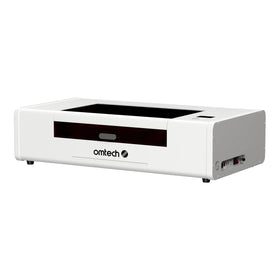
High-quality systems—like the OMTech Spectra UV Printer—include built-in air purification systems that help capture and filter any residual fumes or particulates during printing. This makes UV printing more comfortable and suitable for small studios, classrooms, and indoor workspaces where ventilation may be limited.
How to Print UV DTF Transfers
UV DTF printing involves printing UV designs onto a special film with adhesive layers, then transferring the design onto curved or irregular objects. This approach combines UV durability with transfer flexibility.
UV Printing and Laser Engraving: A Powerful Combination
UV printing pairs exceptionally well with laser engraving and cutting. Lasers can cut shapes, engrave textures, or etch surfaces, while UV printers add full-color graphics, branding, and spot effects.
Together, they enable highly customized products such as engraved signs with printed logos, layered acrylic displays, control panels, and premium packaging—combining precision cutting with durable, high-resolution color.
Final Thoughts
UV printing combines speed, durability, and creative flexibility into a single, powerful technology. Whether you’re producing signage, promotional items, or premium decorative products, UV printing offers professional results with minimal post-processing.
If you’re ready to bring high-speed, high-precision UV printing into your workflow, the OMTech Spectra UV Printer is designed to deliver reliable, production-ready performance—making advanced UV printing accessible for creators and growing businesses alike.


![[Latest] Diode Laser vs. CO2 Laser vs. Fiber Lasers - Complete Guide](http://omtech.com/cdn/shop/articles/diode-vs-co2-vs-fiber-lasers_cad89d19-589c-4837-a019-48d69698f6f5.jpg?v=1789898499&width=200)

