






DTF Printer for Shirts: Everything You Need to Know Before Buying

If you’re starting a custom apparel business or looking to expand beyond basic screen-printing or embroidery, DTF (Direct-to-Film) printing is one of the most versatile and accessible ways to print on t-shirts. Unlike older methods that require heavy setup or are limited to specific fabric types, DTF offers flexibility, quality, and scalability—making it especially attractive for small businesses, side hustles, or print-on-demand shops.
How DTF Printing Works: From Design to Completion

Understanding the basic workflow helps you appreciate why DTF is powerful:
-
Design to Film: The artwork is printed on a special PET film, using CMYK colors. Then a layer of white ink (underbase) is applied, which ensures vibrant colors and opacity—especially important on dark garments.
-
Apply Adhesive Powder: While the ink is still wet, a fine hot-melt adhesive powder is sprinkled onto the film, bonding only to the inked areas. Excess powder is shaken off.
-
Curing/Pre-Heat Film: The film passes through a curing oven (or similar heat stage) to melt/fuse the adhesive and fix the ink to the film.
-
Heat Press Transfer: The film is positioned face-down on the t-shirt (or garment), then pressed under controlled heat, pressure, and time to permanently bond the design to the fabric.
-
Peel & Post-Press: After pressing, peel off the film (hot-peel or cold-peel depending on film type). Many workflows include a second press (post-press) to improve feel and ensure durability.
Because of this multi-step process, DTF gives you reliable and vibrant results, even for color-heavy or dark-fabric t-shirts.
Why a DTF Printer Is a Smart Foundation for a T-Shirt Business
-
Low startup barrier: With a DTF printer and heat press (plus inks, film, adhesives), you can start producing custom t-shirts without costly screen-printing setups or large upfront runs.
-
Flexibility: Because DTF handles many fabric types, color schemes, and garment types, you’re not locked into one niche — you can offer cotton tees, poly-blend hoodies, fleece sweatshirts, etc.
-
On-demand friendly: Print when orders come in — ideal for small-batch runs, custom orders, or print-on-demand business models.
-
Quality & durability: Vibrant designs that hold up wash after wash can help build brand reputation and customer loyalty.
-
Creative potential: From complex graphics, photographic prints, gradients, and multicolor artwork — DTF lets you create shirts that stand out from basic logos or screen-printed graphics.
Compared to other apparel printing methods, such as DTG or sublimation, DTF printers offer a strong return on investment with their low setup barrier and printing versatility. For more information on DTG printing versus DTF printing, or DTF printing versus screen printing, check out our articles on these topics.
What DTF Does Well
-
Works across many fabrics: DTF isn’t limited to cotton. It works on cotton, polyester, blends, nylon, fleece—even leather or some synthetics—giving you flexibility in the apparel lineup you offer.
-
Vibrant, durable designs: Because DTF prints utilize a white-ink underbase, CMYK inks, adhesive powder, and heat pressing, the result is bold, vivid colors on both light and dark shirts—and prints tend to resist fading, peeling, or cracking through multiple washes.
-
Great for full-color, detailed art: DTF can reproduce intricate designs, gradients, and multicolor graphics with strong clarity, which can be expensive or difficult with traditional screen printing or other transfer methods.
-
Low barrier to entry: Because you only need a printer, film, adhesive powder, and a heat press—no screens, no heavy pre-treatment—DTF is accessible for startups or small-scale operations.
In short: DTF gives you flexibility in fabric, design, and production size—great for custom orders, small batches, or even growing a full-fledged t-shirt brand.
What to Know When Choosing a DTF Printer for Shirts
Not all DTF printers are created equal, and choosing the right machine can significantly affect productivity, print quality, and long-term costs.
-
Print quality and white ink performance should be a top priority. A reliable white ink circulation system helps prevent clogging and ensures consistent opacity. Resolution and color accuracy also matter, especially for branding and photographic designs.
-
Workflow compatibility is another key factor. Look for printers that integrate smoothly with RIP software and support common file formats. Ease of maintenance, automated cleaning features, and accessible replacement parts all contribute to uptime and reliability.
-
Production scale should match your business goals. Entry-level machines may be sufficient for low-volume operations, but growing businesses benefit from wider print widths, faster output, and robust construction.
-
Consider support and ecosystem. A strong manufacturer provides not only hardware, but also training resources, consumables, and upgrade paths as your business evolves.
Top DTF Printer for Shirts in 2026

As DTF technology continues to mature, the best machines are those that balance professional performance with approachability. For 2026, OMTech’s DTF printer stands out as a top choice for serious t-shirt businesses.
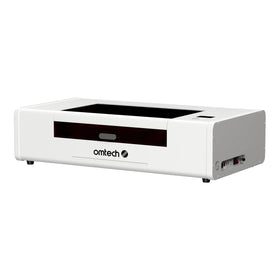
The OMTech Aurora is designed with production reliability and user accessibility in mind. It offers consistent white ink output, sharp color reproduction, and stable operation for daily use—making it well-suited for both startups and established shops.
One of OMTech’s biggest advantages is its bundle-based approach. Instead of requiring users to source components separately, OMTech offers complete DTF solutions that include the printer, curing equipment, heat press, inks, film, and adhesive powder. This simplifies setup and helps businesses get into production faster with fewer compatibility issues.
Key benefits of choosing the OMTech Aurora DTF printer include:
-
Reliable white ink circulation for reduced downtime
-
Fast printing speed (50 ft²/h) and larger effective printing area (14 inches)
-
Strong color consistency across long print runs
-
Support for a wide range of garment types
-
Bundles tailored for different production scales
-
Accessible customer support and educational resources
For businesses planning to scale in 2026, OMTech’s DTF printer options provide a clear path from first print to full production without unnecessary complexity. Whether you’re launching a new brand or expanding services, these systems are built to grow with your operation.
Final Thoughts
DTF printing has reshaped the custom apparel industry by making professional-quality t-shirt production more accessible than ever. With its ability to handle diverse fabrics, vibrant full-color designs, and flexible workflows, DTF is no longer just an alternative—it’s often the foundation of a modern t-shirt business.
If you're ready to start printing shirts with professional quality—and grow your business with confidence—the OMTech Aurora offers the ideal balance of performance, reliability, and beginner-friendly design. Explore the Aurora and bring your custom apparel goals to life.


![[Latest] Diode Laser vs. CO2 Laser vs. Fiber Lasers - Complete Guide](http://omtech.com/cdn/shop/articles/diode-vs-co2-vs-fiber-lasers_cad89d19-589c-4837-a019-48d69698f6f5.jpg?v=1789898499&width=200)

