







Single vs. Dual Printhead UV Printers: Which is Better?
One of the major decisions you have to make when you start in UV printing is what kind of UV printer you need. What makes choosing the right UV printer is not just the obvious issue that there are so many different models, brands, and designs out there, but also the fact that you must consider the present and future needs.
So, once you settle on the model you need, the next question is: will you choose a single- or dual-head model? The answer is not always straightforward: dual-head UV printers offer faster speeds, can handle white ink better, etc., but single-head UV printers are more affordable and sufficient for basic rigid items.
The best way to decide is always to thoroughly consider the pros and cons of each, and make your decision with a view to what you need now and what you will possibly be needing down the line.

Single vs. Dual Head UV Printers: 4 Key Factors to Consider When Choosing
1. Print Speed and Efficiency
The main advantage of a dual-head UV printer is that it can run parallel or stacked passes, which saves you a significant amount of time and makes your work much faster. Put simply, you have many more avenues to make money with a UV printer if it is a double-head model
When I have my dual-head printer simultaneously separating color/varnish and white channels (across the two printheads), for example, a large print job is done about 10-15 minutes faster. Overall, using a dual-head printer can save you about 25% to 40% of the time you would have taken on a single-head machine.
A single-head UV printer, on the other hand, is much slower because it handles all channels sequentially on a single carriage. If you are running a multi-layer or heavy white ink project, it is even slower and more tedious with a single-head UV printer.
2. Ability to Handle Specialty Inks and Substrates
A dual-head UV printer gives you so much more flexibility when it comes to extra ink channels, which ultimately means you can work with a wider variety of materials and attempt many more projects than you ordinarily would with a single-head UV printer. With a dual-head printer, you get:
- Flexible White (for leather, canvas, and bendable items without cracking)
- Fluorescent Inks (Red and Yellow for neon/blacklight effects).
Having fluorescent inks is a special advantage because, though it does not expand your standard CMYK gamut, it allows you to be able to print on specific niche products like display cartons, cosmetic containers, transparent stickers, and even security and anti-counterfeiting items like banknotes and official certificates. There are just so many more things you can make with a UV printer when you have flexible ink channels.
With a single-head UV printer, on the other hand, you are pretty much limited to the standard CMYK, standard white, and varnish channels. CMYK ink is good for a starter, but eventually it may restrict the size and shapes of products you can print, limiting you to rigid, flat items. This is something to consider, especially if you envision yourself doing UV printing in the long run.
3. 3D Embossing and White Opacity
With a dual-head UV printer, you get better opacity for dark substrates and, if you are working with 3D raised textures, your build-up is a lot faster, with better results. Here’s why that happens: the dual-head configuration of the machine doubles the white ink jetting capacity, so you get twice the ink within the same period of time.
If you work on raised textures up to 5mm, for example, you can add impressive depth and texture to your designs with stackable layers.
4. Cost and Maintenance
When it comes to costs, single-head UV printers are much more affordable: not just because they have a lower initial purchase price (usually about $2500-$3500), but also because they have fewer parts to replace or maintain over time. They cost less both in the short and long run.
A dual-head UV printer usually costs anywhere from around $3,000 to $4,000+. The price depends on the desktop model, but they are usually about $1000 more expensive than single-head printers. Besides, they may also be more costly to maintain in the long run, especially if you do not pay close attention.
The good news, however, is that every decent model from a good manufacturer comes with a complete UV printer maintenance guide with troubleshooting tips and recommended solutions for most problems. Also, you get a good warranty when you buy a dual-head UV printer.
Single vs Dual-Printhead UV Printers: Differences at a Glance
|
Feature |
Dual-Head UV Printer |
Single-Head UV Printer |
|
Print Speed and Efficiency |
Can save approximately 25–40% of printing time by processing ink channels in parallel. |
Complex, multi-layer, and white-ink-heavy jobs are slower. |
|
Specialty Inks and Substrates |
Offers greater flexibility for specialty inks, including flexible white and fluorescent inks. |
Generally limited to standard CMYK, white, and varnish channels. |
|
3D Embossing and White Opacity |
Provides greater white ink output for improved opacity on dark substrates. |
Slower buildup of raised textures and potentially less efficient white ink layering. |
|
Initial Purchase Cost |
Approximately 3,000–4,000+, depending on the model. |
Approximately 2,500–3,500 |
|
Maintenance Costs |
May cost more to maintain over time due to additional components and maintenance requirements. |
Generally cheaper to maintain because it has fewer components. |
|
Best For |
Businesses prioritizing production speed, specialty applications, premium finishes, and complex designs. |
Beginners, small businesses, and users prioritizing affordability and simpler printing projects. |
In summary, Single-head UV printers are great in the sense that they are:
- Much more affordable than dual-head UV printers
- Easier to learn and more accessible for beginners
- Less costly to maintain in the long run
However, you must cycle through color, white, and varnish layers sequentially, which slows down print times and increases the risk of layer shifting on complex jobs.
Dual-Head UV printers, on the other hand, are much more advanced and better for speedy and bulk printing because they are:
- Faster
- Handle white ink better
- Have specialty ink channels (white and fluorescent colors)
However, the upfront machine cost is higher, and replacing printheads later on is more expensive.
3 Ideal Scenarios To Choose a Single-Printhead UV Printer
There are three specific scenarios where it makes more sense to choose a single-head UV printer over a double-head UV printer:
- You are a beginner, or just doing UV printing as a hobby: A single-head UV printer is much more affordable and less complicated to learn. You can go from beginner to intermediate in a matter of a month or two.
- Your business is still very small, and order volume is low-to-moderate: If you are just starting your business, and you are at the beginning stage where you are running small batches and/or doing a limited number of custom batches, don't rush to get a dual-head UV printer, even if you have the money. Wait until business picks up and stays consistently up for a while, then you can go for a dual-head.
- You have limited operating space, or not enough time/resources to maintain the machine: A single-head UV printer is much easier to maintain and requires fewer resources. One printhead means a simpler setup, fewer parts to calibrate, and lower replacement costs if the head gets damaged.

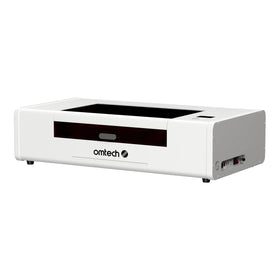
OMTech Spectra Single Printhead UV Printer: Highly Recommended For Beginners and Small Businesses.
The single-printhead model of the OMTech Spectra A3+ Flatbed UV Printer is an excellent machine for you to get into UV printing, and even start building a profitable UV printing business without taking on the extra cost and complexity of buying, using, and maintaining a dual-printhead model.
The single-head model comes with all the basic features included in the dual-head model:
- An Epson F1080 Printhead (CMYKWW + Varnish) with 1,080 nozzles and a minimum droplet size of just 4.5 pL, delivering resolution up to 720 × 1,440 DPI.
- Achieves 99% true colour reproduction with one-click gloss and embossing for depth and vibrancy.
- An expanded area (13.78" × 17.72") unlocks more creative space beyond standard A3.
This machine supports a more cost-effective approach to UV printing with a 13.8 × 17.7-inch print area and white ink. If you are an entrepreneur seeking a practical starting point to test demand for personalized merchandise before investing in higher production capacity, this is the model for you.
3 Ideal Scenarios To Choose a Dual-Printhead Printer
There are about three scenarios where it is absolutely worth it to go for a dual-head UV printer over a single-head model. In fact, if you find yourself in any of the following situations, it is better to wait, save up, and buy a dual-head UV printer, even if you cannot afford it at the moment:
- You run a commercial or high-volume business: In a booming UV printing business where you are processing many orders every day, you absolutely need a machine with dual-head UV printer. Dual technology means multiple ink channels (such as color and white) fire at the same time, which drastically increases speed and throughput.
- If you rely heavily on white ink or special effects. A dual-head setup enhances effective jetting capacity for white ink and eliminates constant print-mode switching. The results are much better, and production is more efficient.
- You need 3D textures or varnish layers fast: A dual-head UV printer handles multi-layer printing, raised braille/textures, and clear gloss varnish much faster and with better alignment accuracy.
Recommended Dual Head Printer: The OMTech Spectra A3+ Flatbed UV Printer — Dual Printhead.
The dual-head variant of the OMTech Spectra A3+ UV printer is a strong choice if you are an entrepreneur who is ready to prioritize productivity and take on more customer orders.
It features two Epson F1080 printheads to support efficient printing workflows, making it easier to handle larger order volumes and grow a custom-printing business without immediately needing a larger machine. This dual-head version also supports a varnish channel for glossy finishes and textured, raised designs up to 5 mm, giving you more opportunities to offer premium products that can command higher prices.
You also get a 13.8 × 17.7-inch print area, automatic printhead maintenance, and support for materials such as acrylic, wood, leather, metal, and glass, making it a versatile option for entrepreneurs looking to build a custom-printing business with greater production capabilities
Choosing Between a Single and Dual Printhead UV Printer: Why The Target Product/Material Also Matters
Price and preferences certainly play a huge role in whether you should go for a single- or dual-head printer, but those should not be the only two factors to consider. There are some scenarios where it would be worth it to wait, save up the extra $1000 dollars to get a UV printer, and some scenarios where, even if you have the money, it is worth starting with a single-head UV printer. It all comes down to two factors:
- What kind of products you plan to make (phone cases, leather goods, signage, cylindrical/rotary items)?
- Whether you are printing for a hobby/side hustle or full-time production
Single vs Dual Printhead UV Printers: Compatibility With Different Products
The products you plan to make should be one of the most important factors you consider when choosing between a single- and double-head UV printer: the UV ink formulations must chemically match the mechanical flexibility of your substrate. Here are two reasons why:
- Standard UV inks cure into a rigid plastic layer: if you print them on materials that bend, the ink will instantly crack and peel.
- If you are working on multi-layered tactile designs, you need a lot of ink: usually more than a single-head printer can provide at a given time. I have tried my hand at ADA-compliant bathroom signs with raised Braille dots, and they always need a massive ink throughput to build physical height. For designs like these, you need a dual-head UV printer.
Single vs. Dual-Printhead UV Printers for Different Products
| If You Plan to Make... | Best Printer Model | Why |
| Rigid items (Acrylic signs, wood plaques, glass, ceramic coasters, metal blanks, hard plastic phone cases) | Single-Head UV | Standard rigid CMYK + White + Varnish ink sets work perfectly. A single head sequentially applying these layers is entirely sufficient. |
| Flexible and bendable goods like leather wallets, canvas bags, faux leather journals, silicone bands/pouches) | Dual-Head UV | A dual-head model allocates the second head to Flexible White (FW) ink, which allows the cured print to stretch, bend, and torque without cracking. |
| 3D Embossed / Textured Goods (Tactile Braille signs, thick raised logos, oil painting replicas, textured awards) | Dual-Head UV | Building a 7mm 3D texture requires stacking dozens of white ink layers. A dual-head jets white ink from multiple parallel channels simultaneously |
| Glow and novelty items like concert merchandise, nightclub signs, neon party favors, blacklight-reactive decals. | Dual-Head UV | Dual-head printers support dedicated channels for Fluorescent Yellow and Fluorescent Red, allowing you to tap into high-margin specialty markets. |
| UV DTF ticker transfers: Decals for curved surfaces like tumblers, helmets, or irregular objects) | Either Model (Dual for speed) | Both printers can print onto UV DTF adhesive film. However, a dual-head setup handles the film volume much more efficiently. |
Choose a Single-Head UV Printer if your product catalog consists strictly of flat, hard objects (like wood, acrylic, or metal tokens), and you are primarily printing logos, text, or standard flat images. It will save you upfront capital ($1,000+ less) and significantly cut down on your weekly ink flush and printhead capping maintenance.
Choose a Dual-Head UV Printer if you want to offer leather goods, canvas accessories, or silicone items. It is also the correct choice if heavily raised 3D texturing is a core selling point of your business, as a single head will bottleneck your daily production speeds on dense, multi-layer texturing jobs.
Final Thoughts on Choosing Between a Single- and Dual- Printhead UV Printer.
In conclusion, choosing between a single-head and dual-head UV printer ultimately comes down to your budget, production needs, and business goals. However, a single-head printer is generally a more sensible starting point if you want to learn UV printing, test market demand, and keep your initial investment manageable. A dual-head printer, on the other hand, is worth considering if you anticipate higher order volumes or want to offer more specialized finishes. The best choice is the printer that meets your current needs while leaving room for your business to grow.
You may also be interested in spot UV printing and whether this is one of the creative directions you can explore with a flatbed UV printer.