







20+ Things You Can Make With a UV Printer
The main reason why people see UV printing as a total game-changer is that with a UV printing machine, the ink cures instantly under LED light and bonds directly to the surface of the material you are printing on. What makes this so great is that you don't need sublimation coatings or transfer papers; it opens up a wide category of materials you can print on, even "unprintable" raw, rigid, or non-porous materials.
This instant curing is the key difference from other print methods: because the UV light hardens the ink the moment it hits the surface, there's no drying time, no coating prep, and none of the smearing risk that comes with solvent- or sublimation-based printing. UV-printed pieces can go straight from the machine to packaging
One way to know what you can make with your UV machine is by observing what others are doing with theirs. That was certainly the approach I took when I got my first UV printer, and it gave a good idea of what to begin with. Nowadays, the most popular and profitable things people are making with UV printers, especially, I have noticed, with the new maker-focused desktop UV machines, generally fall into five clear categories:
- High-margin custom merch and gifts
- High-texture 3D effects
- Custom trading cards
- Leather and faux-leather goods
- Coloring 3D prints and miniatures
Category#1: High-Margin Custom Merch and Gifts
If you are mainly using your UV printer for business, one of the best uses you can put it to is making high-margin custom merchandise and gifts. Remember, you can drop almost anything flat onto the print bed, and this is precisely what makes these machines so ideal for a side hustle. Here are four custom merch and gift items you can make with your UV printer:
- Custom tumblers and mugs. With a UV printer, you can easily print vibrant, full-color designs directly onto metal or ceramic drinkware.
- Acrylic photo blocks. You can also print photographs onto the back of clear acrylic blocks (this is known as second-surface printing). It creates a deep, glossy, 3D luxury look, and it is highly marketable.
- Acrylic QR codes. These are usually very highly requested by small businesses. You can print custom-shaped table signs, Wi-Fi login plaques, or social media handles. Some entrepreneurs working with us at OMTech use acrylic layers to create a 3D glass look, and it always adds a special touch.
- Phone cases and tech accessories: With a UV printer, you can easily start a phone case business where you add high-end, colorful graphics to the backs of phone cases or laptops. Custom phone cases make a lot of money: you can make anywhere from $500 to $2,000 per month running a small side hustle, or over $120,000 a month with an established brand.
- Wooden wall art/coasters. A UV printer is great for printing directly onto light-grain raw woods. With a decent UV printer, you can start a wooden wall art business from your home, and depending on how creative your designs are and how good your marketing is, you can make a lot of money.
- Smart business cards and keychains: Consider printing striking, tactile, high-build gloss text or company logos over acrylic or wood blocks embedded with an NFC tag or QR code.
- Full-color lapel pins: UV digital printing on metal or plastic blanks easily captures complex gradients and fine details that traditional enamel pins cannot do quickly. Companies like PinMart or Alchemy Merch rely heavily on UV-cured ink for fast-turnaround custom badges
- Custom glass recipe and wedding jars: Print full-color designs (like "Grandma’s Kitchen") or mock-leather patches directly onto storage containers or shadow boxes for weddings and housewarmings.
Category #2. High-Texture and 3D Effects
Another major use of a UV printing machine is for making high-texture 3D effects. This mainly involves using CMYK + White + Varnish (Gloss) ink setups to build physical textures you can actually feel on different materials and products like signage, trading cards, and even goods.
The varnish channel is what makes this possible: unlike CMYK or white ink, which lay down color, gloss varnish can be stacked layer over layer in the same spot to build up physical height. A few passes, and you have a raised edge you can feel with a fingertip, not just see. Here are some ideas for using your UV printer:
- Make embossed signage: You can do this by layering the ink to create raised text, logos, and Braille. With a UV printer, you can make embossed signage on acrylic, PVC, and Sintra, wood and MDF, and even premium paperboard. Consider the following projects:
- Textured art reproductions: You can print replicas of oil paintings that have realistic, raised brushstrokes.
- Braille signage: You can easily output ADA-compliant signage featuring raised braille dots and crisp lettering.
Category #3: Custom Trading Cards
Consider creating custom Pokémon, Magic, or sports cards with raised textures, foil elements, and selective gloss. I have seen some creators even use varnish to print custom line patterns that create the illusion of an animated moving texture when tilted. This may be a little advanced, but definitely worth aiming towards in the long run.
For now, you can use a UV printer to create custom textured, dimensional, and multi-layered trading cards with unique gloss effects. Here are some ideas to try:
- Raised gloss textures and line art: Print clear gloss varnish in specific geometric patterns, topographic lines, or growing shapes. This will give the illusion of movement and tactile depth when tilted in the light.
- Selective white ink blocking: Print a partial white ink layer underneath your CMYK artwork on holographic PVC cards. This works because it blocks the holo shine in specific areas, but lets it permeate through the unprinted background.
- Animated depth/moiré patterns: Layer fine diagonal or curved gloss lines over specific elements of the artwork to catch light at shifting angles.
- Direct-to-Foil Printing: Print CMYK and white ink directly onto stripped or blank holographic foil substrates for custom Pokémon, One Piece, or original TCG art.
To know which ideas to narrow down to, consider what trading card game (TCG) or style you are designing for, and whether you want to aim for holo effects or solid matte/gloss textures.
Category#4: Leather and Faux-Leather Goods
You can print durable, flexible graphics onto leather wallets, patches, and notebooks with a UV printer.
- Custom faux-leather goods: A UV printer handles faux leather very well. You can add textured patterns, monograms, or logos to wallets, passport holders, and belts
- Custom hat patches: You print vibrant, full-color corporate logos or wedding designs directly onto the sheet, laser-cut the contours, and heat-press them onto blank caps.
- Personalized journals and portfolios: Blank faux-leather notebooks are inexpensive but look premium when customized. Printers love adding a heavy 2.5mm "relief" or "craft mode" texture to the print, making logos feel physically embossed into the material.
- Keychains and valet trays: Small items like flat PU leather sublimation or UV blanks make excellent impulse-buy wedding or corporate gifts. You can print detailed geometric patterns or maps directly across the leather before it's snapped or riveted together.
- Luxury menus and coasters: Restaurants pay top dollar for custom faux leather check presenters, coasters, and menu covers
Category #5: Coloring 3D Prints and Miniatures
Recently, more and more creators are combining 3D printing and UV printing, and this opens up a whole new category of things you can do with a UV printer. For context, one of the main ways this works is that you treat the UV printer as a digital paintbrush. Consider this:
- Tabletop Miniatures: Instead of spending hours hand-painting complex details onto neutral-colored 3D prints, creators use UV surface-mapping to apply ultra-sharp text, detailed shields, and smooth color gradients in minutes. Consider the following:
- Intricate shields and banners: These are flat or slightly curved elements like knight shields, space marine shoulder pads, and faction banners that take UV ink perfectly. You can apply smooth gradients, complex house crests, or micro-logos that are nearly impossible to paint by hand.
- Tabletop terrain sprues and tiles: Flatbed UV printing shines best here. There are many companies that use UV flatbeds to print high-fidelity brick textures, dirt, grass, and metallic rust details onto dungeon tiles, walls, and flat terrain sprues.
Because most miniatures and terrain pieces aren't perfectly flat, this is also where a rotary attachment earns its keep; it lets the printer wrap detail around curved surfaces like shields, cylindrical terrain pieces, or figure bases, rather than limiting you to flat-on-the-bed work
Buying a UV Printing Machine: What To Look For
The common advice when it comes to buying a UV machine is usually that you prioritize local technical support and reliable brand reputation over cheap, unbranded hobby machines. However, if you want to narrow down your choice and choose one that best fits your application(s), the amount of space you have available, and your personal preferences when it comes to printing projects, there are some key features to look for:
Key Factors to Consider
- Consumables and ink costs: Factor in the recurring cost of white ink channels (which notoriously clog), specialized UV inks, shelf life, and bulb/LED replacements. For context, it is better to buy your UV printer from a brand that also has ink available, as well as other UV printer accessories
- Size and sizing strategy: Buy at least one size larger than your initial need (e.g., A3 instead of A4) because regular maintenance requirements often inspire you to take on bigger projects.
- Maintenance and daily use: A UV printer cannot sit idle; they require near-daily running to prevent permanent printhead clogs and expensive nozzle replacements. So, always ask the seller about holiday shutdown protocols.
- Local Service Techs: Choose a brand with certified repair technicians and parts availability physically located near your shop. A slightly more expensive machine with local support beats a cheaper orphan machine.
- Brand quality and budget: Decent flatbed UV printers usually start from about $3,000. Do not go for any of those cheap generic or converted printers. Usually, they lack legal software, fail quickly, and have zero customer support.
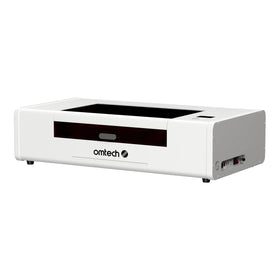
OMTech Spectra A3+ Flatbed UV Printer: 99% True Color Accuracy + One-Click Gloss and Embossing for Depth and Vibrancy.
For makers ready to buy, the OMTech Spectra A3+ Flatbed UV Printer is worth a close look against the checklist above. It's available in a Single-Head package ($2,999.99) or a Dual-Head package ($3,999.99), and it addresses several of the buying concerns raised in this guide directly:
- Print size: A 13.8" x 17.7" print bed; larger than standard A3, which lines up with the "buy one size larger than you need" advice above.
- Open ink platform: No proprietary ink cartridges, which OMTech states can cut ink costs by up to 75% compared to closed systems: a direct answer to the "consumables and ink cost" concern.
- 99% true color reproduction with an Epson F1080 printhead running at up to 1440 x 720 DPI, which matters most for the photo blocks, trading cards, and detailed merch designs covered above.
- Up to 5mm of stackable gloss/varnish layering for the embossed signage, Braille, and raised trading-card textures described in Categories 2 and 3.
- Automatic maintenance: built-in white ink circulation and a 12-hour auto-cleaning cycle that runs even while idle, directly addressing the "UV printers can't sit idle" maintenance warning above.
- 300+ compatible materials; acrylic, wood, leather, metal, glass, ceramics, and more covering essentially every category in this guide from one machine.
- Low-VOC, GREENGUARD Gold certified inks, worth knowing if you'll be running the printer in a home studio or shared workspace.
- A rotary attachment (sold separately, around $149.99) for printing on curved and cylindrical items: tumblers, mugs, and the miniatures/terrain work covered in Category 5.
The Dual-Head version effectively doubles throughput (2 x 100W UV lamps, two printheads) and adds the varnish channel needed for embossing and gloss effects, making it the better starting point if 3D texture work (Categories 2 and 3) is part of your business plan from day one. The Single-Head package is the more budget-friendly entry point if you're starting with flat, full-color merch (Category 1) and want to add gloss/texture capability later.
Final Thoughts on UV Printing
What makes UV printing such a flexible business tool isn't any single product idea; it's that the underlying process (instant-cure ink bonding directly to almost any flat, rigid surface) applies across an enormous range of materials and price points at once.
The same machine that prints a $15 custom tumbler can also produce a $200 embossed art reproduction or a run of holographic trading cards, which is part of why so many small UV printing businesses expand their product lines quickly without buying new equipment.
The real limiting factor tends to be discipline rather than creativity: UV printers need near-daily use to stay healthy, ink and white-channel costs add up if you buy into a closed system, and it's easy to want to chase every idea in this guide at once. Pick one or two categories that match your existing customer base or sales channel, get comfortable with the workflow and maintenance routine, and expand into texture work, trading cards, or curved-surface printing once the basics are running smoothly.
You may also be interested in how to make custom phone cases with a UV printer.