






What Kind of Printer Do You Need For DTF Transfers?
For Direct to Film (DTF) transfers, you either need an inkjet printer that is specifically built or modified to handle DTF inks and a white ink channel, or a dedicated desktop-to-industrial DTF printing machine. The most important thing is to ensure that the printer meets all the requirements for DTF printing. From there, you can make your final decision based on:
- your budget
- how many items you plan to print per week or month
- whether you will be running the machine at home or in a dedicated shop.
Which Printer Do You Need For DTF Transfers? A Breakdown Of Different Types of DTF Printers
To decide on which particular model of printer you need for DTF transfers, you need to take into account your budget, the number of items you want to print per day/week or month, and whether you have the space to accommodate it.
To simplify this complex process, experts in the DTF printing community have generally divided the market into all the types of printers for DTF transfers into three main categories:
- Converted desktop printers
- Small to mid-format industrial printers
- Large format commercial DTF Printers
Here is a guide to which printers are in each category, how much they cost, and who they are best for:
1. Converted desktop printers for DTF Printing
These are standard consumer inkjet printers that have been modified by aftermarket brands or DIY hobbyists to handle thick DTF textile inks. Usually, they are printers built on Epson EcoTank systems like the L1800, 8550, or R1390. The most notable brands in this category are Inksonic (C13A/E) and Precolored printers.
- The main advantage of these converted desktop printers is that they are very affordable. However, they lack robust automation, so they require a lot of maintenance. In fact, you must strip them down daily or the white ink clogs.
- Also, powdering and curing have to be done manually. You can use a small tabletop oven or hold a heat press above the film, but that is very labor-intensive, and the risk is much higher.
2. Small-to-Mid Format Industrial Printers
These are printers that are purpose-built for textile transfers: they feature 12-to-17 inch print widths and integrated roll-to-roll capabilities. Most entry-level industrial options in this category utilize a single or dual Epson XP600 printhead setup, while slightly heavier-duty units step up to Epson i1600 heads.
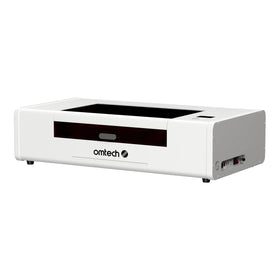
The main advantage of these small- to mid-DTF printers and converted desktop printers is that they are paired with inline automated powder shakers and infrared heating conveyor dryers. The film feeds automatically from the printer directly into the powder machine, which means the machine can output finished, ready-to-press rolls. A good example of a DTF printer in this category is the OMTech Aurora D1 Series 15" DTF Printer with Dual Epson (currently on sale at omtech.com)
3. Large-Format Commercial DTF Printers
This category comprises massive, heavy-duty industrial DTF printing machines with 24- to 30-inch-wide roll capacities, specifically designed for continuous, high-volume shift printing.
They utilize advanced multi-head structures (2 to 4 high-end printheads like the Epson i3200), linear guide rails, heavy industrial take-up reels, and bulk ink tanks featuring continuous pneumatic vacuum circulation.

Choosing a Printer For DTF Transfer: Converted Inkjet Printers vs Small-to-Mid-Sized DTF Printers vs. Commercial DTF Printers
| Consideration Feature | Converted Desktop / All-in-One | Small-to-Mid Industrial (12"-17") | Large Format Commercial (24"+) |
| Best for | Hobbyists, low-volume side hustles, micro-boutiques. | Small print shops, active local brands (50–100+ garments/day). | High-volume contract fulfillment and commercial print houses. |
| Output Speed | Ultra slow (10 sq ft/hour or less). | Moderate (30 to 50 sq ft/hour). | Extremely fast (150 to 275+ linear feet/hour). |
| Maintenance Demand | Extremely High. Requires aggressive manual cleanings and flushing. | Moderate. Automated capping stations, automated circulation, but requires routine maintenance. | Low-to-Moderate. Industrial self-cleaning, automated degassing, and dedicated service contracts. |
| Space and Environment | Small desk space; still requires localized filtration/ventilation. | Requires a small dedicated room with dedicated 110V/220V circuits and strict climate controls. | Demands a large shop floor, dedicated commercial exhaust, and tight humidity/temperature regulation. |
Choosing a Printer For DTF Transfers: 4+ Must-Have Features To Look For
For a printer to work for DTF transfers, it needs specific hardware features that will allow it to handle white ink and some specialized powder systems. It also needs to be compatible with the right software and be suitable for use in DTF printing environments. Here are 7 key features a printer must have to be suitable for DTF transfers:
1. A White Ink System
The key difference between regular printers and DTF printers is that DTF printers can handle white DTF ink. DTF printing requires a 6-color configuration: CMYK (Cyan, Magenta, Yellow, Black) plus two white ink channels to lay down a white base layer underneath colors so designs show up on dark fabrics.
2. A White Ink Circulation System
A DTF printer must have an active, effective white ink circulation and stirring system. White DTF ink settles quickly, and it can clog printheads rapidly if it sits still for as little as 20 minutes to an hour or two. Circulation keeps the white ink moving through the system, while stirring ensures that the pigment will remain evenly mixed in the tank.
3. A Piezo Printhead
A DTF printer must have a printhead that uses piezo technology. This is the technology that powers Epson-based printheads and allows them to be able to handle thick pigment and white ink without burning out.
4. An Auto Cleaning System
The printer must also have built-in automated cleaning cycles and periodic "flash spray" or moistening systems to keep the print nozzles from drying out overnight.
5. Dual/Improved Capping Station
This is not necessarily a “must-have” feature, but one that most of the best and highly recommended DTF printers have. Upgraded dual-pump capping stations make maintenance easier
Buying a DTF Printer: Key Tips and Considerations To Keep In Mind
- There is a lot of maintenance required: DTF printers demand regular use and cleaning. Leaving a DTF printer idle for more than a few days often results in ruined, clogged printheads.
- You have a choice to outsource the DTF printing: Many small-business threads argue that unless you are printing roughly 1,000 to 3,000+ garments per month, in-house DTF maintenance is rarely worth the headache, and outsourcing to services like Ninja Transfers or All Day DTF is more cost-effective.
The OMTech Aurora D1 Series 15" DTF Printer: Best Middle-Ground DTF Printer For Entrepreneurs
For entrepreneurs who want to start a T-shirt printing business or move beyond the limitations of a converted desktop printer, the OMTech Aurora D1 Series 15" DTF Printer with Epson Printhead is worth considering.
Its 15-inch print width makes it a practical middle ground between a small converted inkjet printer and a large commercial machine, giving you room to produce custom designs for T-shirts, hoodies, tote bags, and other fabric products without committing to a full-scale industrial setup.
The Epson printhead is designed for the demands of DTF printing, while the dedicated printer format offers a more suitable starting point for businesses looking to develop a repeatable production workflow. If you expect to take regular customer orders and want to build your printing operation over time, it is a useful option to compare against cheaper converted printers and higher-capacity commercial models.
Beyond the Printer: Top Three Essential Equipment You Need To Run Your DTF Print Shop
For DTF printing, you need a lot more than a suitable, effective printer. In fact, DTF printing takes an entire integrated ecosystem of equipment, which must include an oven or automated shaker to melt the powder and a reliable heat press to transfer the cured design onto the final substrate.
Essential Equipment Setup
- DTF Printer: Could be a specialized or modified inkjet printer (such as an L1800 or R1390, a desktop model OMTech, or commercial units equipped with white ink circulation and dedicated RIP software for color management.
- A curing unit (oven or powder shaker): You need a desktop curing oven (which is commonly bundled with smaller units) or an automated roll-to-roll powder shaker and dryer to melt the adhesive powder onto the printed film. Check out the OMTech DTF oven dryer, which has digital time and temperature control and a PET film dryer.
- A Heat Press: You also need a flat heat press machine (such as a 15x15 inch heat press or similar model) to cure or finish the powder and permanently press the final transfer onto T-shirts, hoodies, or other fabrics. The OMTech 15" x 15" Auto Heat Press Machine is currently on sale. It automatically adapts to materials up to 2.4" thick, applies steady pressure, and lifts itself when done, so you can focus on creating, not operating
I’d place the product recommendation after the section comparing printer types, where readers have enough information to understand why a small-to-mid-format DTF printer might suit their needs. The final thoughts can then reinforce the importance of matching production capacity, maintenance requirements, and budget.

Final Thoughts on Choosing a Printer For DTF Printers
The best printer for DTF transfers is not necessarily the cheapest or the fastest; it is the one that matches your production needs, budget, available space, and willingness to handle routine maintenance. Converted desktop printers can work for hobbyists and occasional orders, while small-to-mid-format machines offer a practical balance for growing print businesses.
Large-format commercial printers make more sense when order volumes justify the additional investment. Before buying, remember to budget for curing equipment, a reliable heat press, ink, film, adhesive powder, and ongoing maintenance. Choose a setup that meets your current needs without paying for production capacity you are unlikely to use.
You may also be interested in how to print DTF on a black T-shirt and other interesting business prospects and projects you can use DTF printing for.