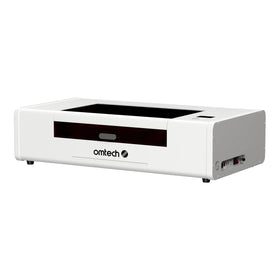








OMTech Aurora vs Procolored K13: DTF Printer Comparison

Direct-to-film (DTF) printing is revolutionizing the custom apparel industry, and selecting the right printer can significantly impact how efficiently your business scales. Popular options in the mid-range DTF market are the OMTech Aurora series (D1 and D1 Pro) and the Procolored K13. While both machines are capable of producing professional-quality apparel transfers, their differences are significant in terms of daily production, maintenance, and long-term growth potential.
This comparison will break down how these printers differ in terms of performance, reliability, and real-world usability, allowing you to decide which platform best fits your workflow and business goals.
Specification Breakdown
|
Feature |
Procolored K13 |
||
|
Dimensions (L × W × H) |
790 × 484 × 313 mm |
790 × 484 × 313 mm |
737 × 320 × 208 mm |
|
Net Weight |
35 kg |
36 kg |
18 kg |
|
Printing Mode |
Roll Film |
Roll Film |
Roll Film |
|
Printheads |
1 |
2 |
1 |
|
Printhead Model |
F1080 |
I1600 |
L1800 |
|
Ink Channels |
CMYKWW |
CMYK + WWWW |
CMYKWW |
|
Max Print Width |
356 mm (14″) |
356 mm (14″) |
330 mm (13″) |
|
Max Resolution (DPI) |
720 × 1440 |
720 × 1800 |
1440 × 2880 |
|
Print Speed |
1.02 m²/h (11 ft²/h) |
4.64 m²/h (50 ft²/h) |
0.743 m²/h (8 ft²/h) |
|
White Ink Circulation |
Yes |
Yes |
Yes |
|
Self-Cleaning |
Yes |
Yes |
Yes |
|
Automatic Moisturizing |
Yes |
Yes |
No |
|
Film Cutting |
Manual |
Manual |
Manual |
Build Quality and Design Philosophy

The OMTech Aurora lineup is built with commercial environments in mind. Both the D1 and D1 Pro are housed in sturdy enclosures designed for stability during high-speed printing. With 14” print width, you’ll have more room for sheets and plus-size designs. At 35–36 kg, the machines feel industrial and sturdy, helping maintain accuracy and consistency during long production runs.
The Procolored K13, by comparison, is significantly lighter, weighing 18 kg, and features a more compact, lightweight frame. This makes it easier to move or fit into tighter spaces, but it can feel less robust in higher-volume shop environments where vibration control and stability matter more.
If you’re setting up on a shared desk or very tight workspace, the K13’s lighter footprint is appealing. If you’re thinking in terms of daily production consistency and less vibration, Aurora’s sturdier build is the better long-term bet.
Printhead Configuration and Ink System Performance
One of the most important differences lies in printhead architecture.
OMTech Aurora models use Epson printheads. The Aurora D1 utilizes a single F1080 printhead, whereas the Aurora D1 Pro features dual I1600 printheads, which significantly increases output capability. The dual-head design allows faster production without sacrificing detail or white ink density.
The Procolored K13 uses a single L1800 printhead. While this is capable of solid quality output, single-head systems generally create a bottleneck when volume increases.
Ink configuration also plays a major role in print quality and reliability. The Aurora utilizes several systems around the printhead to keep production efficient:
-
Self-cleaning: Runs automatic cleaning cycles using ink to flush the head whenever the machine has been idle.
-
Automatic moisturizing: Feeds moisturizing liquid into the cap sponge under the printhead so it stays damp, like a tiny humidifier. This is a huge help if you don’t print every single day.
-
White ink circulation + bottle stirring: Circulation keeps ink flowing through the lines. A stirring mechanism agitates the white ink bottle itself so titanium dioxide doesn’t cake at the bottom. Together, they preserve white density and reduce banding and opacity issues.
-
One-touch ink priming: Instead of using a syringe to pull ink to the head, you tap a touchscreen button and the system primes the lines automatically.
In practical use, the Aurora’s ink-handling system tends to reduce clogging risk and supports more stable white ink performance over long production sessions. The K13 without automatic moisturizing and bottle stirring, doesn't have the same moisture management and long-term circulation safeguards.
Speed, Resolution, and Real-World Throughput
On paper, resolution specs are comparable, but real-world productivity tells a more useful story.
-
The D1 Pro clearly stands out in throughput — four to five times faster than the base D1 and significantly faster than the K13.
-
The K13 has a high DPI spec, but the real-world printing speed is slower, which may impact output volume for businesses scaling up.
-
The D1 (entry Aurora model) offers reliable baseline output for smaller operations while still sharing the same width as the D1 Pro.
If you anticipate growing your business or producing frequent batches, the D1 Pro offers a clear advantage in throughput. For smaller volume or startup operations, the D1 still presents a strong value. The K13 may suffice for occasional use, but its slower speed will be felt as job volume increases.
Smarter Ink Management
- Ink Shortage Alarm: Never worry about mid-job interruptions. The system alerts you immediately when ink levels are critically low, preventing printhead damage from dry firing and ensuring uninterrupted production.
- Waste Ink Alarm: This critical safety feature notifies you before the waste tank overflows. This prevents messy and potentially costly spills, protecting your machine's electronic components and significantly reducing maintenance downtime.
Which Printer Fits Which User?
OMTech Aurora D1 is ideal for:
-
Start-up apparel businesses evolving from hobby to commercial
-
Etsy sellers scaling into bulk or wholesale work
-
Decorators needing reliable white ink and consistent output
OMTech Aurora D1 Pro makes the most sense for:
-
Production-focused apparel shops
-
Businesses running daily batch output
-
Users who need speed, redundancy, and long-term reliability
Procolored K13 fits best for:
-
Lower-volume environments
-
Occasional production jobs
-
Makers prioritizing compact size and budget over maximum throughput
The biggest advantage of the Aurora lineup is choice. OMTech offers a clear upgrade path, allowing you to start with the D1 and move to the D1 Pro as demand increases — without jumping to an entirely different platform.
Which DTF Printer Makes the Most Business Sense?

Both machines can produce quality transfers. However, the OMTech Aurora ecosystem clearly targets business scalability, not just entry-level function.
The D1 Pro, in particular, delivers faster production, stronger ink management, better uptime protections, and a more commercial-ready build. While the K13 works best as a light-duty machine, for businesses serious about growth, consistent output, and reduced maintenance headaches, the Aurora line offers a more future-proof foundation.
Ready to scale your DTF production? OMTech Aurora is launching exclusively on Kickstarter. Explore the OMTech Aurora D1 and D1 Pro today and see how commercial-grade reliability can help your apparel business grow faster and print smarter.