







How Universities Are Using Laser Engravers for Engineering & Design Projects
My professor walked into our senior capstone lab in 2019 and announced we'd be getting a CO2 laser engraver. Half the class had never seen one run. Three weeks later, we were cutting custom acrylic enclosures for our PCB designs and engraving precision part IDs on aluminum fixtures. That machine changed how the whole cohort thought about prototyping.

Universities across the US are putting laser engravers for education to work in engineering departments, architecture studios, and research labs. And the results speak for themselves — faster iteration, cleaner prototypes, and students who graduate knowing how to operate the same tools they'll find in professional fabrication environments.
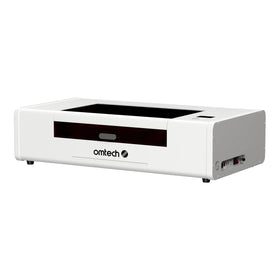
This article walks through exactly how universities are using these machines, which departments benefit most, and what to look for when choosing a laser engraver for education. OMTech's CO2 laser engraver machines and fiber systems are already running in university labs, makerspaces, and design studios across North America.
Why Universities Are Investing in Laser Engravers
The shift is practical, not trendy. Engineering programs are under pressure to produce graduates who can do more than solve equations on paper — they need students who have actually held a prototype they designed themselves.
According to laser engraving overview from Wikipedia, laser engraving uses a focused beam to remove material or mark surfaces with high precision — the same fundamental process behind industrial part marking, medical device labeling, and aerospace component identification.

When students use this technology in a university lab, they're not playing with a toy. They're learning the exact workflow that manufacturing and R&D teams use in industry.
|
🏛️ REAL UNIVERSITY EXAMPLE Georgia Tech's mechanical engineering program integrated CO2 and fiber laser systems into their undergraduate fabrication labs over five years ago. Students now use them for everything from producing test fixtures to cutting architectural components for design competitions. Faculty report that project quality improved noticeably within the first semester — specifically because the laser removed the gap between a student's design and a physical, testable part. |
|
DEPARTMENT |
PRIMARY USE |
MOST COMMON MACHINE TYPE |
|
Mechanical Engineering |
Prototyping, fixtures, test parts |
CO2 + Fiber laser |
|
Architecture |
Scale models, site mockups |
CO2 laser (60W–100W) |
|
Product Design |
Concept models, consumer prototypes |
Desktop CO2 |
|
Materials Science / Research |
Sample marking, part ID, lab fixtures |
Fiber / MOPA laser |
|
Electrical Engineering |
PCB enclosures, panel cutouts |
CO2 laser |
|
Art & Design |
Mixed-media, sculpture, installations |
CO2 laser |
How a Laser Engraver for Education Actually Works in a Lab Setting
The setup is simpler than most new users expect. A student creates a design in software — Inkscape, Fusion 360, Adobe Illustrator, or directly in LightBurn — and sends it to the machine. The laser follows the design path, cutting or engraving the material with sub-millimeter accuracy.

Most CO2 laser engravers in university settings run on standard 110V power, connect via USB or Ethernet, and take less than a day to set up from delivery. There's no CNC programming required. The learning curve for basic operation is typically under two hours for a technically capable student.
|
⚠️ KEY TECHNICAL POINT CO2 lasers work on non-metallic materials: wood, acrylic, leather, cardboard, glass, and many plastics. For direct metal engraving — marking steel, aluminum, titanium, or brass without coatings — a fiber laser is required. Universities running both a design studio and a research lab often maintain one of each. |
|
LASER TYPE |
MATERIALS |
BEST UNIVERSITY SETTING |
|
CO2 (40W–100W) |
Wood, acrylic, glass, leather, cardboard |
Design studios, makerspaces, architecture labs |
|
CO2 (100W–150W) |
Thick wood, dense acrylic, foam, slate |
Engineering fab labs, CTE programs |
|
Fiber (20W–50W) |
Stainless steel, aluminum, brass, titanium |
Research labs, materials science, ECE |
|
MOPA Fiber (60W+) |
Color engraving on metal, anodized aluminum |
Advanced research, aerospace, precision marking |
Engineering Applications: What Students Are Actually Building
The range of what engineering students produce with a laser engraver covers more ground than most faculty expect when they first install one. Here is what's actually happening in labs right now:
Mechanical and Manufacturing Engineering
Students cut custom jigs and fixtures for assembly projects that previously required expensive machined parts or workarounds. A team building a robotic arm can cut precision acrylic mounting plates in 20 minutes that would have taken a week to source externally.
-
Prototype housings and enclosures for electronics projects
-
Test fixtures and alignment jigs for mechanical assemblies
-
Precision-cut gear blanks and structural components from acrylic or wood
-
Part identification markings on metal using fiber laser systems
Architecture and Spatial Design
Architectural scale models that used to take a week of hand-cutting now take a few hours. More importantly, students can iterate. If the proportions are wrong after the first print, they adjust the file and cut again — the same way professional firms operate.
-
1:50 and 1:100 site models from cardboard, foam, and basswood
-
Structural component mockups for engineering-architecture joint projects
-
Custom presentation boards and engraved site maps
Electrical and Computer Engineering
PCB enclosures, custom control panels, and laser-cut mounting brackets are the most common uses. Students designing IoT devices or embedded systems can produce a professional-looking enclosure that actually fits their PCB — not a cardboard box held together with tape.
-
Laser-cut control panel blanks with precise cutouts for switches and displays
-
Custom enclosures for capstone project hardware
-
Engraved labels on anodized aluminum panels using fiber laser engraving machines
|
🏛️ REAL UNIVERSITY EXAMPLE At MIT's Fab Lab (one of the original fablabs worldwide), laser cutters have been a core tool since the early 2000s. Faculty report that the machines enable a design-build-test loop that would otherwise require outsourcing or waiting for machine shop time. Students move from CAD file to physical prototype in under an hour on straightforward parts. |
Research Labs: Where Fiber Lasers Do the Heavy Lifting
When the application moves from student prototyping into actual research, fiber laser engraving machines become the preferred tool. Fiber lasers engrave directly onto metal without coatings or sprays — and they do it at speeds and accuracy levels that CO2 machines can't match on hard materials.
Materials science departments use fiber lasers to mark sample batches with permanent identifiers — tracking hundreds of specimens through heat treatment, stress testing, or chemical exposure without losing the label. That kind of repeatable, permanent marking is exactly what research traceability requires.
|
RESEARCH APPLICATION |
WHAT THE LASER DOES |
MACHINE TYPE |
|
Sample batch marking |
Permanent IDs on metal coupons |
Fiber 20W–30W |
|
Aerospace component labeling |
Serialization on titanium / aluminum |
Fiber 50W+ |
|
Medical device research |
Marking on stainless steel instruments |
Fiber / MOPA |
|
Polymer & materials testing |
Engraving test identifiers on specimens |
CO2 or Fiber |
|
Microfluidics prototyping |
Cutting micro-channel patterns in acrylic |
CO2 high-precision |
|
🔬 RESEARCH LAB EXAMPLE A materials science team at a major Midwest university uses a galvo fiber laser to mark 200+ metal specimens per research cycle with unique identifiers. Before adding the laser, they were hand-stamping samples — a process that introduced inconsistency and occasionally damaged the surface under test. The laser marks in seconds, never contacts the surface with mechanical force, and the marks survive extreme heat and chemical exposure. |
Best OMTech Laser Engravers for University Use
The right machine depends on which department is using it and what materials they're working with. Here are three OMTech machines that cover the most common university lab scenarios:
|
FEATURE |
AF2028-60 60W |
PRO 2440 100W |
GALVO FIBER 20/30/50W |
|
Laser Type |
CO2 |
CO2 |
Fiber |
|
Power |
60W |
80W / 100W |
20W / 30W / 50W |
|
Work Area |
20" x 28" |
24" x 40" |
4.3" – 6.9" sq. |
|
Engraving Speed |
600 mm/s |
1,000 mm/s |
Up to 10,000 mm/s |
|
Autofocus |
✓ Yes |
✓ Yes |
✓ Yes |
|
Metal Engraving |
Coated only |
Coated only |
✓ Direct on metal |
|
Water Chiller |
External req. |
Built-in |
Air-cooled |
|
LightBurn |
✓ Yes |
✓ Yes |
✓ Yes |
|
Best For |
Design studios, makerspaces |
Engineering fab labs |
Research labs, marking |
|
AF2028-60 60W CO2 — Design Studios • Makerspaces • Architecture The 20" × 28" bed handles most student project sizes without restriction. At 600 mm/s, it keeps up with a busy lab where students are queuing jobs back-to-back. Camera preview, rotary compatibility, and LightBurn integration make it the most versatile entry into a university design program. Architecture students particularly value the bed size for cutting cardboard and basswood models in one pass. |
|
Pro 2440 80W / 100W CO2 — Engineering Fab Labs • High-Volume Production The built-in water chiller and 24" × 40" working area make this the right machine when the lab runs all day with multiple student groups. At 100W, it cuts thick plywood, dense acrylic, and foam cleanly without multiple passes. The dual workbed configuration handles both full sheets and smaller precision parts without reconfiguration. Faculty managing busy engineering labs consistently prefer this model for its throughput. |
|
Galvo Fiber 20W / 30W / 50W — Research Labs • Materials Science • ECE This is the machine for direct metal marking. At up to 10,000 mm/s and 0.01mm accuracy, it engraves permanent IDs on steel, aluminum, titanium, and brass without coatings. The autofocus system and compact footprint make it easy to integrate into a research bench setup. Universities running materials testing, aerospace components research, or biomedical device work find the fiber laser essential for traceability and precision. |
Setting Up a University Laser Lab: What to Plan For
Adding a laser engraver to a university lab is not complicated, but there are a few things to sort out before the machine arrives. Getting these right the first time saves weeks of delay after delivery.
-
Define primary use cases — Know whether the machine serves a design studio, a fab lab, or a research bench before choosing wattage and laser type
-
Confirm ventilation — CO2 lasers require fume extraction — either ducted to an exterior wall or through a standalone filtered unit. Budget $150–$2,500 for this.
-
Assign a lab manager — Universities that run laser labs best have one person — faculty or advanced student — who owns the machine, runs onboarding, and handles minor maintenance
-
Budget consumables — Laser tubes, replacement lenses, and engraving materials are ongoing costs. Plan $200–$500/year for a well-used lab machine.
-
Schedule installation — OMTech's professional laser setup support includes on-site setup and training. For a university lab with multiple users, that initial training session pays for itself in avoided errors and damaged materials.
-
Build a safety protocol — Signed user agreements, a posted SOP near the machine, and a brief operational test before any student runs an unsupervised job
-
Stock starting materials — A supply of basswood sheets, acrylic blanks, and cardboard lets students begin projects on day one. OMTech's laser engraving materials collection covers the most common university lab materials.
|
Equip your university lab with the right laser system |
Frequently Asked Questions
What is a laser engraver for education?
A laser engraver for education is a CO2 or fiber laser machine configured for use in a school, university, or research lab environment. It typically has an enclosed design for safety, runs LightBurn-compatible software, and is capable of cutting and engraving materials like wood, acrylic, leather, and metal.
How does a laser engraver work?
A laser engraver focuses a high-intensity light beam onto a material surface. The energy from the beam vaporizes or ablates the material, leaving a precise mark or cut. CO2 lasers operate at 10,600nm wavelength and work best on non-metals. Fiber lasers operate at 1,064nm and engrave directly onto metal surfaces.
What are the main applications of laser engraving in universities?
Universities use laser engravers for prototyping mechanical parts, cutting architectural models, producing PCB enclosures, marking research specimens, creating educational tools, and building student capstone projects. Engineering, architecture, materials science, and design departments are the most active users.
What type of manufacturing is laser engraving?
Laser engraving is a subtractive manufacturing process. The laser removes material from the surface rather than adding it. This makes it complementary to additive processes like 3D printing — many university labs run both and use them at different stages of the design-build-test cycle.
What are the three main types of laser engravers used in education?
CO2 lasers are the most common in education for their material versatility. Fiber lasers are preferred for direct metal marking in research settings. Diode lasers offer the lowest cost entry point but are limited in material range and cutting depth compared to CO2 machines.
What cannot be cut by a laser?
Standard CO2 laser engravers cannot cut bare metal, tempered glass, or PVC plastic (which produces toxic chlorine gas). Reflective metals can also damage the optics of a CO2 machine. Fiber lasers can mark metal but are not typically used for thick metal cutting — that requires a high-power industrial fiber cutter.
What software do university laser engravers use?
LightBurn is the standard in most university labs. It supports SVG, DXF, AI, and PNG files, works on Windows and Mac, and offers precise control over speed, power, and pass settings. Inkscape and Fusion 360 are the most common design tools students use to prepare files before sending them to LightBurn.
How much does a laser engraver for education cost?
CO2 laser engravers suitable for university makerspaces and design studios start at $1,799 and scale to $7,000+ for high-output machines with large work areas. Fiber laser systems for research applications start around $1,200 for 20W galvo units. Budget ventilation, materials, and training on top of the machine cost.
Does a university laser engraver need special maintenance?
CO2 laser engravers require regular lens and mirror cleaning, periodic laser tube inspection, and water chiller maintenance for higher-wattage machines. Most routine maintenance tasks can be taught to lab staff or advanced students in under an hour. OMTech provides manuals, online support, and virtual technical help for ongoing lab operation.