







Reflecting on EDUtech Australia 2026: Meaningful Conversations, Valuable Insights
From 3–4 June 2026, the OMTech team was proud to exhibit at EDUtech Australia 2026, one of the country's leading events for education, technology, and innovation.
Over the two-day event, we had the opportunity to meet hundreds of educators, STEM coordinators, technology teachers, school leaders, makerspace managers, and industry professionals from across Australia and New Zealand.

More importantly, we were able to have genuine conversations—not only with potential customers, but also with existing users, education partners, and fellow industry suppliers who are helping shape the future of digital fabrication in schools.
We were delighted to see such strong interest in laser cutting, engraving, and emerging technologies like UV printing. It was particularly rewarding to hear firsthand how schools are using fabrication tools to support STEM learning, design thinking, entrepreneurship programs, and hands-on project-based education.
Events like EDUtech are valuable because they allow us to step away from product specifications and marketing materials and focus on what really matters: listening to educators and understanding their real-world challenges.
Across dozens of conversations, certain questions and concerns came up repeatedly. These discussions gave us valuable insight into what Australian schools are looking for when evaluating laser systems and digital fabrication equipment.
Here are the seven topics that generated the most interest at our booth.
EDUtech Australia 2026 gave OMTech the opportunity to meet face-to-face with educators, school leaders, STEM coordinators, technology teachers, and makerspace managers from across Australia.
Rather than simply showcasing machines, the event became a valuable listening session.
Over two days of conversations, one thing became clear: Australian schools are genuinely interested in bringing laser cutting, engraving, and digital fabrication into classrooms. But they are also practical, cautious, and very clear about what they need before making a decision.

They were not just asking, “What can this machine do?”
They were asking:
“Can we afford it?”
“Is it safe for students?”
“Will our teachers know how to use it?”
“Can we run it indoors?”
“Will it actually work for classroom projects?”
These questions revealed what matters most to education customers when choosing laser equipment.
1. Price and Value Were the First Questions
The most common conversation started with price.
Several visitors told us they were looking for a machine that could deliver professional classroom results without taking up the entire technology budget.
For many schools, value did not simply mean choosing the cheapest option. It meant finding the right balance between:
- Machine capability
- Safety
- Work area
- Support
- Training
- Long-term usability
- Budget approval
This is where OMTech attracted strong interest. Many visitors saw OMTech as a more accessible pathway into laser technology, especially for schools that want to build or expand a makerspace without paying premium industrial pricing.
2. Safety Was a Major Concern
After price, safety was the next major topic.
Teachers and school decision-makers wanted reassurance that laser equipment could be used responsibly in an education environment.
Many asked specifically about:
- Class 1 laser safety
- Student supervision
- Machine enclosures
- Interlocks
- Classroom suitability
- Compliance expectations
These were not casual questions. They came from real classroom concerns.
Teachers need to feel confident that a machine can be used around students. School leaders need to justify the purchase to risk and compliance teams. Technology departments need equipment that fits within school safety policies.
The message was clear: for schools, safety is not a feature. It is a requirement.
3. Installation and Training Can Make or Break the Decision
Many educators were excited by laser technology, but some were also nervous.
For schools with no previous laser experience, the biggest concern was not the machine itself. It was what happens after delivery.
Common questions included:
- Who installs it?
- Who trains the teachers?
- How difficult is the software?
- What happens if staff have never used a laser before?
- Can we get support after purchase?
This feedback was important because it showed that schools are not just buying equipment. They are buying confidence.
A teacher may love the idea of a laser cutter, but if they feel unsupported, the machine may never be used to its full potential.
For education customers, onboarding matters as much as hardware. Clear installation support, teacher training, beginner-friendly resources, and ongoing assistance all play a major role in purchase confidence.
4. Filtration and Indoor Use Were Practical Concerns
Many schools asked about filtration before they asked about advanced applications.
That makes sense. Most school lasers will be used indoors, in classrooms, technology rooms, STEM labs, or makerspaces.
Educators wanted to know:
- How is smoke managed?
- Do we need external ventilation?
- Is there a filter system?
- Can this work in an existing classroom?
- What materials are safe to cut?
These questions came from very real site limitations. Not every school has a dedicated workshop with external extraction. Some schools are trying to build creative learning spaces inside existing rooms.
For these customers, a reliable filtration solution is not optional. It directly affects whether the machine can be installed at all.
5. Bed Size Matters for Classroom Projects
Another common question was about bed size.
Teachers were not thinking only about one-off projects. They were thinking about full classes.
A typical school project may involve 20 or 30 students producing name tags, model parts, design prototypes, or project components within a limited lesson block.
That means bed size directly affects classroom efficiency.
Educators asked:
- How many student projects can fit at once?
- Can we process batches?
- Which machine size is better for school use?
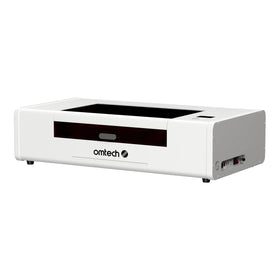
- Is the Pronto Series large enough for group work?
This showed that schools care about workflow, not just specifications.
A larger working area can reduce waiting time, support group projects, and make the machine more practical for everyday teaching.

6. Rotary Tools Showed Deeper Application Interest
Some teachers asked about rotary tools, which was a strong sign that they were already thinking beyond basic cutting and engraving.
They wanted to know whether students could engrave:
- Drink bottles
- Cylindrical objects
- Pens
- Tumblers
- Promotional items
- Design prototypes
These conversations were especially encouraging because they showed a more advanced understanding of digital fabrication.
Teachers were not just asking, “Can students cut wood?”
They were asking, “How far can we take this in a real design or entrepreneurship program?”
This suggests strong potential for project-based learning, product design units, school fundraising projects, and vocational training applications.
7. UV Printing Created Unexpected Interest
One of the strongest cross-selling signals at EDUtech was interest in UV printing.
Several visitors asked whether OMTech would offer UV printers and how UV printing could work alongside laser cutting.
Educators quickly understood the value of combining both technologies.
Laser cutters can shape and engrave materials.
UV printers can add full-colour graphics, logos, images, and design details.
Together, they create a much broader digital fabrication workflow.
Possible school applications include:
- Custom signage
- Student product prototypes
- Awards and plaques
- Design technology projects
- Entrepreneurship projects
- Promotional products
- Makerspace activities
This interest suggests that many schools are not only looking for one machine. They are thinking about complete creative production ecosystems.
What These Conversations Tell Us
EDUtech Australia 2026 confirmed that schools are ready for more hands-on digital fabrication.
But education customers need more than an impressive demo.
They need solutions that feel achievable.
They want equipment that is:
- Affordable enough for school budgets
- Safe enough for classroom environments
- Easy enough for teachers to learn
- Supported through installation and training
- Practical for indoor use
- Large enough for group projects
- Flexible enough for future applications
The most valuable insight from the event was simple:
Schools are not buying lasers just because they are exciting.
They are buying them because they want students to design, make, test, problem-solve, and create real things.
OMTech’s Role in Australian Education
For OMTech, EDUtech Australia 2026 was more than a product showcase. It was a chance to understand what educators truly need from laser technology.
The conversations helped us see where schools need the most support:
- Clear safety information
- Education-friendly pricing
- Installation guidance
- Teacher training
- Filtration solutions
- Machine size recommendations
- Project ideas and curriculum resources
- Future pathways into UV printing
These insights will help OMTech better support Australian schools as they build makerspaces, STEM labs, design technology programs, and vocational training environments.
The strongest impression from EDUtech Australia 2026 was not just that educators were interested in laser machines.
It was that they were imagining what students could do with them.
They pictured students building models, engraving prototypes, creating signs, launching small product ideas, personalising materials, and turning classroom concepts into physical outcomes.
That is where OMTech can make a meaningful impact.
By making laser technology more accessible, safer to adopt, and easier to teach, OMTech can help more Australian schools bring real-world design and fabrication into the classroom.
Thank you to everyone who visited OMTech at EDUtech Australia 2026. Your questions, feedback, and honest concerns will help shape how we support the next generation of makers, designers, engineers, and innovators.
Thank You, EDUtech Australia
We would like to sincerely thank everyone who visited the OMTech booth during EDUtech Australia 2026.
Whether you stopped by for a quick demonstration, shared your school's experiences, discussed future makerspace plans, or simply wanted to learn more about laser technology, we truly appreciated every conversation.
We also enjoyed connecting with fellow exhibitors, technology providers, and education partners across the industry. The exchange of ideas, experiences, and perspectives is what makes events like EDUtech so valuable for everyone involved.
The enthusiasm we saw throughout the event reinforces our belief that digital fabrication technologies will continue to play an increasingly important role in Australian education.
We look forward to continuing these conversations and helping more schools, TAFEs, makerspaces, and training organisations bring creative, hands-on learning opportunities to students across Australia.
See you at EDUtech 2027!