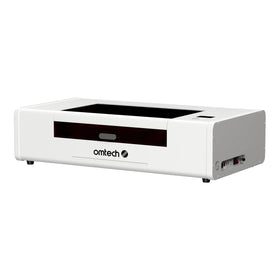








Laser Cutters for Universities
Universities occupy a unique position in the digital fabrication landscape—serving as centers for advanced research, interdisciplinary collaboration, entrepreneurship development, and professional preparation simultaneously. Laser cutting technology has become indispensable across this diverse mission, supporting everything from undergraduate engineering courses to doctoral research to startup incubation.
Explore OMTech University Solutions | Find a Demo Room Near You | Connect with Our Education Team
This guide explores how universities can strategically implement laser cutting technology to serve their multifaceted academic mission, examining department-specific applications, research capabilities, and the infrastructure decisions that maximize institutional value.

The University Context: Unique Considerations
Serving Multiple Stakeholders
Unlike K-12 schools or single-purpose makerspaces, universities must serve remarkably diverse constituencies with a single technology investment:
Undergraduate Students:
- Course-based learning across multiple disciplines
- Extracurricular and club projects
- Capstone and senior design projects
- Entrepreneurship initiatives
Graduate Students:
- Thesis and dissertation research
- Advanced prototyping needs
- Specialized experimental apparatus
- Publication-quality fabrication
Faculty Researchers:
- Grant-funded research projects
- Experimental setup fabrication
- Conference presentation materials
- Interdisciplinary collaboration tools
Staff and Administration:
- Facilities and operations support
- Marketing and event materials
- Administrative signage and organization
External Partners:
- Industry collaboration projects
- Community engagement initiatives
- Continuing education programs
This diversity demands thoughtful infrastructure planning that balances accessibility with the sophisticated capabilities advanced research requires.
The Research Imperative
Universities differ fundamentally from other educational institutions in their research mission. Laser cutting technology must support:
Reproducible Research: Academic integrity requires documented, repeatable fabrication processes suitable for publication and peer review
Novel Applications: Research often pushes technology boundaries, requiring equipment flexibility beyond standard educational applications
Precision Requirements: Scientific and engineering research frequently demands tolerances and consistency exceeding typical educational use
Documentation Standards: Research applications require detailed parameter documentation for methodology sections and replication studies
Department-Specific Applications Across the University
Engineering Programs
Mechanical Engineering:
Undergraduate Applications:
- Design and manufacturing course projects
- Senior capstone prototype development
- Robotics and mechanism design
- Materials testing sample preparation
Graduate Research Applications:
- Custom experimental fixture fabrication
- Novel mechanism prototyping
- Thesis project component manufacturing
- Publication-quality demonstration models
Specific Use Cases:
- Gear train and mechanism prototypes
- Structural testing specimens
- Custom jigs and fixtures for other equipment
- Wind tunnel model components
Electrical Engineering:
Applications:
- Custom PCB enclosures and housings
- Sensor mounting brackets and fixtures
- Educational demonstration devices
- Project enclosures for embedded systems courses
Civil Engineering:
Applications:
- Structural model creation for testing
- Architectural scale models
- Bridge design competition entries
- Material testing sample preparation
Biomedical Engineering:
Applications:
- Custom laboratory equipment fixtures
- Prosthetic and orthotic prototyping
- Anatomical model creation
- Medical device housing prototypes
Physical and Life Sciences
Physics Department:
Applications:
- Custom experimental apparatus components
- Optical mount and fixture fabrication
- Demonstration equipment for teaching labs
- Research instrument prototyping
Chemistry Department:
Applications:
- Laboratory organization systems
- Custom glassware holders and racks
- Safety equipment signage
- Molecular model components
Biology Department:
Applications:
- Specimen display cases
- Laboratory equipment organization
- Field research equipment housings
- Educational model creation
Environmental Science:
Applications:
- Field research equipment enclosures
- Data collection device housings
- Educational demonstration models
- Sustainable design project components
Business and Entrepreneurship
Business School Applications:
Entrepreneurship Centers:
- Startup prototype development
- Product design for business plan competitions
- Trade show and presentation materials
- Minimum viable product (MVP) creation
Innovation Labs:
- Cross-disciplinary venture development
- Design thinking workshop materials
- Rapid prototyping for business concepts
- Client project deliverables
Case Study Applications:
- Physical prototypes for case competitions
- Marketing material development
- Product design courses
Arts and Design Programs
Fine Arts Applications:
- Sculptural element creation
- Mixed-media artwork components
- Exhibition and display materials
- Printmaking plate creation
Graphic Design:
- Portfolio piece development
- Packaging design prototypes
- Signage and wayfinding projects
- Typography exploration
Theater and Performance:
- Set design elements
- Prop fabrication
- Costume design components
- Stage signage and displays
Architecture Programs:
Applications:
- Scale model construction (individual and studio projects)
- Design competition entries
- Material study samples
- Presentation model components
Advanced Applications:
- Parametric design exploration
- Complex geometric structure prototyping
- Facade system studies
- Urban planning model elements
Liberal Arts and Humanities
History Department:
- Historical artifact reproduction (educational)
- Museum-quality display creation
- Timeline and exhibition materials
Anthropology:
- Cultural artifact study models
- Field research equipment
- Educational demonstration materials
Communication and Media Studies:
- Set and prop design for productions
- Interactive media installations
- Exhibition design projects
Medical and Health Sciences
Medical School Applications:
- Anatomical teaching models
- Surgical simulation equipment components
- Medical device prototyping
- Patient education materials
Nursing Programs:
- Simulation equipment enhancement
- Educational model creation
- Training equipment customization
Public Health:
- Community health intervention materials
- Educational campaign materials
- Data visualization displays
Research-Specific Considerations
Supporting Grant-Funded Research
Equipment Access for Funded Projects:
Universities must consider how laser cutting resources integrate with research funding structures:
Core Facility Models:
- Centralized access with usage fees charged to grants
- Detailed usage tracking for grant reporting
- Priority scheduling for funded research
Departmental Ownership:
- Equipment purchased through specific grants
- Dedicated access for research groups
- Potential underutilization outside active research periods
Hybrid Approaches:
- Shared core facility with reserved research time blocks
- Tiered access balancing broad availability with research priority
Publication and Reproducibility Requirements
Documentation Standards for Research Use:
Academic research demands rigor beyond typical educational or hobbyist use:
Parameter Documentation:
- Precise power, speed, and pass settings recorded
- Material specifications and sourcing documented
- Environmental conditions noted when relevant
Calibration Records:
- Regular calibration verification
- Documented maintenance affecting precision
- Equipment performance validation
Reproducibility Support:
- Detailed methodology documentation for publications
- Settings libraries for research group consistency
- Cross-validation capabilities when multiple researchers use shared equipment
Intellectual Property Considerations
Research Output Protection:
Universities must consider intellectual property implications of shared fabrication resources:
Access Logging:
- Documentation of who accessed equipment when
- Project file management and security
- Appropriate confidentiality for sensitive research
Industry Partnership Projects:
- Clear policies for industry-sponsored research using university equipment
- IP assignment clarity for collaborative projects
- Appropriate use restrictions for proprietary research
Infrastructure Models for University Implementation
Centralized Core Facility Model
Structure: Single, well-equipped facility serving entire university community
Advantages:
- Concentrated expertise and support staff
- Cost-efficient equipment utilization
- Consistent safety and training standards
- Simplified maintenance and upgrade planning
Challenges:
- Potential access bottlenecks during peak demand
- Distance/convenience issues for some departments
- Scheduling complexity across diverse user needs
Best For:
- Small to mid-size universities
- Institutions prioritizing cross-disciplinary collaboration
- Limited budget requiring resource concentration
Distributed Department Model
Structure: Multiple machines located within specific departments or colleges
Advantages:
- Convenient access for department-specific needs
- Specialized configuration for departmental requirements
- Reduced scheduling conflicts
- Department ownership and investment
Challenges:
- Potential redundancy and underutilization
- Inconsistent training and safety standards across locations
- Higher total equipment investment
- Fragmented technical support
Best For:
- Large universities with distinct department needs
- Institutions with department-specific funding models
- Programs requiring specialized configurations
Hybrid Hub-and-Spoke Model
Structure: Central advanced facility complemented by satellite locations with basic equipment
Advantages:
- Balances accessibility with specialized capability
- Central facility handles complex/research-grade needs
- Satellite locations serve routine educational use
- Efficient resource allocation
Challenges:
- More complex coordination and management
- Requires clear use-case guidelines
- Staffing across multiple locations
Best For:
- Large research universities
- Institutions with both extensive research and broad educational missions
- Universities with significant undergraduate populations alongside active research programs
Equipment Selection for University Environments
Matching Equipment to Institutional Needs
Undergraduate Teaching Facilities:
Recommended Specifications:
- Power: 60-80W CO₂ laser
- Working area: 500mm × 700mm minimum
- Software: LightBurn compatible
- Safety: Class 1 certification essential
Rationale: Balances capability for diverse course applications with appropriate accessibility for varying student skill levels
Research-Focused Facilities:
Recommended Specifications:
- Power: 100-150W CO₂ laser (or multiple power options)
- Working area: Larger format for research flexibility
- Precision: Enhanced calibration capabilities
- Documentation: Robust settings/parameter logging capability
Additional Considerations:
- Fiber laser addition for metal research applications
- Rotary attachment for cylindrical research objects
- Pass-through capability for oversized research components
Multi-Purpose Core Facilities:
Recommended Approach:
- Multiple machines with varying capabilities
- Entry-level system for teaching/training
- Advanced system for research/complex projects
- Potential fiber laser for materials science applications
Software and Digital Infrastructure
LightBurn as University Standard:
Advantages for Higher Education:
- Industry-standard skills transferable to student careers
- Multi-license options suit university computer lab deployment
- Extensive documentation supports self-directed learning
- Active community provides supplementary support resources
Integration Considerations:
- Compatibility with existing CAD instruction (SolidWorks, Fusion 360, AutoCAD)
- File format compatibility across design-to-fabrication workflow
- Network/cloud storage integration for project management
Research-Specific Software Needs:
Advanced Applications:
- Custom parameter development for novel materials
- Integration with data collection/documentation systems
- Compatibility with specialized research software when relevant
Safety Infrastructure for University Settings
Institutional Safety Requirements:
Environmental Health and Safety (EHS) Integration:
- Compliance with university-wide safety protocols
- Integration with institutional risk management
- Appropriate insurance and liability considerations
Enhanced Training Requirements:
- Multi-tier certification appropriate for diverse user sophistication
- Research-specific safety protocols for novel applications
- Graduate student/researcher advanced training options
Documentation and Compliance:
- Detailed usage logs for institutional record-keeping
- Incident reporting integrated with university systems
- Regular safety audit and compliance verification
Building Interdisciplinary Programs
Cross-Departmental Collaboration Models
Shared Course Development:
Universities increasingly recognize value in courses spanning traditional departmental boundaries:
Example: Design and Engineering Collaboration
- Joint courses between art/design and engineering programs
- Shared project requirements utilizing laser cutting
- Cross-disciplinary team formation
- Combined assessment reflecting multiple skill domains
Example: Business and Technology Innovation
- Entrepreneurship courses incorporating technical prototyping
- Engineering students partnering with business students
- Real product development from concept through business planning
Example: Humanities and Digital Fabrication
- Historical reproduction projects combining research and fabrication
- Museum studies programs utilizing display creation
- Digital humanities integration with physical artifact creation
Research Center Integration
Innovation and Entrepreneurship Centers:
Many universities have dedicated centers supporting student and faculty entrepreneurship—laser cutting technology often serves as core infrastructure:
Typical Services:
- Prototype development support for startup ventures
- Workshop programming on digital fabrication
- Equipment access for business plan competition preparation
- Industry mentor connection for technical projects
University-Industry Partnership Programs:
Collaborative Research Applications:
- Industry-sponsored research utilizing university fabrication resources
- Joint development projects
- Technology transfer initiatives
- Corporate-sponsored student competition support
Student Organization and Club Support
Engineering Competition Teams:
- Formula SAE and similar competition teams
- Robotics competition preparation
- Design competition entries
Entrepreneurship Clubs:
- Student startup development
- Business plan competition preparation
- Product development initiatives
Maker/Technology Clubs:
- General exploration and skill development
- Community project initiatives
- Peer teaching and mentorship programs
Funding Strategies for University Implementation
Institutional Budget Integration
Capital Equipment Budgeting:
- Multi-year equipment replacement planning
- Integration with broader facilities planning
- Department vs. institutional funding responsibility clarity
Operating Budget Considerations:
- Consumables and maintenance ongoing costs
- Staffing for training and support
- Software licensing across institution
External Funding Sources
Federal Research Infrastructure Grants:
- National Science Foundation (NSF) Major Research Instrumentation program
- Department of Education technology grants
- Agency-specific research infrastructure funding
Foundation and Private Funding:
- Technology-focused foundation grants
- Alumni donor equipment funding
- Corporate partnership equipment sponsorship
Student Fee Models:
- Technology fee allocation
- Course-specific fee structures for material costs
- Makerspace membership models for extended access
Industry Partnership Funding
Corporate Sponsorship Models:
- Named facility sponsorship in exchange for funding
- Equipment donation or discount partnerships
- Ongoing material/supply sponsorship arrangements
Research Partnership Funding:
- Industry-funded research programs including equipment provisions
- Technology transfer revenue supporting equipment reinvestment
Assessment and Institutional Impact
Measuring Educational Outcomes
Course-Level Assessment:
- Learning objective achievement documentation
- Student project quality evaluation
- Skill development pre/post assessment
Program-Level Impact:
- Enrollment trends in courses utilizing technology
- Student satisfaction and engagement metrics
- Career outcome correlation studies
Research Productivity Metrics
Scholarly Output:
- Publications utilizing fabrication resources
- Conference presentations featuring laser-cut components
- Grant funding secured for related research
Innovation Metrics:
- Patent applications from research utilizing equipment
- Startup companies emerging from university fabrication resources
- Industry partnership development
Institutional Reputation and Recruitment
Marketing and Recruitment Value:
- Prospective student interest in advanced facilities
- Faculty recruitment advantage citing research infrastructure
- Institutional ranking and reputation factors
Community and Industry Relations:
- Local business partnership development
- Community engagement program success
- Regional economic development contribution
Real-World University Implementation Examples
Case Study: Mid-Size Research University Core Facility
A regional research university established a centralized digital fabrication core facility serving engineering, art, and business programs.
Implementation:
- Invested in tiered equipment: 60W teaching system plus 130W research-grade system
- Established formal core facility with dedicated technical staff
- Developed cross-departmental usage and billing system
Outcomes:
- Served 15+ departments within three years
- Supported 40+ funded research projects
- Generated three university-affiliated startup companies
- Received recognition for interdisciplinary collaboration model
Case Study: Engineering College Distributed Model
A large university's engineering college implemented distributed laser cutting access across multiple departments while maintaining central technical support.
Implementation:
- Placed appropriately-sized systems in mechanical, electrical, and civil engineering facilities
- Centralized technical support and training program
- Standardized safety protocols across all locations
Outcomes:
- Reduced student wait times significantly compared to previous single-facility model
- Maintained consistent safety record across distributed locations
- Supported increased capstone project complexity due to improved access
Case Study: Entrepreneurship Center Innovation Hub
A university innovation and entrepreneurship center integrated laser cutting as core technology supporting student venture development.
Implementation:
- Established laser cutting alongside 3D printing and electronics prototyping
- Developed structured workshop series building technical competency
- Created direct pathway from prototype development to business plan competition
Outcomes:
- Supported prototype development for 60+ student ventures annually
- Multiple ventures secured follow-on funding citing prototype quality
- Program became signature offering for entrepreneurship program recruitment
Addressing University-Specific Implementation Challenges
"How Do We Balance Access Across Diverse Departments?"
Governance Structure Development:
- Establish clear advisory committee with cross-departmental representation
- Develop transparent scheduling and priority systems
- Create feedback mechanisms for ongoing policy refinement
Fair Access Models:
- Time-based allocation systems
- Priority tiers for course-required vs. optional use
- Reserved blocks for research vs. general educational access
"How Do We Support Both Teaching and Research Needs?"
Differentiated Service Models:
- Separate training tracks for educational vs. research use
- Distinct equipment designation when resources allow
- Clear policies distinguishing routine educational use from specialized research applications
"How Do We Manage Liability and Safety Across Diverse Users?"
Comprehensive Risk Management:
- Integration with university Environmental Health and Safety protocols
- Standardized training regardless of user status (undergraduate through faculty)
- Clear documentation and incident reporting procedures
- Regular safety audit and compliance verification
"How Do We Justify Continued Investment?"
Comprehensive Value Documentation:
- Track usage across all stakeholder categories
- Document research output and funding correlation
- Measure student outcome and satisfaction data
- Calculate cost-per-use across expanding user base
The OMTech Advantage for University Implementation
Scalable Solutions for Complex Institutions
OMTech provides university-appropriate equipment options supporting the full spectrum of higher education needs:
Range of Capabilities: From accessible teaching-focused systems through advanced research-grade equipment, supporting diverse institutional applications
Reliability for Continuous Use: Built for the sustained, intensive use patterns typical in university environments serving multiple user categories
Professional Software Integration: LightBurn compatibility ensures alignment with industry-standard practices, supporting both educational transferability and research rigor
University-Specific Support Programs
Institutional Partnership Approach:
- Multi-department consultation for infrastructure planning
- Bulk purchase consideration for multi-machine implementations
- Extended warranty and support options for critical research infrastructure
Research Support Resources:
- Technical consultation for novel application development
- Parameter documentation support for research reproducibility
- Direct engineering support for advanced applications
Building Long-Term Institutional Partnerships
Beyond Initial Equipment Purchase: OMTech partners with universities for sustained success, providing:
- Ongoing technical support as programs evolve
- Consultation for expansion planning
- Connection with other university implementations for best practice sharing
- Responsive support for research-critical applications
Conclusion: Advancing Academic Mission Through Digital Fabrication
Universities occupy a distinctive position requiring laser cutting technology to serve remarkably diverse purposes simultaneously—supporting undergraduate education, enabling graduate research, fostering entrepreneurship, and facilitating interdisciplinary collaboration. This complexity demands thoughtful implementation strategy rather than simple equipment acquisition.
Successful university laser cutting programs share common characteristics: appropriate equipment matched to diverse use cases, robust safety infrastructure accommodating varied user sophistication, flexible access models balancing broad availability with specialized research needs, and genuine institutional commitment extending beyond initial equipment investment.
The value proposition extends far beyond simple fabrication capability. Universities implementing laser cutting technology strategically create infrastructure supporting educational innovation, research advancement, entrepreneurial development, and interdisciplinary collaboration—core elements of contemporary higher education mission.
As digital fabrication technology continues advancing and industry increasingly relies on these capabilities, universities providing robust access prepare students genuinely for evolving career landscapes while simultaneously advancing faculty research capabilities and institutional innovation reputation.
The question facing university administrators isn't whether digital fabrication technology belongs in higher education infrastructure—evidence overwhelmingly supports its value across teaching, research, and entrepreneurship missions. The question is how thoughtfully institutions can implement this technology to maximize value across their complex, multifaceted academic community.
Additional Resources
Higher Education Technology Organizations:
- EDUCAUSE: educause.edu
- American Society for Engineering Education (ASEE): asee.org
- National Council of University Research Administrators (NCURA): ncura.edu
Research Infrastructure Funding:
- National Science Foundation MRI Program: nsf.gov/mri
- Department of Education technology grants
- Institution-specific research development offices
Makerspace and Innovation Center Networks:
- University Innovation Fellows Program: universityinnovationfellows.org
- National Association of Innovation, Entrepreneurship, and Commercialization Centers
Safety and Compliance Resources:
- Campus Safety Health and Environmental Management Association (CSHEMA): cshema.org
- Institution-specific Environmental Health and Safety offices
Equipment and Institutional Support:
Ready to enhance your university's digital fabrication infrastructure? OMTech provides comprehensive support for higher education institutions, including:
- Institution-Scale Solutions: Equipment options supporting single-department through university-wide implementation
- Research-Grade Capabilities: Systems meeting the precision and documentation needs of academic research
- Multi-User Environment Design: Equipment and software optimized for diverse institutional user bases
- Dedicated Educational Support: Resources specifically developed for higher education implementation
- Long-Term Partnership: Ongoing collaboration supporting your institution's evolving needs