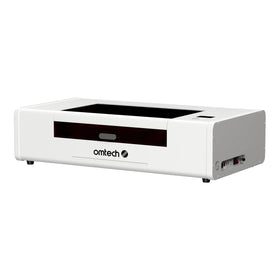








Laser Engravers for STEM Education
How Laser Technology is Transforming Science, Technology, Engineering, and Math Education
In classrooms across the country, educators are searching for tools that make abstract STEM concepts tangible, that engage students who learn best through hands-on creation, and that prepare young minds for a workforce increasingly driven by digital fabrication. Laser engravers have emerged as one of the most powerful additions to modern STEM curricula—bridging the gap between theoretical knowledge and practical application.

This article explores why laser engravers belong in STEM classrooms, what educational benefits they provide, and how schools can successfully integrate this technology into their programs.
Common Laser Types in Education:
CO₂ Lasers: The most popular choice for schools
- Cut and engrave wood, acrylic, leather, paper, cardboard
- Engrave (not cut) glass and some coated metals
- Power range: 40-100W typical for educational use
- Price range: $2,500-$8,000 for quality educational machines
Diode Lasers: Entry-level option
- Lower power, longer processing times
- More affordable initial investment
- Limited material compatibility
- Good for very basic introduction
Fiber Lasers: Advanced applications
- Specifically for metal marking and cutting
- Higher investment ($8,000+)
- Typically for advanced CTE programs
For most STEM classrooms, CO₂ lasers offer the best balance of capability, safety, affordability, and versatility.
Why Laser Engravers Belong in STEM Education
Bridging Theory and Practice
Traditional STEM education often struggles with a fundamental challenge: students learn concepts in the abstract, disconnected from real-world application. A physics formula on a whiteboard feels different from watching that same principle create a functioning mechanical device.
Laser engraving technology solves this disconnect by allowing students to:
- Design using mathematical and geometric principles
- Engineer functional solutions to real problems
- Test their designs through physical prototypes
- Iterate based on real-world performance
- Understand cause-and-effect through immediate results
When a student calculates gear ratios, then watches those gears actually mesh and turn in a laser-cut mechanism, mathematics transforms from abstract symbols into functional understanding.
Multi-Disciplinary Integration
Laser engraving naturally weaves together multiple STEM disciplines in ways few other classroom tools can match:
Science Applications:
- Materials science (how different materials respond to laser energy)
- Physics principles (light, heat, energy transfer)
- Chemistry (material composition affecting cutting properties)
- Biology (creating models of cellular structures, ecosystems)
Technology Integration:
- Computer-Aided Design (CAD) software proficiency
- Digital file management and preparation
- Understanding of manufacturing technology
- Introduction to Industry 4.0 concepts
Engineering Principles:
- Design thinking methodology
- Prototyping and iteration
- Tolerance and precision requirements
- Structural analysis and testing
- Problem-solving through constraints
Mathematics Application:
- Geometric design and spatial reasoning
- Precise measurement and scaling
- Coordinate systems and transformations
- Pattern recognition and tessellation
- Statistical analysis of design iterations
This integration reflects how STEM fields actually function in professional settings—rarely in isolation, but as interconnected disciplines solving complex problems.
Developing 21st Century Skills
Beyond specific STEM content knowledge, laser engraving projects cultivate essential workforce skills:
Design Thinking: Students learn to approach problems systematically—understanding user needs, ideating solutions, prototyping, testing, and refining based on feedback.
Digital Literacy: Proficiency with CAD software and digital fabrication tools prepares students for increasingly technology-dependent careers across all industries.
Precision and Attention to Detail: Unlike many classroom activities with flexible standards, laser cutting demands precise measurements and careful planning—mistakes are immediately visible in the physical output.
Project Management: Students learn to plan projects from concept through completion, managing time, materials, and iterative revisions.
Collaborative Problem-Solving: Group projects require communication, delegation, and collective troubleshooting when designs don't work as expected.
Resilience and Iteration: First attempts rarely produce perfect results. Students develop growth mindset through the natural iteration process of design, test, refine, repeat.
Engaging Diverse Learning Styles
Traditional STEM instruction often favors students who excel at abstract, symbolic thinking. Laser engraving technology opens pathways for different types of learners:
Kinesthetic Learners: Physical creation and hands-on manipulation of materials provides engagement that purely theoretical instruction cannot match.
Visual-Spatial Learners: Design work in CAD software and understanding of spatial relationships plays directly to visual-spatial strengths.
Students Who Struggle with Traditional Assessment: The tangible outcome of laser projects—a finished, functional product—provides alternative demonstration of understanding beyond written tests.
English Language Learners: Visual and hands-on learning reduces language barriers, allowing full participation regardless of English proficiency level.
Students with Learning Differences: Many educators report that students with ADHD, dyslexia, or other learning differences often thrive in maker-space environments where traditional academic challenges don't limit their ability to create and problem-solve.
Curriculum Applications Across Subjects
Science Classroom Applications
Biology:
- Cell structure models with removable, labeled components
- DNA molecule visualization tools
- Ecosystem food web displays
- Anatomical models for study
- Taxonomy classification tools
Chemistry:
- Molecular structure models
- Periodic table displays and games
- Laboratory equipment organization systems
- Chemical reaction demonstration tools
- Safety equipment signage
Physics:
- Simple machines demonstrations (levers, pulleys, gears)
- Force and motion visualization tools
- Optics demonstration devices
- Structural engineering test models
- Energy transfer demonstration tools
Earth Science:
- Topographic map models
- Rock cycle diagram displays
- Weather pattern visualization tools
- Geological time scale displays
- Solar system scale models
Technology Education Applications
Engineering Design Process:
- Complete design cycle projects (research, design, prototype, test, refine)
- Client-based design challenges
- Constraint-based problem solving
- Portfolio development for design work
Digital Fabrication Skills:
- CAD software mastery (Fusion 360, LightBurn, Inkscape)
- File preparation and optimization
- Understanding manufacturing workflows
- Introduction to Industry 4.0 concepts
Robotics Integration:
- Custom robot chassis and components
- Sensor mounting brackets
- Competition robot parts
- Housing and enclosures for electronics
Mathematics Applications
Geometry:
- Tessellation pattern exploration
- 3D geometric solid nets
- Angle and symmetry demonstrations
- Coordinate plane manipulatives
- Scale and proportion projects
Algebra:
- Function graphing tools
- Pattern and sequence visualizations
- Mathematical relationship demonstrations
Statistics:
- Data visualization projects
- Probability demonstration tools
- Survey result infographics
Applied Mathematics:
- Real-world measurement projects
- Budget and cost calculation exercises (material optimization)
- Engineering calculations applied to actual builds
Engineering Applications
Structural Engineering:
- Bridge design challenges (testing load capacity)
- Building structure models
- Truss system demonstrations
- Material strength testing
Mechanical Engineering:
- Gear train mechanisms
- Simple machine combinations
- Kinetic sculpture projects
- Working model creation
Design Engineering:
- Product design challenges
- User-centered design projects
- Iterative prototyping exercises
- Manufacturing constraint problem-solving
Cross-Curricular and Project-Based Learning
Laser engraving excels in project-based learning environments where students tackle complex, real-world challenges spanning multiple disciplines.
Example: Sustainable City Design Project
Subjects Integrated: Environmental Science, Engineering, Mathematics, Social Studies
Project Overview: Students design and build scale models of sustainable urban environments, incorporating:
- Renewable energy infrastructure models
- Efficient transportation system designs
- Green building concepts
- Population density calculations
- Environmental impact assessments
Laser Engraving Application:
- Cut building models to scale
- Engrave informational placards
- Create interactive display elements
- Produce presentation materials
Learning Outcomes:
- Systems thinking
- Environmental science concepts
- Mathematical scaling and proportion
- Engineering design constraints
- Persuasive communication (presenting solutions)
Example: Historical Innovation Recreation
Subjects Integrated: History, Science, Technology, Art
Project Overview: Students research historical inventions or scientific discoveries, then create laser-engraved models or functional recreations demonstrating the underlying principles.
Examples:
- Leonardo da Vinci's mechanical inventions
- Ancient astronomical instruments
- Historical measurement tools
- Early scientific apparatus
Learning Outcomes:
- Historical research skills
- Understanding scientific principles across time
- Appreciation for engineering evolution
- Technical communication skills
Example: Community Problem-Solving Initiative
Subjects Integrated: Engineering, Social Studies, Mathematics, Communication
Project Overview: Students identify real problems in their school or community, then design and create laser-cut solutions.
Recent Examples from Schools:
- Accessible signage for visually impaired community members
- Organizational systems for school resources
- Educational tools for younger students
- Fundraising products supporting causes
Learning Outcomes:
- Authentic problem identification
- Design thinking application
- Community engagement
- Real-world impact assessment
Implementation: Getting Started in Your School
Assessing Your Needs
Questions to Consider:
Curriculum Integration:
- Which courses will utilize this technology?
- How many students need access?
- What existing curriculum could incorporate laser projects?
Space Requirements:
- Where will the equipment be housed?
- Is proper ventilation available or feasible?
- Is the space secure and supervised?
Staffing:
- Who will be trained to operate/supervise equipment?
- What professional development is needed?
- How will scheduling and access be managed?
Budget Considerations:
- Initial equipment investment
- Ongoing material costs
- Maintenance and consumables
- Software licensing
Selecting the Right Equipment
For Educational Settings, Consider:
Safety Features:
- Class 1 laser certification (safest classification)
- Enclosed design with safety interlocks
- Emergency stop functionality
- Key-switch access control
Appropriate Power and Size:
- 40-50W: Suitable for basic engraving, thin material cutting
- 60-80W: Recommended for most STEM programs—versatile capability
- 100W+: Consider for advanced CTE or production-focused programs
Working Area:
- Larger working areas accommodate diverse project sizes
- Consider typical project dimensions for your curriculum
- Balance space requirements with classroom constraints
Software Compatibility:
- LightBurn compatibility offers industry-standard training
- Ensures skills transfer to professional/college settings
- Provides extensive tutorial resources
Educational Support:
- Manufacturer educational programs and pricing
- Curriculum resources and lesson plans
- Teacher training availability
- Responsive technical support
Safety Protocol Development
Essential Safety Elements:
Training Requirements:
- Mandatory safety training before equipment access
- Written safety quiz demonstrating understanding
- Hands-on supervised practice before independent use
- Regular safety refreshers
Operational Procedures:
- Clear step-by-step operating procedures
- Material safety guidelines (what can/cannot be cut)
- Emergency procedures clearly posted
- Adult supervision requirements
Physical Safety Measures:
- Proper ventilation system installation
- Fire extinguisher accessibility
- Clear workspace organization
- Appropriate personal protective equipment when required
Documentation:
- Safety training completion records
- Equipment usage logs
- Maintenance schedules
- Incident reporting procedures
Curriculum Development Approach
Starting Simple:
Phase 1: Foundation (Weeks 1-2)
- Basic safety training
- Introduction to design software
- Simple first projects (name tags, basic shapes)
- Building confidence and competence
Phase 2: Application (Weeks 3-6)
- Subject-specific projects
- Increasing design complexity
- Introduction to engineering design process
- Collaborative projects
Phase 3: Integration (Weeks 7-12)
- Cross-curricular projects
- Student-directed design challenges
- Real-world problem-solving
- Portfolio development
Phase 4: Mastery (Ongoing)
- Advanced techniques
- Student mentorship opportunities
- Community engagement projects
- Competition participation (if applicable)
Funding Strategies
Grant Opportunities:
Federal Programs:
- Carl D. Perkins CTE Grants
- 21st Century Community Learning Centers
- National Science Foundation grants
State and Local:
- State STEM education grants
- Local education foundation grants
- Community business partnerships
Private Foundations:
- Technology-focused foundations
- STEM education initiatives
- Corporate giving programs
Alternative Funding:
- PTA/PTO fundraising
- DonorsChoose.org campaigns
- Business partnerships and sponsorships
- Booster club support
Cost-Effective Approaches:
- Start with single machine, expand based on success
- Shared equipment across multiple classes/departments
- After-school program funding models
- Student fee models for consumables (where appropriate)
Measuring Educational Impact
Assessment Strategies
Portfolio-Based Assessment:
- Design process documentation
- Iteration and improvement evidence
- Final product quality
- Reflection on learning
Skill-Based Rubrics:
- Technical proficiency (software, equipment operation)
- Design thinking application
- Problem-solving demonstration
- Collaboration effectiveness
Standards Alignment: Laser engraving projects can address:
- Next Generation Science Standards (NGSS) engineering design standards
- Common Core mathematical practice standards
- ISTE technology standards
- State-specific STEM competencies
Long-Term Outcomes to Track
Student Engagement Metrics:
- Course enrollment trends
- Elective/club participation
- Student satisfaction surveys
- Attendance patterns during laser-integrated units
Skill Development:
- Pre/post assessment of design thinking
- Technical skill progression
- Problem-solving capability growth
College and Career Readiness:
- Related career interest development
- Portfolio quality for applications
- Relevant certification achievement
- Post-graduation pathway tracking
Real-World Success Stories
Case Study: Middle School STEM Integration
A suburban middle school integrated laser engraving into their 7th-grade STEM elective, initially serving 60 students annually.
Implementation:
- Started with single 60W CO₂ laser
- Trained two teachers as primary operators
- Developed cross-curricular unit connecting math, science, and technology
Results After Two Years:
- Program expanded to serve 240 students annually
- Added second machine due to demand
- Student STEM elective enrollment increased 35%
- Teacher reported significant increase in struggling students' engagement
- Program became model for other schools in district
Case Study: High School Engineering Program
A high school engineering pathway incorporated laser cutting into their existing curriculum, using it for prototype development across multiple courses.
Implementation:
- Integrated into existing Introduction to Engineering Design course
- Advanced students used equipment for capstone projects
- Connected with local manufacturing businesses for real-world context
Results:
- Students developed portfolio-quality projects for college applications
- Several students pursued engineering programs citing laser-cutting experience
- Local business partnerships developed through demonstrated capability
- Program received recognition at state technology education conference
Case Study: Elementary STEM Enrichment
An elementary school after-school STEM club introduced laser engraving for students in grades 4-5, focusing on foundational design thinking.
Implementation:
- Simplified projects with heavy teacher guidance initially
- Focus on basic shapes, patterns, and simple text
- Connected to classroom science and math units
Results:
- High student engagement and enthusiasm
- Successful introduction to CAD concepts at elementary level
- Positive parent feedback on student excitement about STEM
- Smooth transition pathway to middle school STEM programs
Addressing Common Concerns
"Isn't This Too Advanced for [Grade Level]?"
Laser engraving technology scales remarkably well across age groups:
Elementary (K-5): Teacher-led design with simple student input; focus on basic shapes and personalization
Middle School (6-8): Guided independent design; introduction to CAD software; structured projects with creative elements
High School (9-12): Independent design and problem-solving; complex, multi-step projects; industry-standard software proficiency
The key is age-appropriate scaffolding, not avoiding the technology altogether.
"We Don't Have Space for This"
Space-Efficient Solutions:
- Desktop laser engravers require modest footprint (often 3-4 square feet)
- Mobile carts allow equipment sharing across classrooms
- Many schools successfully operate in converted closets or corner spaces
- Proper ventilation can often utilize existing HVAC modifications
"This Seems Expensive"
Cost Perspective:
- Compare to other STEM equipment (3D printers, robotics kits, science lab equipment)
- Consider cost-per-student when serving multiple classes/years
- Grant funding specifically targets this type of equipment
- Long lifespan (5+ years) distributes cost effectively
- Consider revenue potential (school store, fundraising products)
"Our Teachers Aren't Technical Enough"
Support Systems Available:
- Manufacturer training programs (often free or low-cost)
- Extensive online tutorial libraries
- Active educator communities for peer support
- User-friendly software specifically designed for accessibility
- Start simple; expertise develops through use
"Safety Concerns Are Too Significant"
Modern Safety Standards:
- Class 1 laser certification means enclosed, safe operation
- Automatic safety interlocks prevent exposure
- Far safer than many traditional shop class equipment
- Comprehensive safety protocols well-established in education sector
- Thousands of schools successfully operate this equipment safely
The Future of STEM Education and Digital Fabrication
As industries increasingly rely on digital fabrication technologies—from rapid prototyping to custom manufacturing—educational systems must prepare students for this reality. Laser engraving represents an accessible entry point into this technological ecosystem.
Emerging Trends:
Increased Accessibility: Equipment costs continue decreasing while capabilities increase, making implementation feasible for more schools.
Software Advancement: Design software becomes increasingly intuitive, reducing learning curve barriers.
Industry Connections: Growing partnerships between schools and local manufacturers create authentic learning opportunities and career pathways.
Interdisciplinary Recognition: Educational standards increasingly emphasize the cross-curricular thinking that laser engraving naturally supports.
Workforce Alignment: As manufacturing evolves toward digital fabrication, early exposure provides genuine career preparation advantages.
Making the Investment: Why Now?
Schools considering laser engraving technology for STEM education face a straightforward calculation: the tools that once required significant capital investment and specialized facilities are now accessible, safe, and educationally proven.
The Case for Implementation:
✅ Proven Educational Value: Extensive evidence supports STEM learning enhancement
✅ Accessible Technology: Modern equipment designed specifically for educational safety and use
✅ Comprehensive Support: Manufacturers provide curriculum resources, training, and ongoing support
✅ Scalable Implementation: Programs can start small and grow based on success and demand
✅ Multiple Funding Pathways: Various grant and funding opportunities specifically support this technology
✅ Long-Term Value: Equipment lifespan and versatility provide sustained educational return
✅ Student Engagement: Consistently demonstrates increased student interest and participation in STEM
Getting Started: Your Next Steps
For Educators Ready to Explore Implementation:
1. Research and Learn
- Explore educational resources and case studies
- Connect with schools already implementing this technology
- Attend webinars or educational conferences featuring digital fabrication
2. Build Your Case
- Document curriculum connections and learning objectives
- Calculate potential student impact
- Research funding opportunities
3. Start Small
- Consider pilot programs before full implementation
- Begin with single classroom or elective course
- Document outcomes for future expansion justification
4. Seek Support
- Contact equipment manufacturers about educational programs
- Connect with educational technology coordinators
- Join educator communities focused on digital fabrication
5. Plan for Success
- Develop comprehensive safety protocols
- Create curriculum integration plans
- Establish assessment and evaluation methods
Conclusion: Empowering the Next Generation of Innovators
Laser engraving technology represents far more than an interesting classroom gadget—it's a genuine bridge between abstract STEM concepts and tangible, real-world application. When students design a bridge structure, calculate the geometry, then watch their laser-cut model actually bear weight, they experience learning in its most powerful form: understanding through creation.
As education continues evolving to meet the demands of an increasingly technical world, tools that combine multiple STEM disciplines while developing crucial 21st-century skills become not just beneficial, but essential.
The question facing educators isn't whether digital fabrication belongs in STEM education—the evidence overwhelmingly supports its value. The question is how quickly schools can implement this technology to give students the hands-on, engaging, multi-disciplinary learning experiences that prepare them for future success.
Every laser-cut project completed by a student represents more than a physical object—it represents confidence gained, concepts understood, problems solved, and potential unlocked. That's the true value laser engraving brings to STEM education.
Additional Resources
Curriculum Development:
- Next Generation Science Standards (NGSS): nextgenscience.org
- ISTE Standards for Students: iste.org/standards
- Project Lead the Way: pltw.org
Professional Development:
- FabLearn (Stanford): fablearn.stanford.edu
- Maker Ed: makered.org
- ITEEA (Technology & Engineering Education): iteea.org
Grant Resources:
- Grants.gov (federal opportunities)
- DonorsChoose.org (classroom crowdfunding)
- Your state Department of Education STEM initiatives
Equipment and Educational Support:
Ready to explore laser engraving for your STEM program? OMTech offers dedicated educational resources, including:
- Educational Pricing: Special discounts for schools and educational institutions
- Curriculum Support: Free resources and lesson plan frameworks
- Teacher Training: Comprehensive onboarding and ongoing support
- Safety-First Design: Class 1 certified equipment built for educational environments
- Nationwide Demo Rooms: See equipment in action before purchasing
Explore OMTech Educational Programs | Find a Demo Room Near You | Contact Our Education Team