







How to Use Different Stabilizers for Embroidery

Whether you’re stitching by hand or using a modern embroidery machine, stabilizer plays a critical role in how your finished design looks and holds up over time. It’s the foundation that keeps fabric from shifting, puckering, or stretching as stitches are laid down. Choosing the right stabilizer—and knowing how to use it correctly—can mean the difference between a crisp, professional result and a distorted design that doesn’t survive the first wash.
In both hand and machine embroidery, stabilizer supports the fabric while stitches are being formed, allowing thread tension and stitch density to remain consistent. In this article, we’ll show you the different types of stabilizer—tear-away, cutaway, and dissolving options—and help you select the best support for your project, fabric, and design.
Tear-Away Stabilizer: Clean Backs and Simple Support
Tear-away stabilizer is one of the most popular options for embroidery, especially for lightweight or tightly woven fabrics. It is non-fusible and typically attached to the back of the fabric using a light coat of temporary spray adhesive before hooping. Once adhered, the fabric and stabilizer are hooped together snugly—firm but not stretched—so the surface stays flat during stitching.
This type of stabilizer works best with natural, stable fabrics such as cotton, linen, or canvas. Because tear-away stabilizer weakens with repeated needle penetrations, it is best suited for designs with moderate stitch density rather than very dense or oversized patterns.
One of the main advantages of tear-away stabilizer is the clean finish it leaves behind. After stitching is complete, the excess stabilizer is gently torn away from around the design, leaving no visible edge or backing on the garment. For simple logos or decorative embroidery, this makes tear-away a popular choice.
However, tear-away stabilizer does require careful handling. Intricate designs may leave small bits of stabilizer trapped within dense stitching, which often need to be removed with tweezers. Because the stabilizer weakens over time from needle hits, it can also allow fabric distortion if the design is too dense or the fabric too stretchy. A general rule of thumb applies here: lighter fabrics require lighter stabilizer, and heavier fabrics need stronger support. Multiple layers of tear-away can be stacked for added stability, but only when appropriate for the fabric and design.
Cutaway Stabilizer: Long-Term Stability and Durability
Cutaway stabilizer is considered the most versatile and durable option, especially for machine embroidery. Like tear-away, it is typically non-fusible and attached to the back of the fabric with temporary adhesive before hooping. Once hooped, the fabric should be pulled to a “drum-tight” tension to prevent shifting while stitching.
Cutaway stabilizer excels when working with dense designs, large embroidery areas, or fabrics that stretch—particularly knits and T-shirts. Because it does not tear away, it continues to support the embroidery long after stitching is complete, helping the design maintain its shape through repeated wear and washing.
This makes cutaway stabilizer ideal for garments that will see heavy use. It is also soft against the skin, which is why it is commonly used for apparel embroidery. After stitching, the excess stabilizer is trimmed close to the design—usually leaving about 1/8" to 1/4" around the stitched area—without cutting into the fabric itself. Since the stabilizer remains permanently on the garment, choosing a soft, flexible cutaway is important for comfort.
For hand embroidery, cutaway stabilizer can also be useful when working on stretchy fabrics or when creating detailed designs that require long-term support.
Dissolving Stabilizers: Precision and Special Applications
Dissolving stabilizers are another common category, designed to disappear completely after stitching. These stabilizers come in several forms, including water-soluble films, water-soluble papers, heat-soluble sheets, and even liquid stabilizers.
Water-soluble stabilizers are the most widely used of this group. They are available in plastic-like film or paper form and come in various weights. These stabilizers are especially useful for lace embroidery, fine or sheer fabrics, and freestanding embroidery designs where no backing should remain visible.
They are also commonly used as a topping placed on top of textured fabrics like terry cloth, fleece, or knits. In this role, the stabilizer prevents stitches from sinking into the fabric pile, ensuring crisp, well-defined embroidery.
Care is required when using water-soluble stabilizers. They should be hooped carefully without stretching, and they must be stored in airtight packaging to prevent them from absorbing moisture and degrading prematurely. After stitching, the excess stabilizer is trimmed away, then rinsed in warm water until fully dissolved. Gently rubbing the area or using a soft nail brush can help remove residue trapped in dense stitching.
It’s important to note that water-soluble stabilizers should not be used as the sole backing for standard fabric embroidery. They are designed for specific applications, such as freestanding lace or temporary surface support, not general stabilization.
Matching Stabilizer to Fabric and Design

Choosing the right stabilizer always comes down to matching the stabilizer type and weight to both the fabric and the stitch density of the design. Lightweight fabrics require lighter support, while heavier fabrics and dense designs demand stronger stabilization.
Using stabilizers made specifically for machine embroidery is highly recommended, as generic interfacing may not hold up to repeated needle penetration or wash cycles. Testing is also essential. Before committing to a final piece, run a sample using the same fabric, stabilizer, and design. This small step can prevent wasted materials and disappointing results.
Once you find a stabilizer that consistently produces results you like, it’s perfectly acceptable to stick with it. Embroidery is as much about personal workflow as it is about technical rules.
Stable Process, Stable Results
Stabilizers may not be visible in the finished embroidery, but their impact is undeniable. Tear-away stabilizers offer clean backs and simple support, cutaway stabilizers provide lasting durability, and dissolving stabilizers enable precision and specialty techniques. Understanding when and how to use each type gives you greater control over your embroidery results, whether you’re stitching by hand or running a multi-needle machine.
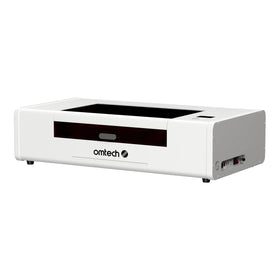
If you’re ready to put proper stabilization to work in a professional embroidery workflow, the OMTech Pulse 15-needle embroidery machine offers the precision, versatility, and efficiency needed for everything from apparel to accessories. Designed for reliability and multi-color production, the Pulse pairs perfectly with the right stabilizer choices to help you achieve clean, consistent results every time.
Explore the OMTech Pulse and elevate your embroidery with confidence.