







How to Make Money With an Embroidery Machine
To make money with an embroidery machine, you need to be able to identify where the profit comes from and maximize that potential income from those areas. Most embroiderers agree that profit comes from marking up physical items like hats, baby clothes, or corporate polos and using embroidery as added value, rather than charging solely for stitch count.
Making money with an embroidery machine requires finding a specific niche, outsourcing your digitizing initially, and securing bulk B2B clients rather than competing on cheap custom items.
But that is only the general opinion when it comes to making money from an embroidery machine. The truth is, there are so many other avenues where you will be able to make money with an embroidery machine if you are creative, smart, and understand your market.
In this blog, we will discuss how you can generate more profit with your embroidery machine by using the following three strategies:
- targeting local niches
- buying blanks in bulk
- and marketing actively on social media

Strategy #1: Find Your Niche and Products
To find your embroidery business niche, focus on specific local industries, underserved hobby groups, or specialized personalized items rather than general one-off apparel. Here are some profitable embroidery niches you can make money in:
- Personalization: Monogramming items that customers already own (backpacks, towels, linens) is a high-profit niche because you don't need to hold inventory.
- Specialty Items: Custom baby gear, religious apparel, local school spirit wear, and hospital uniforms are frequently cited as high-demand items.
- Small Business Customization: Rather than competing with big manufacturers, small shops thrive by doing small batch jobs (1–20 pieces) for local businesses.
- Hats/Caps: High-demand items but require a good machine to do properly.
What Are the Best Niches To Make Money With An Embroidery Machine?
- Local B2B and corporate orders: Target local businesses, landscapers, construction crews, and restaurants. They need logos on polo shirts, jackets, and hats, and they buy in bulk.
- The "Niche" Etsy shop: Avoid generic monogramming. Hyper-focus on underserved markets like custom pet ear embroidery, personalized memory bears, high-end bridal handkerchiefs, or specialized anime/gaming patches.
- Medical and school spirit wear: A very lucrative niche is embroidering department fleece jackets for hospital staff (nurses, doctors) and custom spirit wear for local private schools.
How To Identify High-Profit Embroidery Niches
Understand that it is all about identifying existing opportunities in the market or area where you find yourself, and creating continuous demand rather than one-time sales. Here are three ways you can o find your niche:
- Target local businesses: Pitch your custom logo polo shirts or hats to local contractors, landscapers, and cafes.
- Consider making niche apparel: Focus on high-margin items like children's boutique clothing, custom baby blankets, and pet accessories.
- Look into event merch: Target local sports teams, dance schools, and charity 5K runs for bulk cap and jacket orders.
The whole point of having a niche is that it helps you build a reliable customer base and increases your repeat orders. So target repeat-order B2B clients or unique keepsakes, especially if you are trying to keep a single-head machine profitable.
Explore some of the best embroidery ideas for beginners.

2. Pricing and Profit Strategies To Make Money With an Embroidery Machine
The conventional way of pricing embroidery is by using stitch-count formulas for machine work ($1 per 1,000 stitches plus garment costs and a $20 minimum), and hourly formulas for hand embroidery (materials + hours worked × local living wage).
If you want to make money with an embroidery machine, the best strategy is to use a mix of base fees, stitch metrics, and add-ons.
Here is a profitable pricing strategy to consider: (Stitch count/1,000 x rate) +cost of blank garment+ extra labor+markup.
This formula works because it helps you price your items to fully reflect your time, material costs, and skill level. Here are the charges it accounts for:
- Blank markups: Double the wholesale cost of the blank garment or add a fixed $7–$10 decoration fee per item.
- Extra upcharges: Add fees for customer-supplied items (risk of error), tricky materials like Carhartt jackets or robes, and single custom names.
- The stitch count rule: Charge roughly $1.00 per 1,000 stitches, though small logos often carry a flat minimum shop fee of $15 to $25.
- Digitizing fees: Charge a flat $15 to $45 setup/digitizing fee for new logos depending on complexity. You can sometimes waive this fee for bulk orders.
Smart, Profitable Pricing Strategies For Embroidery Machines
- Markup the blank: Most home embroiderers note you cannot make good money charging just for the embroidery; profit lives in the garment markup.
- Set minimums: Do not turn on your machine for less than a $15 to $20 base item price.
- Bulk efficiency: Streamline hooping and thread changes to handle small batch orders rather than single one-offs.
- Open wholesale accounts: Set up accounts with bulk apparel distributors like SanMar, S&S Activewear, or AlphaBroder.

Making Money With an Embroidery Machine: Marketing and Client Acquisition Strategies
To generate sales for your embroidery products, focus on platforms like Etsy or your own website while driving traffic through short-form video content on social media. You can also build local B2B clients by offering free samples to local businesses. Here are three ways you can leverage these methods:
- Drop samples: Stitch a free sample polo or hat for a local business you like and drop it off in person.
- Social proof: Post crisp, high-resolution videos and photos of your stitch-outs on TikTok, Instagram, and local Facebook groups.
- Validate first: Test market interest with pre-orders before buying massive amounts of inventory or expensive commercial upgrades.
Making Money With An Embroidery Machine: Local B2B vs. Online Retail
Choosing between Local B2B and Online Retail fundamentally changes how you run your business, use your OMTech machine, and make profit. Here is what you have to know and consider when choosing between these two ways of making money with your embroidery machine.
Local B2B focuses on high volume and lower margins per stitch.
- With local B2B, you need bulk orders to make good money. A deal like 50 shirts for a landscaping crew may make good money, but lower quantity orders will not be very profitable.
- Online retail, on the other hand, focuses on low volume and high margins. You might sell just one custom bridal jacket on Etsy, but you can charge a massive premium for the unique design.
The machine workflow and setup also matter
- Local B2B is highly efficient for a 10-15-needle machine. You load the client’s brand colors once, lock in the hoop size, and you can run the machine continuously for hours.
- For online retail, you need a high-maintenance workflow. You constantly change thread colors, switch hoop sizes, and swap out designs for every individual order, which increases your machine downtime.
Customer Management and Marketing Needs Differ Too
- Local B2B relies very heavily on relationship building and cold outreach. One good connection with a local contractor can lead to years of recurring, predictable uniform orders.
- Online Retail is much less reliable. It tends to rely heavily on platform algorithms, SEO, and social media trends. You need to spend significant time taking photos, packaging single items, and dealing with individual customer shipping inquiries.
So, the question is, which approach fits your current schedule better? Handling fewer, larger clients locally, or managing many individual buyers online? The answer to this question will help you decide which pathway to adopt and which would potentially make you the most money
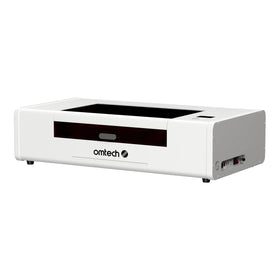
Making Money With The OMTech Pulse 15-Needle Embroidery Machine: Key Strategies
With an OMTech Pulse 15-Needle Machine, you have a powerful, entry-level commercial setup capable of 1,000 stitches per minute and automatic color changes. A single industrious 15-needle head like this can generate an average of $30 to $50 per hour in active production.
Because your machine features a large 13" x 19.7" embroidery field and a 270° cap rotation driver, you can target the most lucrative business markets immediately.
1. Monetize the 270° Cap Driver (High Margin)
Hats are notoriously difficult for hobbyists but a breeze for your machine. Here’s how you can generate money: avoid stitching single hats for individuals. Instead, target local golf clubs, car meets, construction crews, and fitness studios.
You can clear a massive profit if you buy wholesale blanks (like Yupoong or Richardson) for $4–$6, and charge $15–$20 per custom cap in small bulk batches (12–24 units).
2. Capitalize on 15 Needles for Multi-Color B2B Uniforms
Your machine holds 15 thread cones at once, meaning you can stitch complex, multi-colored business logos without stopping for manual thread swaps.
If you keep your primary 15 needles pre-loaded with standard corporate colors (black, white, navy, red, gold), this will slash your job setup time to nearly zero and allow you to push multiple orders through every single day.
Your goal should be to secure recurring clients like HVAC companies, landscaping crews, and local restaurants.
3. Leverage the Large 13" x 19.7" Field for Statement Pieces
Hobby machines max out quickly, but with the OMTech embroidery machine, you have a larger 13" x 19.7" workspace, which allows you to fulfill high-end, premium requests. Offer large jacket backs for local motorcycle clubs, custom heavy-duty tote bags, or corporate canvas jackets.
You can charge a premium flat "digitizing fee" ($30–$60) for transforming their business logo into a stitch file, then retain them as a long-term customer since you own their production-ready design.
Key Challenges To Making Money With an Embroidery Machine
- There is usually a steep learning curve: It takes time to learn to hoop, stabilize, and maintain the machine properly, which is crucial for reducing waste.
- Digitizing is key: Learning to digitize (convert images to embroidery files) is hard but profitable. Many beginners start by outsourcing this, then learning it later.
- Equipment quality: While you can start on a smaller home machine (like a Brother PE800), you will very likely have to upgrade to a multi-needle commercial machine for high-speed, high-quality production.
- It is not just about the machine: Success in the embroidery business requires marketing, finding customers, and finding reliable blank suppliers (e.g., SanMar, S&S).
Golden Rules For Making Money With an Embroidery Machine
1. Outsource your digitizing at first
Digitizing (converting an image into a stitch file) is a completely separate artistic and technical skill from operating the machine. It is usually not wise to pay a professional digitizer ($10–$20) and pass that cost to the customer when starting. Trying to use "auto-digitize" software results in thread breaks, ruined garments, and a terrible customer experience.
2. Don't fight a price war on Etsy
If you are using a single-needle home machine (like a Brother PE800 or SE600), you cannot compete with massive multi-head industrial shops on speed or price.
3. Secure wholesale accounts
To maximize profit margins, do not buy blanks at retail prices. Business owners always recommend setting up a legal business entity to get wholesale accounts with apparel distributors like SanMar, S&S Activewear, or AlphaBroder.
Final Thoughts on Making Money With an Embroidery Machine
You can absolutely make money with an embroidery machine. Though it is usually more challenging than it looks, there is a very high profit potential if you adopt a strategic approach that combines your skill and ability, the embroidery machine that you have, your creativity, and intimate knowledge of the market around you.
Again, the key is to find what your niche is, adopt a viable pricing strategy, and market your products very well. To start, you must understand that it will take business acumen to succeed, and you must also be willing to confront and solve some of the challenges that the business will throw your way.
In this way, you can turn a profit in a relatively short time and stay in the business long-term.
You may also be interested in how to start an embroidery business in 2026.