







How to Start a Phone Case Business in 4 Steps
When you are starting a phone case business, your initial goal should be to create unique phone case designs that appeal to a particular niche of customers and test those designs using low-risk print-on-demand (POD) platforms like Podbase or Printful.
From there, you can build a brand that focuses on a specific niche, evaluate whether to print on demand or print in-house, then market heavily through TikTok and Instagram short-form videos, and expand beyond just iPhone models to capture the underserved Android market.
It sounds much easier than it actually is, because the phone case business is especially crowded nowadays. So, needless to say, several steps in this process require a great deal of creativity and market knowledge. Here are two key questions you should ask yourself before starting a phone case business:
- What is your target niche or design style?
- Are you planning to use print-on-demand, or will you print the cases yourself?
Based on your answers to these questions, you can create a tailored launch checklist or marketing plan.

Step #1: Create Unique Phone Case Designs
The most common way to create phone case designs is to start with a matte or clear TPU base, add high-resolution layered graphics or 3D charms, and secure them using UV resin or a strong epoxy.
This process is standard for everyone making phone cases, but the way to differentiate yourself is through the level of creativity and visual appeal you bring to your final designs.
If you are looking to start a phone case business, you probably already have an idea of the type of phone case designs you want to create. If not, finding inspiration starts with exploring daily micro-trends, nature, and your own personal archives before turning those visual ideas into mood boards or design templates using platforms like Shopify.
Here are some ways to find inspiration:
- Explore Pinterest: Search for terms like "coquette aesthetic," "abstract fluid art," or specific vintage eras to identify recurring color palettes and design motifs.
- Instagram and TikTok reels: Watch DIY painting, custom sticker application, and resin-pouring videos for real-time texture and technique ideas.
- Browse design blogs: Explore curation hubs like Printful for structured style breakdowns across different niches.
Why Creativity Is Important in the Phone Case Business
Here is a secret about the phone case business that is especially important for beginners: your success will depend largely on how much creativity you put into your phone case designs.
Phone case sales are driven primarily by visual appeal. The more attractive and distinctive your designs are, the more sales you are likely to make.
Step #2: Find Your Niche and Specialize (At Least in the Short Term)
In the phone case business, your target niche or design style determines who you market to, how much you can charge, how you source materials, and which social media platforms you should focus on.
To help you navigate the market, here is a breakdown of the three primary phone case niches and communities, evaluated by profitability, competition, and level of effort.
Niche 1: Passionate Fandoms and Hobbies
In the phone case business, your target niche or design style determines who you market to, how much you can charge, how you source materials, and which social media platforms you should focus on.
To help you navigate the market, here is a breakdown of the three primary phone case niches and communities, evaluated by profitability, competition, and level of effort.
Pros:
- Highly loyal customers.
- Strong repeat purchase rates.
- Community-driven word-of-mouth marketing.
Cons:
- High risk of copyright infringement if you use official logos or characters.
- You must create original, inspired-by artwork.

Niche 2: Lifestyle and Aesthetic Subcultures
These customers are drawn to specific aesthetics such as Y2K, Cottagecore, Cyberpunk, Goth/Alt, Minimalist/Clean Girl, or Retro '90s. You can easily reach these audiences through Instagram, TikTok, and Pinterest.
This niche works particularly well if you are focusing on print-on-demand, since you are less likely to be left with unsold inventory when trends fade. Success in this market depends heavily on your branding and short-form video content.
Pros:
- Highly visual.
- Perfect for viral short-form video marketing.
- Easy to launch using print-on-demand.
Cons:
- Fierce competition from fast-fashion retailers such as Shein, Temu, and Amazon.
- Trends change extremely quickly.
Niche 3: High-Utility and Functional Phone Cases
These are practical phone cases designed for customers who prioritize protecting their phones. If you have startup capital and want to build a serious product-focused brand, solving a practical problem is often more profitable than simply selling an attractive design.
Pros:
- Customers buy out of practical need rather than emotion.
- Higher average selling prices ($40–$80+).
- Very low return rates.
Cons:
- Difficult to produce using print-on-demand.
- Requires manufacturing partnerships, upfront capital, and strict quality control.
Which Is the Best Niche for a Phone Case Business?
For beginners, passionate micro-niches (hobbies, pets, and special interests) are usually the best choice.
They avoid the intense price competition of aesthetic niches, where you compete against inexpensive factory-made cases, while also requiring far less startup capital than high-utility or premium corporate brands.
They are also easier to market because passionate communities naturally share products they love, making them an excellent opportunity for healthy profit margins and long-term customer loyalty.
Step #3: Determine Your Production and Sourcing Strategy: POD vs. In-House Printing
Choosing between print-on-demand (POD) and in-house printing completely changes your business model, financial risk, daily operations, and long-term growth strategy. Here is how that single decision affects each of the major areas of your business.
Financial Risk and Upfront Capital
- If you choose print-on-demand, you need virtually no upfront product investment. You only pay for a phone case after a customer places an order, making POD an excellent way to test new designs with minimal financial risk.
- With in-house printing, however, startup costs are significantly higher. You must invest in equipment (such as a UV printer or sublimation heat press) as well as blank phone case inventory, typically requiring an initial investment of $1,000–$5,000 or more.
Most entrepreneurs agree that starting with POD is the safest approach because it minimizes inventory costs while allowing you to discover which designs actually sell.
Profit Margins and Pricing Power
- With print-on-demand, profit margins are generally lower. You can typically expect margins of around 20% to 30%, since the POD provider handles production, labor, and fulfillment in exchange for a significant share of the revenue.
- With in-house printing, profit margins are considerably higher. Margins of 60% to 80% are achievable because blank phone cases are inexpensive when purchased in bulk, allowing you to retain most of the retail price.
Operations and Fulfillment Speed
- With print-on-demand, the entire fulfillment process is essentially hands-off. The provider prints, packages, and ships each order directly to your customer, allowing you to focus almost entirely on marketing and growing your brand.
- With in-house printing, there is much more day-to-day work involved. You must manage inventory, print every phone case yourself, purchase shipping labels, package orders, and deliver them to the shipping carrier.
Therefore, if you have the time and energy to dedicate to the business, in-house printing can be an excellent long-term option.
Product Quality and the Unboxing Experience
- With print-on-demand, you have relatively little control over the final product. You cannot inspect print quality before orders are shipped, and you are generally limited to standard, generic packaging.
- With in-house printing, you have complete creative control. You can inspect every case before shipping and create premium branded packaging with custom boxes, stickers, inserts, and thank-you cards that provide customers with a memorable unboxing experience.
Speed to Market and Catalog Flexibility
- With print-on-demand, you can respond almost instantly to changing trends. You can upload dozens of new designs in a single afternoon or capitalize on a viral trend without worrying about unsold inventory.
- With in-house printing, expanding your catalog is usually slower. You must purchase and store blank cases for every phone model (iPhone 14, 14 Pro, 14 Pro Max, 15, and so on), tying up capital in physical inventory.
POD vs. In-House Printing for a Phone Case Business: Which Should You Choose?
| Factor | Print-on-Demand (POD) | In-House Printing |
| Upfront Cost | Very low; no inventory required. | Higher investment ($1,000–$5,000+) for equipment and blank cases. |
| Profit Margins | Lower (typically 20%–30%). | Higher (typically 60%–80%). |
| Operations | Provider handles printing, packaging, and shipping. | You manage production, inventory, packaging, and fulfillment. |
| Quality Control | Limited control over print quality and packaging. | Full control over quality, branding, and the customer unboxing experience. |
| Speed and Flexibility | Quickly add new designs and follow trends without inventory risk. | Slower to expand due to inventory requirements for multiple phone models. |
Should You Choose Print-on-Demand or In-House Printing?
If you're just starting, print-on-demand (POD) is the better choice. It keeps startup costs low, eliminates inventory risk, and lets you test new designs while the provider handles production and shipping.
As your business grows, in-house printing becomes more worthwhile. Although it requires a larger upfront investment, it offers higher profit margins, better quality control, and greater branding opportunities.
For most entrepreneurs, the best strategy is to start with POD and transition to in-house printing once you have consistent sales and proven demand.
Step #4: Handle Social Media and Marketing
- Short-form video: Prioritize TikTok and Instagram Reels over static Facebook advertisements. Showcase your packing process, durability tests, and how your phone cases complement different aesthetics.
- Show the creation process: Audiences connect much more strongly with creators than with products alone. Behind-the-scenes videos showing your design process, production workflow, and packaging are often more effective than traditional sales-focused content.
- The Android gap: Don't overlook Android users. Most phone case brands focus almost exclusively on Apple products, so offering stylish cases for popular Samsung and Google Pixel devices can help your business stand out from the competition.
When Is Your Phone Case Business Successful? Five Key Signs
From a financial perspective, your phone case business is successful when it consistently generates positive profit margins after production, advertising, and shipping costs have been deducted.
However, there are many other indicators of success beyond profitability, including strong customer loyalty and growing organic social media engagement.
Here are some important signs that your business is succeeding:
- Good returns in net profit: Your revenue consistently covers manufacturing, platform fees, advertising, and shipping costs while still producing healthy profits.
- Low return rates: Customers are satisfied with the print quality and durability of your products, resulting in very few refunds or complaints.
- Healthy cash flow: You can finance new inventory or design launches using profits from previous sales rather than relying on outside funding.
- Repeat buyers: A significant percentage of your weekly or monthly orders come from returning customers.
- Organic mentions and low customer acquisition costs: Customers voluntarily share photos of your products on social media because they genuinely enjoy them, helping reduce the amount you spend on acquiring each new customer.
Obviously, the most significant way to measure the success of your phone case business, just like any other business, is by how much money it generates in profit. However, it is not always about how much money you make. Depending on what stage you are at in your business journey and what your specific challenges are, any of the above signs could be a good indicator of success in your business.
What Machine(s) Do You Need to Start a Phone Case Business?
The equipment you need depends entirely on your production method.
For a standard custom print shop, you will need a sublimation printer, a heat press, and design software. If you plan to print directly onto phone cases, however, you will instead need a UV flatbed printer.
When choosing a UV printer for a phone case business, look for a machine with white ink capability, reliable manufacturer support, and compatibility with custom jigs for efficient batch printing.
It should also have the following characteristics:
- White ink and varnish channels: Essential for printing vibrant colors on clear or dark phone cases and producing raised or textured glossy finishes.
- Jig customization: Precise custom or vacuum jigs securely hold multiple phone cases in place while accommodating curved edges and raised bezels.
- Reliable printheads: Industrial-quality or reputable printhead systems are less prone to clogging caused by white ink.
- Excellent material adhesion: Ensure the printer performs well on TPU and hard plastic cases, remembering that pure silicone cases are notoriously difficult for UV inks to adhere to.

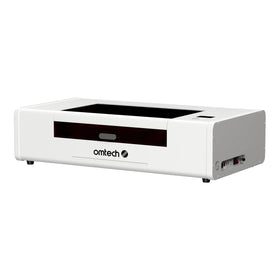
OMTech Spectra A3+ Flatbed UV Printer: Best for Solid, Vibrant Phone Case Printing
The OMTech Spectra A3+ Dual-Head UV Printer is an excellent choice for producing custom phone cases thanks to its professional-grade hardware and precision workflow.
Its dual Epson printheads support high-resolution, fine-droplet printing for exceptionally sharp graphics and intricate details, while the multi-ink configuration allows CMYK, White, and varnish layers to be applied with outstanding accuracy.
The vacuum flatbed securely holds lightweight phone cases in place throughout the printing process, minimizing registration errors and ensuring consistent alignment across multiple layers.
Combined with precise RIP software for accurate image registration, the Spectra A3+ produces vibrant colors, premium glossy finishes, and durable custom phone cases suitable for both small businesses and professional production.

Final Thoughts on Getting Started in the Phone Case Business
Starting a phone case business comes down to a handful of decisions made early and made well: nail down a design style that reflects genuine creativity, choose a niche where you already have some cultural fluency, decide whether POD or in-house printing fits your capital and time, and show up consistently on TikTok and Instagram to build a following around your brand rather than just your product.
None of these steps are complicated on their own, but getting all four right is what separates sellers who fade out after a few months from those who build a lasting, profitable brand.
And if you do decide to go the in-house route for higher margins and full creative control, having the right equipment, like the OMTech Spectra A3+ Flatbed UV Printer, makes it far easier to produce the vibrant, textured, professional-grade cases that turn one-time buyers into repeat customers.
You might be interested in other ways you can make money with a UV printer in addition to making and selling phone cases.