







Best Laser Cutter for Small Business: The Complete Guide for Gift Shops
How to Choose the Right Laser Cutter to Grow Your Small Business
You're ready to add laser cutting to your small business. Maybe you run a gift shop and want to offer custom products. Perhaps you're an Etsy seller looking to scale production. Or you might be launching a custom product brand and need reliable equipment.
The question is: which laser cutter should you buy?
With dozens of brands, confusing specifications, and prices ranging from $300 to $30,000+, making the wrong choice could cost you thousands in lost revenue, wasted materials, and endless frustration.
This guide cuts through the noise. We'll show you exactly what to look for, which machines work best for different business models, and how to choose a laser cutter that actually helps you make money—not just spend it.

Why the Right Laser Cutter Matters for Your Business
Let's be clear: buying a laser cutter for business is fundamentally different from buying one for hobby use.
When your income depends on it, you need:
- Reliability: Downtime = lost revenue
- Speed: Faster production = more orders = more profit
- Consistency: Every product must meet quality standards
- Scalability: Equipment that grows with your business
- Support: Help when things go wrong (and they will)
A $400 hobby laser might be fine for weekend projects. But when a customer needs 50 wedding favors by Friday, or your Etsy shop has a rush of holiday orders, that cheap machine becomes a liability, not an asset.
The Real Cost of the Wrong Machine:
One Etsy seller shared their experience: "My cheap laser was down more than it was running. I lost three major clients because I couldn't deliver on time. The $1,500 I 'saved' cost me over $10,000 in lost business."
Another gift shop owner: "I bought the cheapest option thinking I'd upgrade later. Within six months, I was shopping again because it couldn't handle the workload. Ended up spending $8,000 total instead of $5,000 once."
Bottom line: Your laser cutter is the engine of your business. Choose wisely.

Understanding Laser Cutter Types
Before we dive into specific machines, let's clarify what you're actually buying.
CO₂ Lasers (Most Common for Small Business)
What they cut:
- ✅ Wood and plywood
- ✅ Acrylic and plastics
- ✅ Leather and fabric
- ✅ Paper and cardboard
- ✅ Rubber and foam
- ✅ Glass (engraving only)
- ❌ Metal (cutting - can engrave with special coating)
Power ranges:
- 40-50W: Entry-level, good for engraving and thin materials
- 60-80W: Sweet spot for most small businesses
- 90-130W: Professional production, handles thick materials
- 150W+: Industrial applications
Best for:
- Gift shops (signs, décor, personalized items)
- Etsy sellers (cutting boards, ornaments, jewelry)
- Custom product brands (packaging, prototypes, small batch production)
Price range: $2,500-$15,000 for business-quality machines
Fiber Lasers (Metal Specialists)
What they cut:
- ✅ Stainless steel
- ✅ Aluminum
- ✅ Brass and copper
- ✅ Gold and silver
- ✅ Titanium
- ✅ Anodized metals
- ❌ Wood (not designed for it)
- ❌ Acrylic (will melt)
Best for:
- Jewelry engraving
- Metal business cards
- Industrial part marking
- Trophy shops
- Metal product customization
Price range: $8,000-$25,000+
For most small businesses starting out: CO₂ laser is the right choice.
You can always add a fiber laser later when your business grows and you need metal capabilities.
The Business Owner's Laser Cutter Checklist
Use this checklist to evaluate any laser cutter:
1. Working Area (Bed Size)
Why it matters: Determines maximum product size
Common sizes:
- 300mm × 400mm (12" × 16"): Entry-level, limiting for business
- 500mm × 700mm (20" × 28"): Good for most small business needs
- 900mm × 600mm (35" × 24"): Professional, handles large projects
- 1300mm × 900mm (51" × 35"): Commercial scale
Business consideration: Larger working area = more revenue opportunities
- Make bigger products = higher prices
- Cut multiple small items at once = efficiency
- Accept more diverse projects = more customers
Recommendation: Don't go smaller than 500mm × 700mm for serious business use. You'll quickly feel limited.

2. Laser Power
Why it matters: Determines cutting speed and material thickness
Power guide:
- 40-50W: Engraves well, cuts up to 1/4" wood (slowly)
- 60-80W: Cuts 3/8" wood efficiently, good all-arounder
- 90-100W: Cuts 1/2" wood, fast production
- 130-150W: Cuts 3/4" wood, professional production speeds
Business calculation: Higher power = more products per hour = more revenue
Example:
- 50W cuts a 4" coaster in 8 minutes
- 80W cuts same coaster in 5 minutes
- 37.5% time savings = 37.5% more production capacity
Recommendation: For serious business: 60W minimum, 80-90W ideal for growth
3. Reliability and Build Quality
Red flags:
- ❌ Flimsy frame (wobbles when touched)
- ❌ Cheap steppers motors (jerky movement)
- ❌ Poor quality optics (fuzzy beam)
- ❌ Inconsistent power supply
- ❌ Proprietary parts (hard to replace)
Green flags:
- ✅ Solid steel frame
- ✅ Quality linear rails
- ✅ Branded controllers (Ruida is gold standard)
- ✅ Standard parts (easy to source)
- ✅ Proven track record with business users
Business reality: A machine that runs 90% of the time at 100% capacity makes you more money than a machine that runs 100% of the time at 60% capacity (because you're afraid it'll break).
4. Software Compatibility
Critical question: What software does it work with?
Proprietary software:
- Often free but limited features
- Locked into one manufacturer
- Limited community support
- Harder to learn advanced techniques
Industry-standard software (LightBurn):
- Professional features
- Works with many laser brands
- Massive tutorial library
- Active community support
- Transferable skills
Business advantage: LightBurn compatibility means:
- Better workflow efficiency
- More design capabilities
- Easier to hire help (they might know it already)
- Future-proof (works with next machine too)
Recommendation: Strongly prefer lasers compatible with LightBurn
5. Support and Parts Availability
When (not if) something breaks, can you get help?
Questions to ask:
- Is there phone support?
- What are support hours?
- Where are replacement parts shipped from?
- How long for parts delivery?
- Is there a user community?
- Are there local service technicians?
Business impact:
- 3-day turnaround on parts = 3 days of lost revenue
- 3-week wait from China = potential business failure
Recommendation: Buy from companies with US-based support and inventory
6. Safety Features
Non-negotiable requirements:
✅ Emergency stop button (prominently placed)
✅ Door interlocks (laser stops when opened)
✅ Key switch (prevents unauthorized use)
✅ Proper ventilation compatibility
✅ Fire safety (metal construction, not flimsy plastic)
Why it matters:
- Insurance may require certain features
- Liability protection
- Employee safety
- Local code compliance
7. Total Cost of Ownership
Don't just look at purchase price!
Ongoing costs:
- Laser tube replacement ($500-$1,500 every 2-4 years)
- Lens and mirror cleaning/replacement ($200-400/year)
- Electricity (varies by usage and power)
- Ventilation/filtration
- Maintenance supplies
Hidden costs of cheap machines:
- More frequent part replacement
- Higher failure rate = lost productivity
- Lower quality output = more waste
- Lack of support = paid consultants
True cost example:
Machine A: $3,000
- Breaks down 4 times in first year
- Each downtime = $500 lost revenue
- Parts = $800/year
- Real first-year cost: $6,800
Machine B: $5,500
- One minor issue in first year
- Downtime = $100 lost revenue
- Parts = $200/year
- Real first-year cost: $5,800
Machine B is actually $1,000 cheaper!
Best Laser Cutters by Business Type
For Gift Shops: Versatility is King
Your needs:
- Wide variety of products (signs, décor, jewelry, accessories)
- Custom orders on demand
- Professional quality
- Reliable daily operation
- Room to grow product line
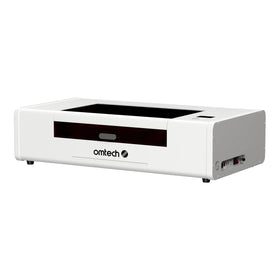
Recommended: OMTech laser cutter (60-80W)

Why it's perfect for gift shops:
✅ Size: 700mm × 500mm working area
- Make 20" signs for wall décor
- Cut multiple small items at once
- Handles breadth of gift products
✅ Power: 60-80W options
- Cuts up to 3/8" wood efficiently
- Fast enough for production
- Handles leather, acrylic, etc.
✅ Reliability: Built for commercial use
- Solid construction
- Proven in retail settings
- Consistent results
✅ Value: $4,500-$7,500
- ROI in 3-6 months typical
- Professional quality
- Room to scale
Gift shop success story:
"The Copper Willow" - Nashville gift shop
- Added OMTech laser in Month 1
- Started with 5 products
- Month 3: Laser products = 40% of revenue
- Month 12: Laser products = 65% of revenue ($180k annually)
- Now have 2 machines, hired dedicated laser operator
Product ideas for gift shops:
- Custom family name signs ($45-95)
- Personalized cutting boards ($55-125)
- Engraved jewelry boxes ($35-75)
- Custom ornaments ($12-25)
- Monogrammed leather goods ($30-80)
- Birthday/anniversary plaques ($40-70)
- Pet memorial items ($45-90)
- Kitchen signs and décor ($35-65)
Pricing structure:
- Markup 4-5× material cost
- Custom fee: $10-25 extra
- Rush fee: 50% upcharge for <3 days
- Typical margin: 70-80%
For Etsy Sellers: Efficiency Meets Affordability
Your needs:
- Fast production for volume
- Consistent quality (reviews matter!)
- Affordable entry point
- Scalable as sales grow
- Works with professional software
Recommended: OMTech Polar Desktop (50W)
Why these work for Etsy:
OMTech Polar 50W ($2,500-$3,500)
✅ Starting out:
- Lower investment risk
- Handles most Etsy products
- Compact (fits in spare room)
- Professional results
✅ Etsy-friendly features:
- Fast enough for personalization
- LightBurn compatible
- Easy to learn
- Reliable performance
✅ Scalability:
- Prove the concept before a bigger investment
- Easy to add a second machine later
- Good resale value
OMTech Turbo 60W ($4,500-$5,500)
✅ Growth phase:
- More power = faster production
- Larger bed = batch processing
- Handles increased volume
- Professional reliability
Etsy seller success story:
"MapleMooseDesigns" - Wedding décor Etsy shop
- Started with Polar 50W
- First month: 8 sales, $400 revenue
- Month 6: 120 sales, $6,000 revenue
- Month 12: Added Turbo 80W for capacity
- Current: 280+ sales/month, $14,000+ revenue
- 2 full-time laser operators
Most profitable Etsy products:
- Wedding signs ($65-150) - High margin, emotional purchase
- Cutting boards ($55-95) - Repeat buyers, gift market
- Ornaments ($8-18) - Volume play, seasonal spike
- Bookmarks ($12-18) - Low material cost, fast production
- Coaster sets ($35-55) - Batch production efficient
- Jewelry boxes ($45-85) - Premium pricing acceptable
Etsy optimization tips:
- Photograph with natural light
- Show product in use (lifestyle shots)
- Offer personalization (higher prices)
- Free shipping over $50 (Etsy rewards this)
- Respond to messages within 1 hour
- Ship same or next day
For Custom Product Brands: Professional Quality
Your needs:
- Brand-level quality
- Production capacity
- Repeatable processes
- Multiple material capabilities
- Potential for team operation
Recommended: OMTech 150W laser cutter
Why you need pro-level:
✅ Quality standards:
- Consistent results = brand reputation
- Fast production = meet demand
- Precision = professional finish
✅ Volume capacity:
- Handle wholesale orders
- Retail + online simultaneously
- Growth headroom
✅ Team-friendly:
- Reliable enough for employees
- Standard software (easy to train)
- Safety features for multiple operators
Price range: $8,000-$15,000
ROI for product brands: With wholesale pricing, equipment often pays for itself in 2-4 months
Custom brand success story:
"Timber & Grace" - Custom wood products
- Launched with Max 130W
- Product line: High-end cutting boards, charcuterie sets, serving ware
- Wholesale to 40+ boutiques
- Retail website
- Year 1 revenue: $280,000
- Year 2 revenue: $520,000
- Added second laser + 4 employees
Product brand strategies:
Wholesale approach:
- Minimum orders: 12-24 pieces
- Wholesale price: 50% of retail
- Terms: Net 30 or deposit required
- Territory exclusivity for large buyers
Direct-to-consumer:
- Premium pricing (3-4× cost)
- Storytelling in marketing
- Beautiful photography
- Email list building
- Repeat customer focus
Hybrid model:
- Wholesale = steady volume
- DTC = higher margins
- Custom corporate = highest prices
- Balanced revenue streams
The OMTech Advantage for Small Business
Full disclosure: This guide focuses on OMTech machines because they offer the best value proposition for small businesses. Here's why:
1. Business-Grade Reliability
Built for commercial use:
- Solid steel frames
- Quality components
- Ruida controllers (industry standard)
- Proven in thousands of businesses
Not hobby machines masquerading as pro equipment
2. Real Support When You Need It
US-based support team:
- Phone support during business hours
- Email support with fast response
- Troubleshooting guides
- Video tutorials
- Active user community
Parts availability:
- US warehouse inventory
- 3-5 day shipping (not 3 weeks from China)
- Standard components (not proprietary)
- Clear parts diagrams
3. LightBurn Compatibility
Industry-standard software:
- Professional features
- Easy to learn
- Massive community
- Regular updates
- Works with other lasers too
Business benefit:
- Train employees using standard tool
- Find designers who know it
- Transfer skills if you upgrade
- Better workflow efficiency
4. Educational Resources
Free resources:
- Setup videos
- Project tutorials
- Maintenance guides
- Troubleshooting library
- Live webinars
Business value: Get up and running fast, minimize learning curve
5. Nationwide Demo Room Network
See before you buy:
- Visit demo rooms across US
- See machines running
- Ask questions to actual users
- Touch and feel build quality
- Compare models side-by-side
Find a demo room: OMTech Demo Room Locator
6. Fair Pricing
Transparent pricing:
- No hidden fees
- Clear shipping costs
- Honest about what you're getting
- Value for money
Compare to competitors:
- More power for the price
- Larger working areas
- Better support
- Proven track record
7. Growing with Your Small Business
Upgrade path:
- Start with Polar Desktop
- Move to Turbo when scaling
- Add Max for serious production
- Add Fiber for metal capability
Your investment isn't wasted:
- First machine becomes backup
- Or dedicate to specific products
- Or sell (holds value)
Real Business Costs and ROI
Let's talk actual numbers. No fluff, just math.
Startup Investment
Complete setup (OMTech Turbo 60W example):
Equipment:
- Laser engraver: $5,000
- LightBurn software: $60
- Ventilation setup: $500
- Work table: $200
- Equipment total: $5,760
Initial materials:
- Wood blanks (variety): $400
- Acrylic sheets: $200
- Leather samples: $100
- Sandpaper, finishes, tools: $150
- Materials total: $850
Business setup:
- Computer (if needed): $800
- Photography setup: $150
- Packaging supplies: $200
- Website/Etsy fees: $100
- Setup total: $1,250
Total startup: $7,860
Can start with less: Minimum viable: $6,000 (entry laser + essentials)
Monthly Operating Costs
Fixed costs:
- Electricity: $50-100
- Insurance: $50-100
- Software subscriptions: $20-50
- Etsy/website fees: $30-100
- Fixed total: $150-350/month
Variable costs (per $1,000 revenue):
- Materials: $250-350 (25-35% of revenue)
- Packaging: $30-50
- Shipping supplies: $40-60
- Marketplace fees: $65-100 (Etsy/payment processing)
- Variable total: $385-560 per $1,000 revenue
Revenue Potential
Conservative scenario:
Month 1-3: Building phase
- 20 sales/month
- $50 average order
- Revenue: $1,000/month
- Materials/fees: $450
- Profit: $400/month (after costs, before labor)
Month 4-6: Growth phase
- 60 sales/month
- $55 average (better products)
- Revenue: $3,300/month
- Materials/fees: $1,350
- Profit: $1,650/month
Month 7-12: Established
- 120 sales/month
- $60 average
- Revenue: $7,200/month
- Materials/fees: $2,880
- Profit: $3,920/month
Year 1 total profit: ~$30,000 ROI: Equipment paid off in 3-4 months
Aggressive scenario:
Month 3: 100 sales, $5,000 revenue Month 6: 200 sales, $12,000 revenue Month 12: 400 sales, $24,000 revenue
Year 1 profit: $100,000+ Many sellers achieve this
Break-Even Analysis
How many sales to cover equipment?
At $50 sale with 60% margin:
- Profit per sale: $30
- Equipment cost: $6,000
- Need 200 sales
Timeline scenarios:
- 50 sales/month = 4 months to break-even
- 100 sales/month = 2 months
- 150 sales/month = 1.3 months
After break-even: pure profit (minus materials/fees)
What to Avoid: Red Flags
1. Rock-Bottom Priced Lasers ($300-$1,500)
They're cheap for a reason:
- Hobby-grade components
- Unreliable performance
- Poor support
- Proprietary software
- Safety concerns
False economy: You'll spend more on:
- Wasted materials
- Replacement parts
- Lost time troubleshooting
- Lost business from downtime
- Replacing machine sooner
When they make sense: Testing if you even like laser engraving (hobby use only)
When they don't: Depending on them for business income
2. "Too Good to Be True" Deals
Warning signs:
- Suspiciously low price
- No verifiable company history
- Generic marketing photos
- No phone support
- Shipping from unknown warehouses
Common scenario: Rebranded Chinese laser with inflated original price, then "70% off" sale to seem like a deal.
Actual value: Often worse than honest $3,000 laser
3. Proprietary Ecosystem Lock-In
Some companies require:
- Their software only
- Their materials only
- Their maintenance
- Their accessories
Business risk:
- Can't switch if problems arise
- Held hostage to their pricing
- Limited by their innovation pace
- Dead end if company fails
Red flag phrases:
- "Works exclusively with our app"
- "Optimized for our brand materials"
- "Cloud-based subscription software"
4. No Established Support
Check before buying:
- Search "[Brand] customer service" on Reddit
- Check BBB ratings
- Look for user forums
- Google "[Brand] problems"
Red flags:
- No phone number listed
- Generic email support only
- Long response times
- Users complaining widely
5. Unclear Specifications
Watch for:
- "Up to" specs (meaningless)
- Vague working area claims
- No laser source details
- Missing power consumption
- Unclear warranty terms
Demand clarity:
- Exact working area (not machine size)
- Actual laser power (not "equivalent")
- Specific tube brand and model
- Documented support terms
Making Your Decision
Step 1: Define Your Business Model
Ask yourself:
What will you sell?
- Specific products or wide variety?
- Custom one-offs or production runs?
- Retail pricing or wholesale?
What's your volume goal?
- 20 sales/month?
- 100 sales/month?
- 500+ sales/month?
What's your timeline?
- Side hustle starting slow?
- Ready to go full-time?
- Replacing existing income?
Step 2: Match Machine to Goals
Use this decision matrix:
Starting slow, testing market: → OMTech Polar 50W ($2,500-$3,500)
- Lower risk
- Prove concept
- Upgrade path
Serious from day one: → OMTech Turbo 60-80W ($4,500-$7,000)
- Room to grow
- Professional capacity
- Business-grade reliability
Replacing full-time income: → OMTech Max 100W+ ($8,000-$15,000)
- Production capacity
- Multiple revenue streams
- Team operation ready
Adding to existing retail: → OMTech Turbo 80W ($6,000-$7,500)
- Integrate with current business
- Proven business model already
- Scale existing success
Step 3: Calculate Your Budget
Total investment needed:
Equipment + materials + setup + buffer = Your startup number
Can you afford:
- Equipment purchase
- 3 months operating costs
- Living expenses during ramp-up
Financing options:
- Business loans (banks, SBA)
- Equipment financing (OMTech partners)
- Business credit cards
- Personal savings
- Partnership investment
Don't: Stretch beyond means hoping for fast payoff
Do: Plan for 3-6 month ramp-up period
Step 4: Research and Validate
Before buying:
☐ Read user reviews (Reddit, Facebook groups)
☐ Watch YouTube videos (unsponsored reviews)
☐ Visit demo room if possible
☐ Talk to actual users
☐ Join laser engraving communities
☐ Test product concepts
☐ Research target market
☐ Calculate true costs
☐ Plan first 10 products
Take time on this step Rushing leads to expensive mistakes
Step 5: Purchase and Setup
When you're ready:
From OMTech:
- Visit OMTech Laser Machines
- Compare models in your range
- Contact sales with questions
- Review warranty and support terms
- Complete purchase
- Schedule delivery/pickup
- Follow setup instructions carefully
- Complete safety training
- Test with scrap materials
- Start production!
Setup success tips:
- Read manual completely
- Watch all setup videos
- Don't skip safety steps
- Test before production
- Document your settings
- Build material library
Your First 90 Days: Action Plan
Month 1: Foundation
Week 1:
- Machine arrives and setup
- Complete safety training
- Test with scrap materials
- Document successful settings
Week 2:
- Create first 5 products
- Photograph professionally
- Set up shop (Etsy/website)
- Create 10 listings
Week 3:
- Launch shop
- Market to friends/family
- Join relevant Facebook groups
- Start Instagram account
Week 4:
- Process first orders
- Refine products based on feedback
- Add 5 more listings
- Begin building systems
Goal: 5-10 sales, validate products
Month 2: Growth
Week 5-6:
- Increase marketing
- Start Etsy ads ($5/day)
- Post daily on social media
- Reach out to local gift shops
Week 7-8:
- Streamline production
- Add complementary products
- Improve photography
- Build email list
Goal: 25-40 sales, find winning products
Month 3: Optimization
Week 9-10:
- Optimize best-sellers
- Discontinue poor performers
- Raise prices on popular items
- Establish partnerships
Week 11-12:
- System documentation
- Consider assistance/automation
- Plan next quarter
- Evaluate equipment needs
Goal: 50-75 sales, sustainable processes
Success Principles
10 rules for laser business success:
1. Quality first, always Your reputation is everything. Never ship mediocre work.
2. Price for profit Cheap prices attract cheap customers. Charge what you're worth.
3. Respond fast Fast communication converts browsers to buyers.
4. Ship quickly Same-day or next-day shipping whenever possible.
5. Photograph well Great photos sell products. Bad photos don't.
6. Build systems Repeatable processes = scalable business.
7. Track everything Data drives decisions. Feelings mislead.
8. Invest in learning Better skills = better products = more money.
9. Listen to customers They tell you what to make. Pay attention.
10. Stay consistent Showing up daily beats occasional hustle.
Your Laser Business Starts Now
You now know:
- What makes a good business laser
- Which machines work for different models
- How much it really costs
- What to avoid
- How to get started
The only question left: Will you do it?
Thousands of gift shops, Etsy sellers, and product brands are building profitable businesses with laser cutters right now. Today. This moment.
They're not smarter than you. They're not luckier. They're not more talented.
They just started.
Your advantages:
- You have this guide
- You know the right equipment
- You understand the real costs
- You see the clear path
- You can calculate your ROI
The market is waiting:
- Etsy shoppers searching for "custom" right now
- Gift shop customers wanting personalization
- Brands needing unique products
- People ready to buy from YOU
The only way this doesn't work? Not starting.