








Which Laser Engraver Should You Buy in 2026?
Picking a laser machine is hard. Too many choices. Too many numbers. People get lost before they even start.
Let me make this simple.
Start With One Question
What do you cut or mark?
Wood? Acrylic? Leather? Go CO2.
Metal? Steel? Aluminum? Go fiber.
That's really it. Everything else comes after.
CO2 Machines: Great for Non-Metal Stuff

CO2 laser engravers use a glass tube. The beam cuts through soft materials clean and fast. Wood burns nicely. Acrylic cuts smoothly. Leather looks sharp after engraving.
Most sign shops use CO2. Etsy sellers too. Anybody making wood gifts or name boards will feel right at home.
OMTech has a lot of options in their CO2 laser machines collection. Sizes range from desktop to big production machines—plenty to pick from.
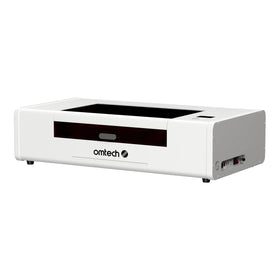
The Pronto 35 60W CO2 Laser Cutter and Engraver works well for starters. It has autofocus built in. Setup doesn't take all day. Good machine if you have limited space.
Need more power? The AF2028 60W CO2 Laser Engraver handles daily jobs well. 20 x 28-inch work area. Cuts acrylic thick. Engraves wood fast. Shops run jobs every day, like this one a lot.
Step up again to the 100W CO2 Laser Engraver Cutter 20x28. More wattage means thicker cuts. Fewer passes. Faster work. Makes sense for busy shops.
Big production? The Pro 3655 130W CO2 Laser Engraver Cutter is built for that. Wide table. High power. Cuts thick MDF and plywood like it's nothing.
One thing people forget: CO2 tubes need cooling. Running a tube hot kills it early. If your machine doesn't have a built-in chiller, grab one from OMTech's water chiller collection. Don't skip this.
Fiber Machines: Made for Metal

Fiber laser engraving machines work differently. The beam hits metal surfaces and leaves a sharp, permanent mark. No ink. No paint. Just the laser burning into the material.
Stainless steel, aluminum, brass, titanium. All fair game.
This is what metal workshops use. Jewelers too. Anyone marking serial numbers, logos, or part IDs on metal needs a fiber machine. According to Wikipedia's overview of laser engraving, fiber lasers are especially well-suited for metal marking because of how efficiently metal absorbs that wavelength.
OMTech's fiber laser engraving machines cover a good range. From small desktop units to full industrial setups.
The Galvo Fiber 20/30/50W Autofocus Laser Marking Machine is a popular one. It marks fast. The autofocus saves setup time on every job. Good fit for jewelry shops and small metal businesses.
Want more working area? The Galvo Fiber 30W Integrated Marker Engraving Machine gives you 5.9 x 5.9 inches. Solid choice for marking flat metal parts.
Need higher speed? The Galvo 50W Autofocus Fiber Laser Marking Machine handles bigger production runs. More wattage means faster cycle times on parts.
Fiber sources last a long time too. Usually 100,000 hours or more. That's years of daily use.
MOPA: When You Want Color on Metal
Regular fiber lasers are marked in black and gray. That's fine for most jobs.
But some people want color. Like rainbow effects on stainless tumblers. Or colored logos on knives.
MOPA machines do that. They control the pulse width. That changes how the metal surface reacts. Different pulse settings make different colors.
The MOPA 60W Integrated Fiber Laser Marker is a compact option. Good for shops that do tumblers or custom gifts.
For more working room, the MP6969 100W MOPA Fiber Laser Marking and Engraving Machine covers 6.9 x 6.9 inches. Handles bigger pieces. Still does full color on stainless. Check the MOPA fiber laser collection if you want to compare models.
Cutting Metal Is Different
Engraving metal is one thing. Cutting through it is different.
Metal cutting needs way more power. And a different machine type.
If you cut a steel plate or an aluminum sheet, you want a fiber laser cutting machine. These are built for fabrication shops. Not hobbyists.
The 1500W Fully Enclosed Fiber Laser Cutting Machine is one example. It has a pass-through slot for long stock. Built-in water chiller included. This is a serious production tool.
What About Accessories?
A machine without the right add-ons causes problems.
Rotary attachments let you engrave round items. Tumblers. Wine glasses. Mugs. Without a rotary, you can't engrave curved surfaces correctly. OMTech sells rotaries through its CO2 laser accessories collection and fiber marker accessories.
Air assist matters too. It blows air at the cut point. Clears smoke. Prevents flare-ups. Really helps with wood and acrylic jobs.
Software is often overlooked. Most OMTech machines work with LightBurn. It's the most used laser software out there. LightBurn for CO2 and fiber lasers is sold right on the OMTech site.
Quick Comparison
|
Type |
Best For |
Power Range |
|---|---|---|
|
CO2 |
Wood, acrylic, leather, glass |
40W to 150W |
|
Fiber |
Metal marking |
20W to 100W |
|
MOPA Fiber |
Color on metal |
30W to 100W |
|
Fiber Cutter |
Cutting metal sheet |
1000W+ |
FAQs
What's the best laser engraving machine for wood?
A 60W to 100W CO2 machine handles most wood jobs well. The Pronto 45 100W CO2 Laser Engraver and Cutter is a solid pick for daily use.
Can CO2 lasers engrave metal?
Not on bare metal directly. You'd need a marking spray or coating first. For clean, permanent metal marks, fiber is the right choice.
What is a good starter fiber laser?
The 20W or 30W Galvo from OMTech is where most people start. It handles stainless steel and aluminum easily and doesn't take up much space.
Do I need a water chiller?
CO2 machines over 60W usually do. Some OMTech models have it built in, which is handy. Fiber lasers are mostly air-cooled.
What laser do I need for tumblers?
You need a fiber or MOPA fiber machine plus a rotary attachment. For color on stainless tumblers, MOPA is better. Check the tumblers collection for blanks to practice on.
Buying a laser machine comes down to materials first, then power, then size. Start there. Don't get pulled into specs before you know what you're making.


![[Latest] Diode Laser vs. CO2 Laser vs. Fiber Lasers - Complete Guide](http://omtech.com/cdn/shop/articles/diode-vs-co2-vs-fiber-lasers_cad89d19-589c-4837-a019-48d69698f6f5.jpg?v=1789898499&width=200)

