







What Exactly Is a UV Flatbed Printer? How It Works, What It Can Print, and When You Need One
A UV flatbed printer is a digital printer that prints directly onto rigid or semi-rigid materials instead of printing on paper or flexible media first. It uses UV-curable ink that cures almost immediately under ultraviolet light, letting you print graphics, text, photos, white ink, gloss effects, and even raised textures directly onto a wide range of objects.
That makes a UV flatbed printer useful for products such as signs, promotional items, phone cases, plaques, packaging, acrylic products, wood panels, leather goods, and personalized merchandise.
But there is an important distinction to make before buying one: being able to print directly onto an object does not necessarily mean you need a UV flatbed printer.
The right question is not simply, "What can a UV printer print?" It is: What am I printing, how often am I printing it, and does direct-to-object printing make my workflow faster or more profitable?

What Is a UV Flatbed Printer?
A UV flatbed printer is a printer with a flat printing surface that holds a material or finished object in place while the printhead deposits UV-curable ink directly onto it. Unlike a conventional printer, there is no need to print the design onto transfer paper and then apply it to another surface.
- The basic process is: Place the material on the bed → print the design → cure the ink with UV light → remove the finished product.
The UV lamps cure the ink as it is deposited, so the printed surface is ready for handling almost immediately. This direct-to-substrate process is one of the biggest advantages of UV printing. Instead of building a workflow around printing, transferring, mounting, and finishing, you can often go directly from the digital design to the finished object.
Modern UV printers can also use more than standard CMYK ink. Depending on the machine, white ink and varnish can be used to create opaque prints, glossy areas, and raised or textured effects.
How Does a UV Flatbed Printer Work?
A UV flatbed printer combines several systems to produce the final print: you place the material on the flatbed, the printhead deposits the ink, the UV light cures the ink, and the multiple layers create texture.
1. The material is placed on the flatbed
The object or sheet is positioned directly on the printer's bed. A flatbed is particularly useful when the material is rigid and cannot easily pass through a conventional roll-fed printer. Some machines use a vacuum table to help keep lightweight sheets from shifting during printing.
2. The printhead deposits ink
The printhead moves across the material and deposits extremely small droplets of ink according to the digital artwork. Depending on the printer and ink configuration, the print may include cyan, magenta, yellow, black, white, and varnish
White ink is particularly useful when printing onto dark or transparent substrates because it provides an opaque base beneath the color.
3. UV light cures the ink
UV lamps mounted near the printhead expose the freshly deposited ink to ultraviolet light. The ink cures almost immediately rather than relying on evaporation or a long drying period. That allows the finished product to be handled soon after printing.
4. Multiple layers can create texture
Some UV printers can build up multiple layers of ink to create raised graphics or embossed effects. This is where UV printing becomes more than simply putting a flat image onto a product. For example, a printer capable of layered printing can create raised lettering, textured patterns, or localized gloss effects.

What Can You Print With a UV Flatbed Printer?
One of the biggest attractions of UV printing is the range of rigid and semi-rigid substrates it can handle. Common applications include: acrylic, wood, plastic, leather, metal, glass, ceramic, signs, plaques, phone cases, promotional products, packaging, and personalized gifts.
OMTech currently lists more than 300 supported material applications for the Spectra A3+, including acrylic, plastic, wood, leather, metal, glass, and ceramics. Actual adhesion and print quality can still vary by substrate, coating, and preparation, so testing a new material is important.
This versatility is particularly useful for businesses that personalize products made from several different materials.
Why Use a UV Flatbed Printer?
The biggest advantage isn't simply the number of materials you can print. It is the workflow. Suppose you are making a personalized acrylic sign. A traditional workflow might involve:
- Printing the design.
- Applying it to another material.
- Mounting or laminating it.
- Trimming the finished piece.
- Completing additional finishing work.
With direct UV printing, much of that workflow can be reduced to: Place the substrate → print → cure → finish. That can save labor and make small-batch personalization much easier.
You Can Print Directly Onto Finished Products
This is particularly useful when the customer is buying the object itself rather than a printed sheet. Examples include:
- Phone cases
- Promotional merchandise
- Keychains
- Plaques
- Personalized gifts
- Small signs
- Decorative objects
Instead of producing a graphic separately and attaching it later, the printer can put the design directly onto the product.
White Ink Opens Up More Materials
White ink is another important advantage. A standard CMYK print can struggle to produce the intended appearance on a dark or transparent surface because the substrate itself affects the color. A white ink layer can provide a foundation underneath the color. This makes white ink useful for:
- Dark acrylic
- Clear acrylic
- Dark wood
- Colored plastics
- Promotional products
However, white ink also introduces an important maintenance consideration, which is something to think about before buying a UV printer.
Gloss and Raised Effects Add Value
A UV printer with varnish and multi-layer capabilities can produce more than a conventional flat print. You can potentially create spot gloss, raised lettering, embossed patterns, textured graphics, tactile logos, and decorative finishes. These effects can make relatively simple products look more premium without requiring a separate finishing process.
When Do You Actually Need a UV Flatbed Printer?
This is probably the most important question to answer before buying one. You probably don't need a UV flatbed printer simply because it can print on a lot of materials. It makes more sense when the machine solves a specific production problem.
1. You Regularly Print on Rigid or Pre-Made Objects
If your business revolves around printing on rigid products, a flatbed printer can simplify the workflow considerably.
For example, imagine you sell personalized plaques. If you are already purchasing finished acrylic or wooden blanks, direct-to-object printing eliminates the need to print a separate transfer and attach it to each blank. The more products you process, the more valuable that simplified workflow can become.
2. Your Order Volume Justifies the Investment
A UV printer is equipment, not just another desktop printer. If you only print a handful of products every month, paying for a dedicated UV printer may not make economic sense.
But if you regularly receive orders for personalized products, signs, promotional merchandise, or other direct-to-object applications, bringing the printing process in-house can give you more control over production.
The important calculation is not simply: "Can I afford the printer?" It is: "Will the printer save enough time, outsourcing cost, or production expense to justify owning it?"
3. You Want to Eliminate Print-and-Mount Work
This is one of the clearest use cases. If your current workflow involves: print → transfer → mount → trim → finish, a UV flatbed printer can potentially reduce several of those steps.
That matters even more when you are producing customized products in relatively small quantities.
4. You Want Texture or Premium Finishes
A conventional printer may give you a good-looking image. A UV printer with white ink and varnish can potentially give you something more tactile. If your products depend on raised lettering, textured graphics, spot gloss, embossed effects, and layered designs, then those capabilities can be more important than simple color reproduction.
When You Probably Don't Need a UV Flatbed Printer
- You Mainly Make Stickers or Decals: If most of your products are stickers, labels, or flexible decals, a roll-fed printing workflow may make more sense. A flatbed is designed around holding objects or sheets on a fixed surface.
- You Mainly Print Apparel: If your business is primarily T-shirts, hoodies, and other garments, you may want to look at DTG, DTF, screen printing, or other apparel-focused technologies instead. The correct printer depends on the substrate and production workflow.
- You Only Print Occasionally: If you're producing a few personalized products every few months, owning a dedicated UV printer may be difficult to justify. Outsourcing may be cheaper until order volume becomes more consistent.
Explore UV vs. DTF printing: what the differences are, and how to choose between them.

How Much Does a UV Flatbed Printer Cost?
UV printer prices vary substantially depending on the size, printhead configuration, ink system, automation, print speed, and intended production volume. A rough way to think about the market is:
| Price Range | Typical Positioning | Best For |
| $2,000–$6,000 | Entry-level / hobby or micro-business | Occasional personalization and small products |
| $10,000–$30,000 | Professional desktop / mid-range | Small businesses and regular production |
| $50,000–$100,000+ | Commercial production | Higher-volume professional workflows |
These ranges should be treated as general market categories rather than fixed prices. Machine configurations and prices change, and the actual cost of ownership can be significantly higher than the printer's purchase price.
For example, the current OMTech Spectra A3+ is positioned much closer to the entry/professional desktop category. OMTech currently lists the single-head version at $2,999.99 and the dual-head version at $3,999.99 on its U.S. site, although promotional pricing can change.
Don't Forget the Hidden Costs
The printer itself is only one part of the investment. Potential additional costs include: UV ink, white ink, varnish, maintenance supplies, replacement printheads, ventilation or air purification, RIP or printing software, substrates, jigs and fixtures, shipping and installation.
This is especially important with white ink. White ink can settle if it is not properly managed, which means the printer's white-ink circulation and maintenance system deserve attention when comparing machines.

Flatbed UV Printer vs. Desktop UV Printer: What's the Difference?
The terms can be confusing because a desktop UV printer can also be a flatbed printer. The more useful distinction is usually size, clearance, production capacity, and intended workload.
| Factor | Smaller Desktop UV Printer | Larger Flatbed UV Printer |
| Footprint | Smaller | Larger |
| Print area | Smaller | Larger |
| Workpiece size | Small products | Larger sheets/objects |
| Production volume | Lower | Higher |
| Z-axis clearance | Often limited | Usually greater |
| Maintenance | Generally simpler | More involved |
| Investment | Lower | Higher |
| Best for | Personalization and small products | Larger or more frequent production |
The right choice depends less on the label "desktop" or "flatbed" and more on the objects you actually plan to print.
What Should You Look for When Buying a UV Flatbed Printer?
Once you've decided that you actually need one, there are several specifications worth paying attention to.
1. Print Area
Start with the size of your products. A printer with a small print bed may be perfectly adequate for phone cases and keychains but frustrating if you want to print larger signs or panels.
- Measure your largest typical product before choosing a machine.
- Don't choose based only on the size of your average job.
- Think about the largest products you realistically expect to sell.
2. Z-Axis Clearance
Flatbed printers aren't limited to thin sheets. You may eventually want to print on boxes, plaques, wood objects, promotional products, thick acrylic, and pre-assembled items. That's why maximum object height matters.
For example, the OMTech Spectra A3+ has a maximum media height of 5.5 inches and uses infrared automatic height sensing. That provides considerably more flexibility than a printer designed only around flat sheets.
3. Printhead
The printhead affects print quality, speed, droplet control, and maintenance. The Spectra A3+ uses Epson F1080 printheads. OMTech lists a 4.5 pL minimum droplet size and a 46 kHz firing frequency.
Don't choose a printer based solely on the brand of the printhead, though. Also consider how easy it is to maintain and replace. A sophisticated printer is only useful if you can keep it producing consistent results.
4. White Ink Management
This deserves special attention. White ink behaves differently from standard CMYK ink and can require additional circulation, agitation, and maintenance. When comparing UV printers, look for white ink circulation, agitation, automatic cleaning, moisturizing or capping systems, low-ink alerts, and accessible maintenance procedures
For example, the Spectra A3+ uses white-ink circulation and agitation, along with automatic printhead cleaning and moisturizing-fluid injection.
5. Ink System
An open ink system can provide more flexibility than a proprietary cartridge system. It is worth comparing:
- Ink cost
- Ink availability
- Ink compatibility
- Tank capacity
- Whether third-party inks can be used
- How difficult ink changes are
Don't look only at the printer's purchase price. If you are producing thousands of products, ink cost can become a meaningful part of your operating expenses.
6. RIP / Printing Software
The software controls much more than simply pressing "Print." Depending on the machine, you may need software to manage color, white ink, varnish layering, image positioning, passes, print quality, and material profiles. A printer with excellent hardware can still be frustrating if its software workflow is difficult to use.
7. Vacuum Bed
A vacuum table can help keep lightweight sheets flat and prevent movement during printing. This can become particularly useful when you are printing multiple layers or working with thin materials. For production work, small registration errors can become expensive.

What Is the OMTech Spectra A3+?
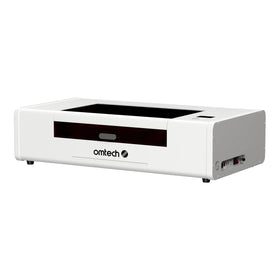
If you are looking for a compact UV flatbed printer rather than a large industrial system, the OMTech Spectra A3+UV Printer is an example of the type of machine to consider. Its current specifications include a 13.8 × 17.7-inch print area, 5.5-inch maximum media height, Epson F1080 printheads, 720 × 1440 DPI resolution, and automatic height sensing.
- The dual-head configuration adds varnish capability, while the printer supports CMYK, white ink, and varnish workflows. It stacks up to 5 mm of stackable 3D embossing effects.
- That combination makes it particularly interesting for businesses producing small-to-medium personalized products where color, texture, and direct-to-object printing all matter.
It is also worth considering the machine as part of a larger production workflow. For example, you could use a laser engraver or cutter to shape an acrylic or wood product and then use the UV printer to add full-color graphics, white layers, or decorative finishes. OMTech itself highlights this print-and-cut workflow as an application for combining its UV printer and laser systems.
What Materials Should You Test Before Buying?
One of the biggest mistakes with UV printing is assuming that a printer will produce the same result on every material. Even if a material is technically printable, you still need to consider ink adhesion, surface texture, coating, color, flexibility, heat sensitivity, scratch resistance, and cleaning requirements.
A smooth acrylic sheet and a textured piece of unfinished wood may both accept UV ink, but that doesn't mean they will produce identical results.
Test Your Actual Products
If possible, test the exact substrates you plan to sell. Don't simply test a generic sheet and assume the results will transfer to every product. This matters especially when you are printing on coated products, finished wood, plastics, metal, glass, ceramics, and promotional blanks.
A good test should evaluate not only how the print looks immediately after curing but also whether it adheres properly and withstands the handling your customers will give it.
Is a UV Flatbed Printer Worth It?
The answer depends on your workflow. A UV printer can be a very useful investment if you regularly print directly onto rigid objects and need the flexibility to personalize different materials. It becomes particularly compelling when you can use capabilities such as white ink, varnish, and raised printing to sell products that are difficult or inefficient to produce with conventional printing methods.
But if you primarily print stickers, apparel, or flexible roll media, a different printing technology may be a better fit.
The same applies if you only print a few products occasionally. In that situation, outsourcing may be more economical than taking on the machine, ink, maintenance, and workspace costs yourself. The best reason to buy a UV flatbed printer is not simply that it can print on hundreds of materials. It is that direct-to-object printing solves a real production problem in your business.
Final Thoughts on UV Flatbed Printers
A UV flatbed printer is essentially a direct-to-object printing system for businesses and creators who need to put durable, full-color graphics onto rigid or semi-rigid products. Its biggest advantages are versatility and workflow. You can print directly onto materials such as acrylic, wood, plastic, leather, metal, glass, and ceramics, while white ink, varnish, and layered printing can add effects that go beyond ordinary flat-color printing.
But the right machine depends on what you actually produce. Before buying, start with three questions:
- What do I want to print?
- How many products will I print?
- Will printing them in-house save enough time or money to justify the investment?
If you regularly work with rigid products and want to combine direct printing, white ink, gloss, and textured effects, a machine such as the OMTech Spectra A3+ is worth considering. If your work is mainly stickers, apparel, or occasional printing, another technology or outsourcing may make more sense. The goal isn't to buy the most capable printer you can afford. It's to buy the printer that makes your particular workflow better.
You may also be interested in spot UV printing and how it can help you expand your creativity in the business.