








An Expert's Guide to Polycarbonate Laser Cutting
Laser systems are extremely versatile and can be used with many different materials. If you're looking for a strong, clear, high-quality option, polycarbonate is a popular material. This guide will tell you everything you need to know about polycarbonate and its applications in laser cutting.

What Is Polycarbonate?
Polycarbonate is a high-performance thermoplastic polymer known for its exceptional clarity and strength. Its transparency is similar to glass but with far superior impact resistance. It’s virtually unbreakable in many applications but is still flexible. It can be molded and shaped at room temperature with clean edges, providing versatility in design and manufacturing.
Polycarbonate also exhibits physical properties such as excellent resistance to temperature variation. It can withstand extreme conditions without losing its structural integrity or optical qualities. Because of this, it’s ideal for outdoor applications, from automotive components to architectural glazing, where it’s constantly exposed to the elements.
Its thermal resistance and flame-retardant properties make it suitable for electrical and electronic applications, where it has safety and performance benefits. Lightweight yet strong, polycarbonate is used in protective gear, such as helmets and bullet-resistant glass. Polycarbonate’s combination of durability, versatility, and manufacturability makes it suitable for many different applications, from industrial to decorative.
Is It Possible To Laser Cut Polycarbonate?
Here is what you should know when it comes to the question of whether or not you can cut polycarbonate: it is possible, but not recommended unless you have a very high-powered industrial laser. Technically speaking, it is possible to cut polycarbonate, especially if you are working with ultra-thin sheets of polycarbonate.
However, not every kind of laser can cut it cleanly and effectively. Standard hobby and desktop laser cutters may manage to cut it, but the process will be very messy and foul-smelling, results will be very poor, and there is a serious fire risk associated with it. The consensus in the laser cutting community is that laser cutting polycarbonate is just not worth it.
At an industrial level, though, with a high-power industrial laser, the process may be cleaner, and you may achieve better results.
So, Should You Laser Cut Polycarbonate?
Though it is quite possible to laser cut polycarbonate, it is generally better to avoid doing so. That is because polycarbonate inherently does not respond well to laser cutting; the process can be very messy and unpleasant, the cut quality is not very good, and it even poses a serious fire risk.
Risks and Hazards of Laser Cutting Polycarbonate
- It is a fire hazard: Polycarbonate easily catches fire, and instead of making a clean laser cut when exposed to a CO2 laser beam, it tends to flare up. If not immediately and properly handled, it may start a fire.
- The edge quality is usually very poor: Polycarbonate melts and discolors, and the cuts are never clean. Instead of vaporizing cleanly, the plastic melts, turns yellow or black, chars, and can flow right back together behind the laser path.
- It produces awful smells and fumes: Laser cutting polycarbonate creates thick, toxic, and foul-smelling smoke that can damage your laser's optics.
Properties of Polycarbonate in Laser Cutting
Polycarbonate has impressive impact resistance and is less prone to cracking or breaking compared to other laser-cutter materials, making it ideal for intricate designs. However, it requires precise laser cutter calibration to penetrate the material effectively without causing thermal damage. Its high glass transition temperature allows it to withstand considerable heat before softening, which is important in laser cutting where control over thermal effects prevents melting or warping at the edges.
Polycarbonate has excellent light transmission and minimal distortion. However, if you want crystal clear results without black markings, you’ll need to pay special attention to the laser cutter’s settings. You may end up with frosted or clouded edges if the laser's parameters are not optimal. You may need to make adjustments to your laser's settings when you're cutting polycarbonate sheets. Thinner sheets are easier to cut with higher precision, whereas thicker ones require adjustments in laser power and speed to avoid excessive heat buildup.
Polycarbonate also absorbs certain laser wavelengths more efficiently, particularly those emitted by CO2 laser machines. If the laser power is too high or the cutting speed is too low, it’s susceptible to thermal damage. Effective heat management strategies, such as air assist, will help minimize thermal damage and give you pristinely cut edges.
Advantages of Laser Cutting Polycarbonate
Polycarbonate is one of the most versatile materials for laser cutting. When you laser-cut polycarbonate, you can achieve a high degree of precision and complexity in your cuts. You can create intricate designs and patterns that would be challenging or impossible to replicate with traditional mechanical cutting tools.
Another advantage of using polycarbonate as a laser cutter material is its contactless nature. Unlike mechanical cutting, there is no physical contact with the polycarbonate. This reduces the risk of material distortion or inducing stress fractures. Laser technology helps you maintain the structural and aesthetic qualities of polycarbonate components.
Laser cutting is an extremely versatile method of working with polycarbonate. A single setup can accommodate a wide range of thicknesses and shapes, so it’s a flexible option for various applications. You can make adjustments quickly and easily. Laser cutting works for short production runs or prototype development without the need for expensive tooling or setup changes.
Applications of Laser Cut Polycarbonate
Laser-cut polycarbonate has many applications because of its durability, clarity, and flexibility. Specific uses for laser-cut polycarbonate include:
- Electronics and electrical components: A cut polycarbonate sheet has excellent insulating properties and flame retardance, making it suitable for electronic and electrical components. Laser cutting allows for the precise fabrication of intricate parts like insulators, connectors, and enclosures.
- Automotive industry: Laser cutting can produce automotive parts with complex shapes and high precision, such as headlight covers, dashboard panels, and protective shields. Clear and durable polycarbonate can be utilized in these components to improve vehicle safety.
- Medical devices: Laser-cutting polycarbonate can create precise components for diagnostic equipment, surgical instruments, and protective covers. The ability to achieve sterilizable, smooth edges is appropriate for hygienic, safe applications.
- Architecture: Laser-cut polycarbonate panels are used in roofing, facades, and glazing, offering a lightweight alternative to glass with the added benefits of impact resistance and thermal insulation. Custom designs and patterns can be easily achieved, allowing creative architectural expressions.
- Signs and displays: You can create intricate designs, logos, and text by laser cutting polycarbonate. These can be used in illuminated signs, point-of-purchase displays, and decorative panels.
Three Safer, Cleaner, and More Effective Alternatives To Laser Cutting Polycarbonate
- Use a CNC Router: You can use a small CNC router to cut or saw polycarbonate. This is the best method because the process is safe and clean, and the cut edges are much more precise than laser cutting.
- Use acrylic as a substitute: If you must use a laser cutter, switch your material to acrylic (Plexiglas). Plexiglass is the laser cutting material that is closest to polycarbonate, and it is much safer, cleaner, and more precise when cut with a CO2 laser.
- Try mechanical cutting: If you are working with thin polycarbonate sheets, you can easily score and snap or cut with heavy-duty snips. This is a more demanding method, but it is still much safer and more effective than laser cutting polycarbonate.
The Laser Cutting Process for Polycarbonate
Laser cutting of polycarbonate sheets uses a high-intensity laser beam to precisely cut or engrave polycarbonate into various shapes and sizes.
The process begins with creating a digital vector file using CAD, or computer-aided design, software. This file dictates the path and intensity of the laser beam.
Before cutting begins, you need to configure the laser cutting machine for polycarbonate. You can adjust the laser power, speed, and focus to match the material's properties and thickness. Polycarbonate absorbs the laser energy efficiently, but you have to take safety precautions to avoid burning or melting the material. You can use protective gases or air assist to blow away molten residues and reduce thermal stress on the cut edges. These precautions ensure that the materials stay within the safety window for laser cutting polycarbonate without burning.
The polycarbonate material sheet is then placed in the laser cutter, and the machine is activated. The laser beam moves along the predetermined path set by the vector file, vaporizing or melting the material to create the cut. The precision of the laser allows for clean, smooth edges and complex shapes with fine detail.
After you finish cutting the polycarbonate, it may need to cool down, especially if you use thicker materials. Cooling helps solidify the material and stabilize the dimensions and properties of the cut pieces. Any residues from the cutting process, such as small particles or dust, are then cleaned off, so your finished product is clear and free of imperfections.
Can You Laser Engrave Polycarbonate?
Just like laser cutting, it is possible to laser engrave polycarbonate, but again, the process is exceedingly messy, and the results are usually unsatisfactory. That is because, unlike acrylic (Plexiglass), which engraves and cuts cleanly with a crisp, frosted white finish, polycarbonate tends to melt, discolor into a yellowish-brown tint, and create a sticky, messy residue. Here is a look at the process and why acrylic is generally preferred.
Laser Engraving Polycarbonate: Laser Types and How They Perform
- CO2 Lasers: A standard CO2 laser tends to burn and melt polycarbonate rather than vaporize it cleanly. Results are usually poor: it leaves discolored, gummy edges and an uneven, low-contrast mark.
- Fiber Lasers: A fiber laser (1.06-micron wavelength) is a little better for engraving polycarbonate because fiber laser engravers generally handle the marking of plastics better. With a fiber laser engraver, you can produce a darker, more defined discoloration on polycarbonate, but results still lag behind materials like acrylic or metals.
So, if you must engrave polycarbonate, it is better to go for a fiber laser engraver over a CO2 laser engraver. With a decent fiber laser engraver, you have a better chance at getting more defined discoloration and better results overall.
Laser Engraving Polycarbonate: Safety and Practical Concerns
- Fumes and odor: Melting polycarbonate produces an intense, unpleasant odor that lingers for a long time.
- Toxicity: While it does not release chlorine gas (unlike PVC, which ruins machines and creates dangerous acid), it still releases noxious, irritating organic vapors. Robust exhaust and ventilation are mandatory.
- Fire risk: Because it melts and holds heat, polycarbonate carries a higher risk of catching fire or bubbling if power settings are even slightly too high.
Laser Cutting vs. Laser Engraving Polycarbonate: What Are The Differences?
Laser cutting and laser engraving polycarbonate are similar in the sense that both are possible, but heavily discouraged. However, the main difference is that there is a marginal chance at succes with laser engraving polycarbonate with a fiber laser engraver, whereas laser cutting polycarbonate is almost certain to yield poor results.
Laser Cutting vs. Laser Engraving Polycarbonate
| Metric / Feature | Laser Cutting Polycarbonate | Laser Engraving Polycarbonate |
| Result Quality | Melts into a gooey, charred mess with heavy yellow/black edges. | Faint, poorly defined mark; lacks the crisp white frost seen on acrylic. |
| Safety and Fumes | Produces thick, toxic, noxious smoke and hazardous off-gases. | Low power creates less smoke, but proper PPE and ventilation are still mandatory. |
| Equipment Risk | High; sticky soot coats and ruins laser lenses and optics rapidly. | Moderate; lower power reduces rapid lens contamination if kept short. |
| Recommended Alternative | Use a CNC Router or waterjet. | Use a CNC router or mechanical engraving bit. |
- Laser cutting polycarbonate (Lexan) is heavily discouraged because it melts, chars badly with black burnt edges, releases noxious/toxic fumes (like chlorine gas variants or heavy soot), and ruins machine optics,
- Low-power engraving polycarbonate is approachable with a fiber laser engraver, but still with poor visual results.
In summary, there are better tools for the job. For cutting or detailing polycarbonate, you can get better results by shifting to a CNC router with an O-flute bit or a waterjet cutter for clean, structural parts without toxic smoke.

Choose the Right Laser Machine for Polycarbonate Cutting
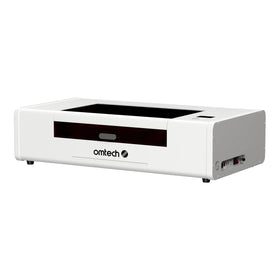
OMTech produces the best polycarbonate laser-cutting machines on the market. We put the power of laser cutting and engraving into the hands of everyone with our affordable machines. Whether you’re a hobbyist or a manufacturer, we can help you find the lasers you need. Explore our extensive collection of laser cutters today.


![[Latest] Diode Laser vs. CO2 Laser vs. Fiber Lasers - Complete Guide](http://omtech.com/cdn/shop/articles/diode-vs-co2-vs-fiber-lasers_cad89d19-589c-4837-a019-48d69698f6f5.jpg?v=1789898499&width=200)

