







Laser Marking and Engraving for Automotive Parts: A Beginner’s Guide
A major US automaker issued a recall notice for a brake component. The parts had been distributed across eleven assembly plants over seven months. Every single affected part needed to be located and removed from service. Because each component had been marked at production with a data matrix code linking it to the batch number, manufacturing date, and supplier — the traceability team completed the affected-parts list in three hours. Without those laser marks, that same task would have taken weeks and likely resulted in a much broader recall than necessary.

Laser engraving automotive parts has become the production standard for traceability, compliance, and part identification across the global automotive supply chain. From engine block serial numbers to aftermarket customization on alloy wheels, the application range covers both industrial manufacturing requirements and the growing custom car culture that treats every surface of a vehicle as a canvas.
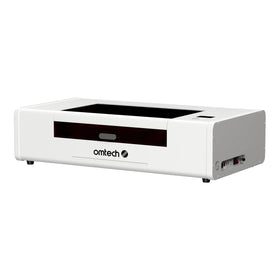
This guide covers laser engraving automotive parts from the ground up — the regulatory requirements that make it mandatory, the specific parts and materials that different laser types handle, and the OMTech fiber laser engraving machines used by production shops and car enthusiasts alike.
Why the Automotive Industry Relies on Laser Marking

Modern vehicles contain more than 20,000 individual components — most of which come from different suppliers, different facilities, and different manufacturing batches. According to Wikipedia's VIN overview, every vehicle sold in the US must carry a unique 17-character Vehicle Identification Number that can be traced from production through the full service life of the vehicle. Beyond VINs, individual component traceability has expanded dramatically — safety-critical parts now require direct part marking that survives the vehicle's entire operating life.
Traditional marking methods — inkjet, labels, and stamping — fail in automotive environments. Engine heat, chemical exposure, vibration, and decades of operational wear destroy ink marks and peel adhesive labels. Laser marks are different. They're permanently integrated into the part surface, resistant to all conditions a vehicle part encounters, and machine-readable throughout the vehicle's lifecycle.
|
MARKING METHOD |
SURVIVES HARSH CONDITIONS |
AUTOMOTIVE SUITABILITY |
|
Laser engraving |
Yes — permanent |
Full traceability and compliance use. Industry standard. |
|
Inkjet printing |
No — fades/smears |
Not suitable for production-line traceability. |
|
Adhesive labels |
No — peels under heat/vibration |
Limited to packaging only. Not for parts. |
|
Mechanical stamping |
Yes — but imprecise |
Used historically for VINs. Now largely replaced by laser. |
|
Chemical etching |
Good — but consumables required |
Used on select applications. Higher operating cost. |
🚗 REAL PRODUCTION EXAMPLEA tier-1 automotive supplier producing cast aluminum suspension brackets switched from dot-peen mechanical marking to fiber laser marking on their production line. The reason wasn't purely compliance — it was quality. Dot-peen marks on die-cast aluminum were causing micro-cracks in some parts during the stamping operation, triggering customer inspection failures. The fiber laser marks the same part in 2.1 seconds with no mechanical force on the casting. In the first three months after switching, their incoming inspection failure rate at the OEM assembly plant dropped from 0.8% to essentially zero. The payback on the laser system was under 14 months. |
Automotive Parts: What Gets Marked and How

The range of laser engraving in the automotive industry spans from production-line traceability to custom enthusiast work. Here are the major categories:
⚙️ Engine & Drivetrain ComponentsMaterial: Aluminum, steel, stainless Laser: Fiber laser Mark Type: Etching / Engraving Engine blocks, cylinder heads, pistons, camshafts, gears, transmission cases, and differential housings. These parts require serial numbers, data matrix codes, and part identification marks that survive extreme heat, oil exposure, and decades of operation. Fiber laser etching on aluminum and steel provides high-contrast, machine-readable codes that link each component to its production batch and quality records through the vehicle's full service life. |
🛞 Chassis, VIN & Safety-Critical PartsMaterial: High-strength steel, aluminum Laser: Fiber laser Mark Type: Deep engraving / Etching Chassis components, frame rails, subframes, and VIN plates require marks that survive the full vehicle lifecycle and resist any attempt at falsification. NHTSA regulations mandate VIN markings that are tamper-evident and permanent. Fiber laser deep engraving on chassis steel provides the required depth and durability, while data matrix codes on safety-critical parts like brake calipers and airbag components enable rapid recall identification. |
⚡ Electronics & Control ModulesMaterial: ABS, polycarbonate, coated metal Laser: Fiber / UV laser Mark Type: Etching / Ablation Electronic control units, sensors, connectors, dashboard buttons, and ignition modules require part identification that doesn't damage sensitive electronics. UV laser ablation on plastic housings creates high-contrast marks without thermal damage. Fiber laser etching handles the metal housings of modules and connectors. Laser-marked backlighting patterns on dashboard buttons — where the laser removes coating to allow LED light through — are a specific automotive application where laser precision is the only viable production method. |
🔧 Aftermarket & Custom AutomotiveMaterial: Aluminum, steel, carbon fiber Laser: Fiber / MOPA Mark Type: Etching / Color marking Custom shop owners, performance tuners, and car enthusiasts use laser engraving to personalize and brand aftermarket components. Valve covers, intake manifolds, wheel center caps, exhaust tips, brake calipers, and gear shift knobs all benefit from laser-engraved custom designs. MOPA fiber lasers produce color marks on anodized aluminum — popular for custom shop branding and limited-edition component identification. The precision of laser work allows intricate designs on curved and complex surfaces. |
Laser Types for Automotive Part Marking

According to Wikipedia's laser engraving overview, laser engraving uses a focused beam to vaporize or alter material surfaces. For automotive applications, the three laser types that matter are fiber, MOPA, and UV — each suited to specific material types and mark requirements. CO2 lasers are occasionally used for interior trim, leather, and non-metal components, but metal parts dominate automotive marking requirements.
|
LASER TYPE |
BEST AUTOMOTIVE MATERIALS |
MARK APPLICATIONS |
NOTES |
|
Fiber (1,064nm) |
Aluminum, steel, stainless, titanium |
Serial numbers, barcodes, VINs, logos |
Standard for most metal automotive marking |
|
MOPA Fiber |
Anodized aluminum, stainless |
Color marks, corrosion-safe annealing |
Premium custom / stainless corrosion safety |
|
UV (355nm) |
ABS, polycarbonate, coated plastics |
Electronics, dashboards, plastic connectors |
Low heat — no damage to electronics |
|
CO2 (10,600nm) |
Leather, fabric, wood composites |
Interior trim, seat covers, floor mats |
Non-metal interior components only |
💡 GALVO HEAD VS FLATBED FOR AUTOMOTIVE PRODUCTION
OMTech's Galvo Fiber Laser Marker collection uses a scanning mirror system to mark at up to 10,000 mm/s — the right choice for high-speed inline marking of small parts at production-line rates. Flatbed fiber systems offer larger work areas for marking bigger components or batch-marking multiple parts in a single fixture setup. For high-throughput automotive production, galvo systems are the production standard.
The Four Automotive Marking Techniques Explained

Laser Etching — High Speed, High Contrast
Laser etching melts the material surface at very low depth, creating raised texture that reflects light differently from the unmarked surface. It's the fastest laser marking process and produces high-contrast black/white marks on steel and aluminum. Most automotive production-line marking — serial numbers, barcodes, and data matrix codes — uses laser etching because cycle times are critical and mark contrast is excellent on production metals.
Laser Engraving — Deep Marks for Harsh Environments
Deep laser engraving removes material to create recessed marks 0.05–0.5mm deep. Required for VIN markings and parts subject to abrasive post-treatments like shotblasting or e-coating. The deeper the mark, the more resistant it is to coating adhesion and surface treatment processes. Engine components and structural chassis parts that undergo aggressive surface preparation after marking need engraving depth, not surface etching.
Laser Annealing — Stainless Without Surface Damage
Laser annealing heats the material surface to produce a dark oxide layer without material removal. For stainless steel exhaust components, fluid contact surfaces, and brake hardware where corrosion resistance is critical, annealing is the only marking method that doesn't compromise the protective surface properties. OMTech's MOPA fiber laser engraving machines provide the pulse duration control required for clean annealing on stainless steel automotive components.
Laser Ablation — Coating Removal for Contrast
Laser ablation removes paint, powder coating, or anodized layer to reveal the base material underneath — creating high-contrast marks on coated automotive components without engraving the metal itself. Used for data matrix codes on powder-coated brackets, serial numbers on e-coated chassis parts, and backlit dashboard button patterns where the coating removal allows LED illumination through the marked area.
Automotive Laser Engraving Applications at a Glance
|
APPLICATION |
MARK TYPE |
LASER |
SURVIVAL REQUIREMENT |
|
VIN plate marking |
Human-readable + barcode |
Fiber |
Full vehicle lifetime, tamper-evident |
|
Engine component serial number |
Data matrix code |
Fiber |
Oil, heat, vibration, shotblast |
|
Brake/safety component ID |
Data matrix + serial |
Fiber |
Brake fluid, heat, abrasion |
|
Dashboard backlit buttons |
Ablation pattern |
Fiber / UV |
UV exposure, temperature cycles |
|
Electronic module ID |
Serial number + QR |
UV / Fiber |
Electronic environment, vibration |
|
Custom wheel branding |
Logo / text |
Fiber / MOPA |
Road debris, cleaning chemicals |
|
Exhaust tip customization |
Logo / text |
MOPA |
Extreme heat, corrosion, weather |
OMTech Machines for Automotive Part Marking

Here are three OMTech fiber laser systems used in automotive marking applications:
|
Galvo Fiber 20/30/50W — High-Speed Part Marking • Serial Numbers • Barcodes Galvo scanning head for production-rate automotive part marking at up to 10,000 mm/s. 0.01mm positioning accuracy for precise data matrix codes and serial number placement. Autofocus handles part-to-part height variation in production batch setups. Variable data capability for batch serial number sequences. Used by contract manufacturers and tier suppliers for inline marking of aluminum and steel automotive components. |
|
MOPA 60 60W Integrated Fiber — Stainless Automotive Parts • Color Marking • Annealing MOPA pulse control for corrosion-safe annealing on stainless steel automotive components — exhaust hardware, brake lines, fuel system components, and fluid-contact surfaces where passivation integrity must be preserved. Also used for color marking on anodized aluminum custom shop components and limited-edition parts. The 60W power level handles thicker automotive stainless at production marking speeds. |
|
Galvo Fiber 30W Integrated Marker — Small Components • 5.9×5.9" Area • Compact Integrated 30W galvo fiber system in a compact form factor with a 5.9" × 5.9" work area. Used by small auto shops, custom fabricators, and aftermarket component manufacturers marking small-format metal parts like fasteners, brackets, connectors, and custom accessories. Compatible with EzCad for variable data and LightBurn for design flexibility on custom automotive marking projects. |
|
💡 INSTALLATION AND SETUP FOR AUTOMOTIVE SHOPS Automotive marking systems are often deployed inline on production floors or in dedicated marking cells. OMTech's professional laser setup support covers installation, parameter calibration, and operator training — getting your marking system production-ready from day one rather than spending weeks in self-guided setup. |
Ready to add laser marking to your automotive production or custom shop? |
Frequently Asked Questions
What is laser engraving automotive parts?
Laser engraving automotive parts is the process of using a focused laser beam to permanently mark vehicle components with identification codes, serial numbers, barcodes, logos, and compliance markings. The marks are integrated directly into the part surface without inks, labels, or consumables, making them resistant to heat, oil, chemicals, abrasion, and the full operational life of the vehicle. Laser marking is used across the automotive supply chain for both regulatory compliance (VIN, NHTSA traceability) and custom applications (aftermarket branding, personalization).
What laser type is best for marking metal automotive parts?
A fiber laser is the standard for marking metal automotive parts. Its 1,064nm wavelength is efficiently absorbed by aluminum, steel, stainless steel, titanium, and other automotive metals, producing high-contrast, permanent marks without consumables. For stainless steel parts where corrosion resistance must be maintained — exhaust components, fluid contact surfaces, and brake hardware — a MOPA fiber laser provides pulse duration control for corrosion-safe annealing. For plastic electronic modules and dashboard components, UV laser is the correct choice.
What is VIN laser engraving and is it required?
VIN (Vehicle Identification Number) laser engraving is the process of permanently marking the 17-character vehicle identification code onto chassis, engine blocks, and door frames during vehicle production. In the United States, NHTSA regulations require VINs to be permanently and legibly marked on all vehicles. Traditional mechanical stamping is still used for VINs by some manufacturers, but laser engraving is increasingly preferred because it produces tamper-evident marks with barcode-readable formats that link to digital vehicle records automatically.
What automotive parts can be laser engraved?
Nearly every metal automotive component can be laser engraved. Common applications include engine blocks, cylinder heads, pistons, transmission cases, chassis components, brake calipers, wheel hubs, fuel system components, electronic control modules, suspension components, exhaust systems, and custom aftermarket parts. Interior plastic components — dashboard buttons, trim pieces, control panels — use UV laser. Leather and fabric interior components use CO2 laser. The material determines the laser type; nearly all automotive materials have a corresponding laser solution.
How long do laser-engraved marks last on automotive parts?
Properly applied laser marks on metal automotive components are permanent — they last the full operating life of the vehicle and beyond. Engine components with laser-engraved serial numbers retain legible marks after hundreds of thousands of miles of operation, including exposure to extreme temperatures, vibration, and chemical cleaning. The mark is physically integrated into the metal surface through material vaporization or surface oxidation, so it cannot be worn off, washed off, or removed by normal operating conditions.
Can laser engraving be used for automotive anti-counterfeiting?
Yes — laser engraving is one of the primary tools in automotive anti-counterfeiting programs. Complex data matrix codes, micro-text, and hidden security patterns can be laser-engraved into parts during production, creating marks that are extremely difficult to replicate. These marks link parts to authenticated production records in manufacturer databases. Scanning a data matrix code on a brake pad or airbag component during maintenance or repair allows service technicians to verify the part is genuine — a capability that adhesive holograms or inkjet-printed codes cannot reliably provide.
What is the difference between laser etching and laser engraving for auto parts?
Laser etching melts the surface to create a shallow, high-contrast mark at very fast speeds — the preferred process for production-line serial number and barcode marking where cycle time is critical. Laser engraving removes material to create a deeper recessed mark (0.05–0.5mm+) — required for parts that will be powder-coated, e-coated, or sandblasted after marking, where a shallow surface mark would be obscured by the coating. Choose etching for speed-critical production marking; choose engraving for parts undergoing aggressive post-processing.
What power fiber laser do I need for automotive part marking?
For standard automotive serial number and barcode marking on aluminum and steel (the most common application), a 20W–30W fiber laser galvo system is sufficient and provides fast production cycle times. For harder alloys, thicker stainless steel components, or applications requiring deeper engraving depth, 50W provides faster cycle times and better penetration on challenging materials. MOPA systems at 60W+ are specified when corrosion-safe annealing on stainless or color marking on anodized aluminum is required.
Can a small auto shop or custom fabricator use a laser for part marking?
Yes — compact galvo fiber laser systems at 20W–30W are well-suited for small auto shops, custom fabricators, and aftermarket manufacturers. These machines mark metal components at speeds that make them viable for low-to-mid volume production. Common small-shop applications include marking custom brackets and hardware, engraving shop logos on billet accessories, personalizing aftermarket wheels and exhaust components, and producing small-run serial number marking for compliance or warranty tracking purposes.