






How to Make Money With a DTF Printer
To make money with a DTF printer, you first need to understand the value in the printer you have and be smart enough to identify opportunities in the market where you can provide that value without competing head-on with bigger, established printing businesses.
Overall, there are three core business models for making money with a DTF printer: selling finished products (custom hoodies, tees, bags, etc.), printing ganged designs, and reaching out to local businesses to advertise your services. The last two present the best opportunities for making money with your DTF printer, and there are roughly four ways to do so.

4 Most Profitable Ways to Make Money With Your DTF Machine
1. Selling Gang Sheets and Transfers (B2B Focus)
Print customer designs onto film rolls and sell them "ready-to-press." You can sell these to customers, like local clothing brands, schools, and Etsy crafters, who already have their own heat presses.
Selling gang sheets is a great way to make money with your DTF machine: the margins are high, production is fast, and you spend no time weeding vinyl or sourcing blank shirts.
If you can be creative with the designs and observant enough to identify what the businesses around you would appreciate, you can make a lot of money with this approach.
2. Contract Printing for Local Shops
Another strong way to make money with a DTF printer is to partner with local screen-printing shops that lack DTF capabilities. DTF printers are quite expensive, and some businesses would be willing to outsource complex, multi-color, or low-minimum orders to you.
This is a great option, especially if you haven't yet figured out the retail side of the business; it lets you bypass the hassle of direct customer service.
To succeed with this approach, you need to be strategic, creative, and bold. It's up to you to approach these businesses and offer your services, not the other way around. Understand the demands of the local print shops near you, build relationships, create your designs, and pitch them directly. If your work is good, they will buy it.
3. Micro-Batch Custom Apparel (1 to 20 Pieces)
Large commercial DTF print shops usually target corporate orders of over 100 shirts, which leaves a significant number of customers with smaller orders underserved. This opens up a marvelous opportunity to make money with your DTF printer. You can market to the 1-to-20-piece niche at a premium rate.
Target small, high-turnover businesses like local restaurants, boutique gyms, landscaping crews, tax offices, and schools. They frequently need 3–5 replacement shirts for new hires and appreciate same-day local service.
With this approach, you can charge about $19–$30+ per custom shirt. Your high-margin sweet spot lies in charging a premium for full-color, complex graphics that are impossible to duplicate with vinyl and too expensive to screen print.
4. Niche Print-on-Demand E-Commerce
Another way to generate money with your DTF printer is to sell finished apparel on platforms like Etsy or Shopify, focusing on ultra-specific niches (e.g., local sports leagues, corporate events, or hyper-targeted fan gear). Here's a good example: every city has its own local sports culture, and with it come groups of fans you could potentially turn into customers.
The smart approach is usually to familiarize yourself with the environment (maybe by attending some games) and take notice of what kinds of merchandise fans are wearing, and what kinds of designs resonate the most with them. Then you can customize these designs and add your own special touch. By understanding what makes fans tick, you can immerse yourself in the local culture and gradually offer your products.

Step-by-Step Action Plan to Start Making Money With Your DTF Machine
- Settle your legalities first: Register your business, secure an LLC, and get a tax ID so you can buy high-quality wholesale blanks from distributors like S&S Activewear or SanMar.
- Master gang sheet software: Learn how to build tight "gang sheets" (packing dozens of designs tightly onto a single layout roll) using graphic tools like Canva or Affinity Designer.
- Run local outreach: Don't just post on social media and wait. Visit local gyms, schools, mechanics, landscaping companies, and event organizers. Bring a few custom-pressed samples to hand out directly.
- Enforce strict quality control: Wash-test your samples multiple times before selling. A transfer is correctly applied only when you can clearly see the texture/weave of the shirt fabric showing through the ink print.
How to Set Up Your DTF Printer to Make Money
Many people think the main barrier to starting a DTF printing business is that it's very capital intensive. However, you don't necessarily need $4,000 to get started. There are two main equipment strategies you can use when venturing into the DTF business, depending on whether you have a small budget (about $1,000) or a commercial budget (about $4,000).
Starting a DTF Printing Business: $1,000 vs. $4,000 Budget
| Strategy | Equipment Used | Pros | Cons |
| The Lean Startup (Under $1,000) | Converted Epson printer (e.g., L1800); manual 15x15 clamshell heat press; small curing oven | Low upfront cost; great for proof of concept | Frequent printhead clogs; slow production speeds |
| The Commercial Scale (Over $4,000) | Dedicated commercial dual-head printer; automatic powder shaker and inline dryer; fume extractor | Massive output capacity; automated workflow; better ink circulation | High financial risk; needs dedicated workshop space |
2 Critical Realities and Pitfalls to Avoid When Starting DTF Printing
1. The "Maintenance Tax"
Maintaining a DTF machine takes a lot of time, more time than most people realize. DTF ink uses heavy titanium dioxide for the white base, so if the printer sits idle for even a couple of days, the ink settles, clogs the lines, and can permanently damage the printhead. If you can't commit to printing or running maintenance cycles every single day, it's better not to buy the printer.
2. The Outsourcing Alternative
If you're just starting, you might want to consider outsourcing your prints first to major transfer houses like Ninja Transfers or DTFBank. At the beginning, invest only in a high-quality heat press, market your brand, and build up a steady stream of consistent client orders.
Once your daily order volume is high enough that outsourcing fees no longer make sense, that's your signal to buy a DTF printer.

The OMTech Aurora D1: A Beginner-Friendly Commercial-Scale DTF Printer for Making Money
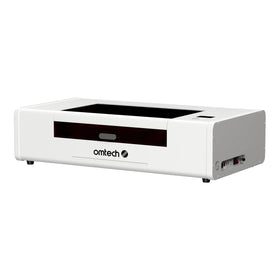
The OMTech Aurora D1 series has some of the best DTF printer options if you're a beginner in DTF printing with commercial ambitions long-term. At its base, this series offers the OMTech Aurora D1 DTF printer, a 15-inch DTF printer with an Epson printhead. The true 14-inch roll-fed system outperforms converted desktop units, offering automated ink circulation and specialized RIP software.
What makes this machine good for beginners looking to make money with a DTF machine is that it features a single F1080 printhead that delivers a steady 11 square feet per hour. Unlike the major commercial models print houses use, it lets you lean into the machine's true strengths: high-resolution detail, 5XL placement capability, and hyper-local turnaround speed, while allowing you to get used to the machine over time.
Buy now and save up to $1,200 on the new OMTech Aurora D1 Series during our limited-time early bird launch.
High-Margin Business Models for the OMTech Aurora D1
1. The "Same-Day" Local Gang Sheet Service
Big online transfer houses take 2 to 5 days to print and ship. You can target local clothing brands, Etsy crafters, and embroidery shops by offering a premium "Order by 10 AM, Pick Up by 4 PM" service.
Because you eliminate shipping costs and wait times, you can easily charge $10–$14 per standard 15" x 22" workspace sheet, while your raw ink and film cost is under $2.
2. Contract B2B Multi-Color Garment Fulfillment
Local screen-printing shops hate setting up multi-color screens for tiny orders of 10 to 30 shirts. Partner with them to fulfill their complex, colorful, or low-minimum requests.
They provide the blank shirts; you just charge them for the printing and pressing. You skip retail customer service altogether while keeping your printer fed with steady, daily volume.
3. The Sub-Surface and Odd-Substrate Niche
Don't just print basic T-shirts. The Aurora D1 can print graphics that bond well to non-traditional materials. Target highly profitable sub-niches:
- Heavy workwear: Denim jackets, canvas tool bags, construction vests.
- Sports accessories: Nylon gym bags, team backpacks, sweatbands, and polyester performance wear.
- Inner neck labels: Local clothing lines will pay a premium for you to press custom size/branding labels inside their shirts.

Important Advice When Buying the OMTech Aurora D1 DTF Printer
1. Plan for the Curing Accessory Machines
It's important to emphasize that the price tag above is only for the OMTech Aurora D1 single-head printer on its own. It would be a mistake to buy the machine without also planning for how you'll powder and cure the film; dusting long rolls manually in a tub will slow you down and cause uneven results.
Budget for either:
- OMTech Desktop Curing Oven: A dedicated curing oven (approx. $300) for batching sheets one at a time.
- OMTech Powder Shaker & Dryer: An automated inline system to take full advantage of roll-to-roll printing.
2. Do Not Ignore Fume Extraction
Curing TPU hot-melt adhesive powder releases plasticizers and vapors into the air. Never operate this machine in a closed bedroom or living space without ventilation. You must vent the exhaust directly outside or purchase a dedicated commercial fume extractor.
Launching Your DTF Printing Business: A 30-Day Blueprint
- Secure commercial wholesalers: Register your business entity immediately. Use your tax ID to set up wholesale accounts with top-tier apparel blanks distributors like S&S Activewear or SanMar so you can offer complete apparel solutions.
- Order samples first: While your machine ships, order a few custom gang sheets from an established provider like Ninja Transfers. Practice pressing them onto different fabrics to master your heat, time, and pressure settings.
- Build your sample deck: Once your Aurora D1 is running, print high-vibrancy sample swatches demonstrating crisp text, gradient fades, and solid white underbases.
- Execute local foot outreach: Walk into local CrossFit gyms, auto repair shops, landscapers, and school booster clubs. Hand them a finished sample shirt or a ready-to-press transfer sheet of their own logo. Showing them the soft-hand texture and stretch durability will seal the deal much faster than a cold email.
Final Thoughts on Making Money With a DTF Printer
A DTF printer only becomes a money-making asset once you stop thinking of it as a machine that prints shirts and start treating it as a service business, one built on speed, flexibility, and relationships that bigger commercial shops can't offer. The most profitable paths, whether that's same-day gang sheets, contract work for local screen printers, or micro-batch orders, all lean on the same advantage: you can turn around small, complex jobs faster and more affordably than large operations built for volume.
Start lean, prove the model with outsourced prints or a modest setup like the Aurora D1, and reinvest as your order volume, not your ambition, tells you it's time to scale.
You may also be interested in how to choose the best DTF printer for your small business and the technicalities that you must consider before you make your final decision.