







How Industrial Laser Engraving Improves Production Efficiency
We had a stamping line that was manually dot-peening part numbers onto steel components. The system worked, but it was slow, inconsistent under varying hardness, and required regular needle replacements. We switched to a fiber laser marker in the same footprint. Cycle time dropped from 11 seconds to 3.5 seconds per part. The marks survived sandblasting without any degradation. Three years later, the laser hasn't needed a single service call.

Industrial laser engraving has moved from a specialty process to a production-line standard across manufacturing sectors. Automotive foundries, medical device makers, aerospace component suppliers, electronics manufacturers — they all rely on laser engraving for permanent part identification, regulatory compliance, and supply chain traceability.
This article covers how industrial laser engraving works, why it outperforms competing marking methods in most production environments, which laser type applies to which material and application, and how OMTech's fiber laser engraving machines are used in real production settings.
What Is Industrial Laser Engraving?

According to Wikipedia's laser engraving overview, laser engraving uses a focused laser beam to vaporize or ablate material, creating a recessed permanent mark without mechanical contact. The beam removes material layer by layer, producing deep, high-contrast marks that survive heat, chemicals, abrasion, and most surface treatments.
The industrial distinction matters: industrial laser engraving systems operate in production environments with high cycle-time requirements, automated part handling, dust and debris exposure, and the need for consistent mark quality across thousands or millions of parts. Consumer laser engravers serve different requirements entirely.
The two primary laser types used in industrial applications are fiber lasers for metals and some plastics, and CO2 lasers for non-metal materials. Each has a distinct wavelength that determines material absorption and therefore marking effectiveness.
🏭 REAL PRODUCTION EXAMPLEA small automotive parts supplier in Ohio was using inkjet coding for serial numbers on aluminum engine brackets. The marks faded during e-coating — their tier-1 customer began failing incoming inspections. They installed a 30W fiber laser marker inline with their press line. The laser marks aluminum before coating, and the engraved serial numbers read cleanly through the e-coat under barcode scanners. Zero failed inspections since installation. The system paid for itself in avoided rework costs within five months. |
Laser Engraving vs. Competing Industrial Marking Methods

Understanding where laser engraving outperforms alternatives — and where it doesn't — is the foundation for making the right equipment decision. Here's a direct comparison:
|
METHOD |
MARK DEPTH |
SPEED |
DURABILITY |
CONSUMABLES |
|
Laser engraving |
Deep (0.1–0.5mm+) |
Fast |
Survives abrasion, heat, chemicals |
None |
|
Laser etching |
Surface only |
Very fast |
Good — not abrasion-resistant |
None |
|
Dot peen (pin marking) |
Medium |
Medium |
Good on metal |
Needles / stylus |
|
Inkjet printing |
Surface only |
Very fast |
Poor — fades, smears, washes off |
Ink, solvents |
|
Chemical etching |
Surface |
Slow |
Good |
Chemicals, masks |
|
Electrochemical marking |
Surface |
Medium |
Good on stainless |
Electrolyte solution |
⚠️ WHEN LASER ENGRAVING IS NOT THE RIGHT CHOICELaser engraving is not ideal for every application. It does not work effectively on highly reflective uncoated aluminum with standard fiber laser power levels without careful parameter tuning. It is also not the right choice for curved or complex 3D parts where a flat scanning head cannot maintain consistent focal distance — though 3D galvo heads address this in high-end systems. For very small characters on extremely hard materials, laser etching or electrochemical marking may produce better contrast at lower cost per mark. |
Industrial Laser Engraving Applications by Industry

Industrial laser engraving addresses traceability, compliance, branding, and quality control requirements across a wide range of manufacturing sectors. Here are the most common production applications:
|
🚗 Automotive Part Marking Laser Type: Fiber laser Material: Steel, aluminum alloys, cast iron Serial numbers, VIN components, data matrix codes, and QR codes on engine components, chassis parts, transmissions, and brake components. Marks must survive e-coating, sandblasting, heat treating, and decades of operational wear. Fiber laser engraving at 0.1–0.3mm depth meets automotive traceability standards including AIAG and VDA requirements. |
|
🏥 Medical Device Marking Laser Type: Fiber / MOPA Material: Stainless steel, titanium, anodized aluminum UDI (Unique Device Identification) codes on surgical instruments, implants, and diagnostic equipment. FDA 21 CFR Part 830 requires permanent, legible marking that survives repeated sterilization cycles — autoclave, chemical, and gamma radiation. MOPA fiber lasers produce high-contrast marks on stainless without thermal discoloration, maintaining the corrosion-resistant surface properties. |
|
✈️ Aerospace Component Traceability Laser Type: Fiber laser Material: Titanium, aluminum alloys, superalloys Part number, serial number, and inspection markings on structural components, fasteners, and actuator housings. AS9100 and FAA traceability requirements mandate permanent identification from manufacturing through the full service life of the aircraft. Laser marks must survive extreme temperatures, vibration, and chemical exposure across decades of operational use. |
|
⚡ Electronics Manufacturing Laser Type: CO2 + Fiber Material: PCBs, coated metals, plastics Component marking, board identification, date/lot codes, and barcode marking on circuit boards and electronic assemblies. CO2 lasers handle organic PCB materials and plastic housings. Fiber lasers mark metal shields, connectors, and chassis components. Both must produce legible marks in very small character sizes without thermal damage to adjacent components. |
|
🔧 Metal Fabrication & Job Shops Laser Type: CO2 + Fiber Material: Steel, aluminum, acrylic, wood Custom part numbers, customer logos, cutting guides, and inspection marks on fabricated components. OMTech's CO2 laser engraver machines handle the non-metal materials common in mixed fabrication shops — acrylic, wood composites, and plastics. Fiber lasers handle bare and coated metal. A shop running both laser types can serve a wider customer base with one production workflow. |
CO2 vs. Fiber Laser for Industrial Engraving: Which Do You Need?

The most common question for manufacturers evaluating industrial laser engraving is which laser technology to specify. According to Wikipedia's fiber laser overview, fiber lasers produce light at 1,064nm — a wavelength efficiently absorbed by metals. CO2 lasers operate at 10,600nm — absorbed efficiently by organic materials, plastics, glass, and coated metals. This wavelength difference determines material compatibility, not wattage.
|
LASER TYPE |
BEST MATERIALS |
INDUSTRIAL APPLICATIONS |
WATTAGE RANGE |
|
Fiber (1,064nm) |
Steel, aluminum, titanium, brass, coated metals |
Part marking, serial numbers, barcodes on metal |
20W–100W+ |
|
MOPA Fiber |
Anodized aluminum, stainless, titanium |
Color marking, medical UDI, corrosion-free marks |
20W–100W+ |
|
CO2 (10,600nm) |
Wood, acrylic, plastics, glass, leather, coated |
Signage, organic materials, plastic housings, PCBs |
40W–150W+ |
|
Galvo Fiber |
All metals, fast cycle time priority |
High-speed inline marking, small characters |
20W–50W |
💡 FOR MIXED-MATERIAL PRODUCTION ENVIRONMENTSMany job shops and contract manufacturers need to mark both metals and non-metals. OMTech's MOPA fiber laser engraving machines handle metals with precision, while CO2 laser engraver machines cover the full range of organic materials and coated surfaces. Running both in the same shop covers essentially all industrial marking applications without outsourcing. |
How Industrial Laser Engraving Improves Production Efficiency

1. No Consumables = Lower Long-Term Operating Cost
Industrial laser systems have no ink, no needles, no chemicals, and no consumables beyond periodic lens cleaning. Inkjet coders cost $0.005–$0.02 per mark in ink and solvent. At 100,000 parts per month, that's $500–$2,000 per month in consumable cost alone — eliminated entirely by laser marking.
2. Faster Cycle Times Than Mechanical Methods
Galvo-head fiber lasers mark at speeds up to 10,000mm/s. A full data matrix code on a steel part takes 1–4 seconds. Dot peen systems marking the same code typically take 8–15 seconds. For a line running 200 parts per hour, that cycle time difference translates directly into increased throughput without adding shifts or equipment.
3. Marks That Survive the Full Production Process
The primary value in industrial applications is mark permanence through downstream processes. Laser-engraved identifiers survive e-coating, powder coating, heat treating, sandblasting, autoclaving, and years of operational wear. Inkjet and label-based marking systems fail at many of these steps, creating rework, non-conformances, and traceability gaps.
4. Regulatory Compliance and Traceability
Industries operating under ISO, FDA, AIAG, or aerospace quality standards require permanent part identification that can be read and traced throughout the product lifecycle. OMTech's fiber laser cutting machines and marking systems produce marks that meet DPM (Direct Part Marking) standards for Data Matrix codes readable by automated vision systems at production-line speeds.
5. Integration Into Automated Production Lines
Modern industrial laser systems connect to PLC and MES systems, receiving part data and marking instructions automatically without operator intervention. This enables fully automated production lines where parts are marked, verified, and released without manual steps — reducing labor cost and eliminating transcription errors.
OMTech Machines for Industrial Marking Applications

Here are two OMTech machines used in industrial marking environments, matched to different application types:
|
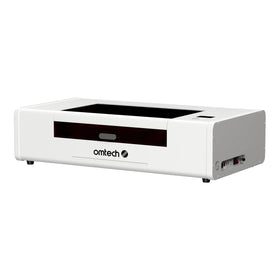
Galvo Fiber 20/30/50W — Metal Part Marking • High Speed • Serial Numbers / Barcodes Galvo scanning head marks at up to 10,000 mm/s with 0.01mm positioning accuracy. The autofocus system adjusts to part-to-part variation without manual recalibration between runs. Used in metal workshops, sign shops, and small manufacturers for serial number marking, barcode engraving, and custom metal part identification. Compatible with LightBurn and EzCad for production batch marking. |
|
MOPA 60 60W Integrated Fiber — Medical / Aerospace Grade • Color Marking • Corrosion-Free MOPA pulse control system produces high-contrast marks on anodized aluminum and stainless steel without the thermal discoloration or surface damage that standard fiber lasers can cause on sensitive alloys. Used for medical device UDI marking, aerospace component traceability, and color-coded industrial identification programs. The 60W power level supports fast cycle times on harder alloys and thick-wall components. |
OMTech's professional laser setup support includes on-site installation and calibration for production environments — critical for manufacturing operations where machine downtime during setup directly impacts output.
Ready to add industrial laser marking to your production line? |
Frequently Asked Questions
What is industrial laser engraving?
Industrial laser engraving is the process of using a focused, high-powered laser beam to vaporize material and create permanent, recessed marks on metal, plastic, wood, glass, or other surfaces in a manufacturing or production environment. It is used for part identification, traceability, compliance marking (barcodes, data matrix codes, serial numbers), and branding. Industrial systems are designed for high cycle-time production, automation integration, and consistent mark quality across large volumes.
Which laser type is best for marking metal in industrial applications?
Fiber lasers are the standard for marking bare metal in industrial applications because their 1,064nm wavelength is efficiently absorbed by metals. For stainless steel, aluminum, titanium, brass, and copper, a fiber laser produces high-contrast permanent marks without consumables. MOPA fiber lasers offer additional control over pulse duration, enabling color marking on anodized aluminum and corrosion-free marking on stainless steel required for medical and food-contact applications.
How deep should industrial laser engraving be?
Mark depth depends on the application and downstream processes. Standard identification marking (serial numbers, barcodes) typically runs 0.05–0.15mm — sufficient to survive most coatings and surface treatments. For parts that will undergo abrasive treatments like shotblasting or heavy handling, 0.1–0.3mm+ depth is recommended. Parts in harsh chemical or thermal environments may require depths of 0.3–0.5mm or more to ensure long-term readability.
What is the difference between laser engraving and laser etching in industrial contexts?
Laser engraving removes material to create a recessed mark with measurable depth. Laser etching melts the surface to create a raised textured mark without significant material removal — it is faster than engraving but produces a less durable mark. In industrial production, engraving is preferred for parts that will undergo abrasive treatments, heat treatment, or chemical processing. Etching is used where cycle time is the priority and downstream processes are not abrasive.
Can industrial laser engraving marks survive coating processes?
Yes — this is one of the primary advantages of laser engraving over inkjet, label, and electrochemical marking. Laser-engraved marks at appropriate depth survive e-coating, powder coating, anodizing, phosphate coating, and plating. The key is achieving sufficient mark depth before coating — typically 0.1–0.2mm minimum. Marks should be verified for readability after coating as part of quality control protocol.
What materials can industrial laser engraving mark?
Fiber lasers mark steel, stainless steel, aluminum (bare and coated), titanium, brass, copper, and most metal alloys. CO2 lasers mark wood, acrylic, plastics, glass, leather, paper, cardboard, and coated metals. UV lasers handle sensitive materials and transparent plastics where CO2 wavelengths pass through without absorption. The correct laser type for each material is determined by wavelength-material absorption characteristics, not wattage.
How does industrial laser engraving improve regulatory compliance?
Industries including medical devices (FDA UDI requirements), automotive (AIAG and VDA traceability standards), and aerospace (AS9100 and FAA marking requirements) mandate permanent, readable part identification throughout the product lifecycle. Laser engraving produces marks that meet DPM (Direct Part Marking) standards for data matrix code readability, survive the full production process, and remain legible after decades of service — which inkjet, label, and mechanical marking methods cannot consistently achieve.
What is the ROI of switching to industrial laser marking?
ROI calculations typically include eliminated consumable costs (ink, needles, chemicals), reduced rework from mark failures, faster cycle times compared to mechanical marking, and avoided non-conformance costs from traceability failures. A typical fiber laser system at $3,000–$8,000 replaces inkjet systems that cost $1,000–$3,000 per year in consumables alone, and eliminates maintenance on consumable-based systems. Most production operators report 12–24 month payback periods when switching from inkjet or dot peen to laser marking.
Can industrial laser engraving systems integrate with production line automation?
Yes. Industrial laser marking systems connect to PLCs and MES platforms through standard industrial communication protocols (Ethernet, EtherNet/IP, serial). The laser receives marking data from the production system — serial number, date code, batch number, barcode content — and marks each part automatically without operator input. This enables fully automated inline marking with no manual steps, eliminating transcription errors and enabling 100% part traceability from the production line.