






From Maker to Entrepreneur: Laser Engraving Business Tips
Six months after I bought my first laser, I was still calling it a hobby. I'd engrave cutting boards on weekends and give them as gifts. My wife finally said, 'You're making things people keep asking to buy — why aren't you charging for them?' That question changed everything. Within a year, I'd quit my side job, registered an LLC, and had three repeat corporate clients. The machine paid for itself inside eight months.
Starting a laser engraving business is more accessible than most people think. The equipment is available at realistic price points, the materials are cheap, and the personalization market keeps growing year after year. What trips most people up isn't the technical side — it's not knowing which steps to take in which order.
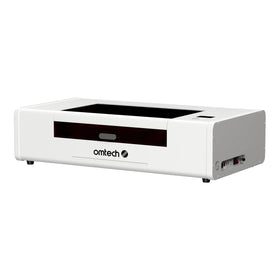
This guide covers the practical path from owning a machine to running a profitable laser engraving business — from machine selection and pricing to niche strategy and sales channels. OMTech's CO2 laser engraver machines are used by thousands of small business operators across the US, from Etsy sellers running part-time shops to sign studios and corporate gift companies.
Is a Laser Engraving Business Actually Profitable?

Yes — but only if you approach it like a business and not a hobby that charges money. The economics work because material costs are low and personalization adds significant perceived value. A bamboo cutting board that costs $7 sells for $45–$60 with a family name on it. A leather wallet that costs $8 sells for $40–$55 with initials. That margin is the foundation.
The challenge is consistency. A hobbyist makes money on good weeks. A business makes money every week because it has systems: a product catalog, a pricing formula, a lead generation method, and repeat customers. Building those systems is what this guide is about.
The Four Phases of Building a Laser Engraving Business

Most successful laser business owners go through roughly the same progression. Understanding these phases helps you set realistic expectations and avoid the mistakes that come from skipping steps.
|
|
Phase 1 Machine & Skills Timeframe: Months 1–3 Learn your machine, LightBurn, and material settings. Produce 20–30 finished pieces. Give some away, sell a few at cost. Your goal in this phase is not profit — it's competence. You need to know your machine well enough that production is predictable before you take money from strangers. |
|
|
Phase 2 First Revenue Timeframe: Months 3–6 Pick one or two products. Price them properly (see pricing section below). List on Etsy, post on local Facebook groups, cold-call two or three local businesses. Your first $500 in revenue proves the model works. Most people who fail quit before reaching this milestone. |
|
|
Phase 3 Repeat Customers & Systems Timeframe: Months 6–18 The business becomes real when customers come back without you having to find them again. Build a simple intake process, create a product catalog with standard pricing, and focus on one or two customer types who buy regularly — corporate HR, sports leagues, wedding planners. Recurring revenue is the goal. |
|
|
Phase 4 Scale or Specialize Timeframe: 18+ months At this stage you either add capacity (a second machine, an employee) or deepen your niche (become the best acrylic award shop in your metro, or the go-to tumbler vendor for corporate clients in your region). Both paths are valid. Scaling without mastering Phase 3 leads to burnout. |
What Do You Need to Start a Laser Engraving Business?

The core requirements are fewer than most people expect. Here's an honest list:
|
ITEM |
ESTIMATED COST |
PRIORITY |
NOTES |
|
CO2 laser engraver (60W) |
$1,500–$4,000 |
Essential |
Handles 80%+ of products |
|
LightBurn software |
$60 one-time |
Essential |
Industry-standard control SW |
|
Ventilation / fume extractor |
$150–$500 |
Essential |
Required for safe operation |
|
Starter materials |
$100–$300 |
Essential |
Wood, acrylic, slate blanks |
|
Rotary attachment |
$80–$200 |
High value |
Required for tumblers/drinkware |
|
Business registration / LLC |
$50–$200 |
Recommended |
State dependent |
|
Etsy shop / basic website |
$0–$50/mo |
Recommended |
Etsy has built-in audience |
|
Pre-owned machine option |
$800–$2,000 |
Cost-saving |
Reduces entry investment |
|
💡 LOWER YOUR ENTRY COST WITH PRE-OWNED OMTech's pre-owned laser machines collection offers inspected, ready-to-run CO2 machines at reduced prices. For someone starting a laser engraving business on a tight budget, a pre-owned 60W machine is a legitimate path to getting started without the full new-machine investment. |
How to Calculate Laser Engraving Cost and Price Your Work

Underpricing is the single most common mistake new laser business owners make. They calculate material cost, add a small margin, and compete on price with mass-produced alternatives. That's a losing strategy. Price for the personalization value, not the material value.
The Basic Pricing Formula
• Material cost × 5–8 = minimum sell price for standard personalized items
• Machine time — calculate at $1.50–$2.50/minute for your machine's operating cost + your time
• Design time — include the time you spent building or customizing the design file
• Market rate check — search Etsy for similar items and position at the mid-to-upper end, not the bottom
|
PRODUCT |
MATERIAL COST |
ENGRAVE TIME |
SELL PRICE |
GROSS MARGIN |
|
Walnut cutting board |
$7–10 |
15–20 min |
$50–65 |
~82% |
|
Engraved tumbler |
$10–14 |
8–12 min |
$30–45 |
~70% |
|
Leather wallet |
$6–9 |
10–15 min |
$40–55 |
~82% |
|
Acrylic corporate award |
$5–10 |
18–25 min |
$55–85 |
~87% |
|
Slate plaque |
$3–5 |
8–12 min |
$35–50 |
~90% |
|
Custom wooden sign |
$4–8 |
20–35 min |
$45–75 |
~88% |
Choosing the Right Machine for Your Laser Business

The machine you start with shapes what you can offer. Here are two OMTech machines that are specifically well-matched to laser engraving businesses at different stages:
|
|
AF2028-60 60W CO2 — Starting a Business • Etsy / Gifts / Awards • Most Popular The 20" × 28" bed handles nearly every standard personalized gift and award product without repositioning. At 60W it cuts acrylic trophies, engraves wood plaques, processes leather, and marks coated tumblers. LightBurn-compatible, camera preview for batch alignment, autofocus for consistent results. For most people starting a laser engraving business, this is the machine the numbers make sense on from day one. |
|
|
Pro 2440 80/100W CO2 — Scaling Up • Corporate Volume • Faster Throughput When your business is producing 30+ pieces per week and session time is your bottleneck, moving to 80W–100W makes a measurable difference. The Pro 2440 includes a built-in water chiller and autofocus, handles thicker materials in fewer passes, and engraves at higher speeds without sacrificing quality. Built-in water cooling keeps the machine running through long production sessions without separate cooling setup. |
Choosing a Niche: The Fastest Path to Repeat Revenue

A laser engraving business that tries to serve everyone ends up mastering nothing. The operators who build sustainable businesses almost always specialize — by customer type, product category, or material. OMTech's laser engraving materials cover every niche from corporate award production to consumer gift items.
|
NICHE |
CUSTOMER TYPE |
ORDER PATTERN |
BEST PRODUCTS |
|
Corporate gifts & awards |
HR departments, managers |
Quarterly recurring |
Plaques, trophies, engraved drinkware |
|
Wedding & events |
Couples, event planners |
Seasonal spikes |
Signs, cake toppers, favors |
|
Etsy personalized gifts |
Individual buyers |
Steady year-round |
Cutting boards, keychains, ornaments |
|
Realtor closing gifts |
Real estate agents |
Per-transaction |
Coasters, wine boxes, key holders |
|
Sports leagues & schools |
Coaches, school admins |
End of season |
Trophies, medals, plaques |
|
Sign shops & signage |
Local businesses |
Project-based |
Office signs, door plates, wayfinding |
Where to Sell Your Laser Engraved Products
• Etsy — Built-in audience for handmade and personalized items. Best for consumer gift products. SEO-driven — your listing descriptions and photography matter more than advertising spend.
• Local businesses (direct outreach) — Cold call or email HR departments, real estate offices, schools, and sports leagues. One corporate client ordering quarterly is worth 20 individual Etsy sales.
• Shopify / your own site — More control, no marketplace fees, but requires your own traffic generation. Better suited for Phase 3+ operators with a proven product line.
• Craft fairs and farmers markets — High-touch, immediate feedback. Good for testing new products and building local brand awareness. Not scalable as a primary channel but valuable for early stage.
• Instagram and Facebook — Show your process and finished products. Organic reach is limited but local community groups (neighborhood Facebook groups, local buy-and-sell) can drive early traction without ad spend.
Getting your machine set up correctly from the start matters more than most people realize. OMTech's professional laser setup support and fiber laser engraving machines are available for operators who want to expand into metal engraving as their business grows.
Ready to start your laser engraving business? |
Frequently Asked Questions
What do you need to start a laser engraving business?
At minimum: a CO2 laser engraver (60W is a practical starting point), LightBurn software, a ventilation system or fume extractor, and a small inventory of starter materials. Total entry cost for a functional setup runs $2,000–$5,000 depending on machine choice. A pre-owned machine reduces this significantly. Business registration, a basic website or Etsy shop, and a pricing formula round out the essentials.

How do you calculate laser engraving cost?
Add your material cost, machine time cost (typically $1.50–$2.50 per minute), and design/setup time. Then multiply material cost by 5–8x for the sell price of standard personalized items. Always check Etsy and competitor pricing to position your work correctly. Price for the personalization value, not the material value — customers buying custom items are not primarily price-shopping.
Which is better for a laser engraving business — CO2 or fiber?
For most small businesses starting out, a CO2 laser is the right choice because it handles the widest range of materials: wood, acrylic, leather, glass, slate, cork, and coated metals. A fiber laser is required for direct marking on bare stainless steel, aluminum, and other metals. Many established laser businesses run both — a CO2 for volume production and a fiber for metal-specific orders.
How much can you make with a laser engraving business?
Part-time operators working 10–15 hours per week typically generate $1,500–$4,000 per month once they have a consistent product catalog and customer base. Full-time operations with recurring corporate clients regularly exceed $8,000–$15,000 per month. Income depends heavily on niche selection, pricing strategy, and how quickly you build repeat customers. Operators who compete on price rather than personalization earn significantly less.
How deep should laser engraving be?
For standard wood plaques and signs, 0.5–1.5mm depth is typical and produces good visual contrast. For functional engraving on tools or industrial parts requiring durability, 1–2mm+ is common. For glass and acrylic, surface engraving (0.1–0.3mm) produces the frosted appearance without structural compromise. Depth is controlled by laser power, speed, and number of passes — always test on scrap material before committing to a production run.
What happens if you laser cut polycarbonate?
Never laser cut polycarbonate. Unlike acrylic (which cuts cleanly with CO2 lasers), polycarbonate absorbs laser energy poorly and releases chlorine-containing fumes that are harmful to inhale and damaging to the machine's internal components. Polycarbonate also tends to melt and discolor rather than cut cleanly. Always use cast acrylic for laser cutting applications. If you're unsure whether a plastic sheet is acrylic or polycarbonate, contact the supplier before running it.
Do I need a business license for a laser engraving business?
Requirements vary by state and city. Most laser engraving businesses operating from home need at minimum a general business license and, in some municipalities, a home occupation permit. If you're selling finished goods, a sales tax permit is typically required. Check your state's requirements through your state business registration portal or the SBA's licensing guide. An LLC structure is commonly recommended to separate personal and business liability.
Can you run a laser engraving business from home?
Yes, and most laser operators start this way. The practical requirements are a dedicated workspace with proper ventilation or fume extraction, a stable power supply (most CO2 machines run on standard 110V or 220V), and compliance with any local zoning or home occupation regulations. Noise levels from CO2 lasers are generally low. The primary operational requirement is ventilation — fumes from engraving must be exhausted safely outside or through a filtration unit.
How long does it take to recoup the investment in a laser engraving business?
Most operators running a part-time laser engraving business recoup their machine investment within 6–18 months depending on machine cost and sales volume. Operators who focus on high-margin products (corporate awards, acrylic trophies, personalized leather goods) and build recurring clients typically reach payback faster than those selling low-margin commodity items. A 60W CO2 machine at $2,500 with average margins of 80% needs approximately $3,125 in total sales to reach payback — achievable in 3–6 months with a focused niche.