







How Long Does CO2 Laser Cutting Take?
Having a good understanding of how fast your CO2 laser machine will take to complete laser cutting projects helps you price your jobs correctly, set and meet deadlines, and avoid unnecessary bottlenecks.
However, when it comes to laser cutting, faster cutting speed should not always be the goal.
While faster sounds better, pushing your machine too hard can actually hurt your results. The goal should be efficiency, consistency, and profitability. The key is knowing what affects cutting speed and how to balance it.

How Long Does Laser Cutting Typically Take with Different CO₂ Lasers?
How long laser cutting takes mainly depends on the power of the laser cutting machine, the material being cut, and the job complexity. However, the laser power (usually 40W to 130W+ usually gives a clue as to how long you can expect it to take when cutting.
1. 40W CO₂ Lasers
The typical Cutting Speed Range (40W CO₂ laser) is about 5 to 20 mm/s for most cutting jobs. That’s roughly 300–1200 mm/min, or about 10–50 inches per minute (IPM), depending on material.
Take note that the cutting speed varies a lot by material and thickness, but that is a typical range you can use as a baseline.
Typical 40W CO₂ Laser Cutting Speeds for Different Materials
| Material | Approximate Cutting Speed |
| 3mm plywood |
8–10 mm/s |
| 6mm wood (multi-pass) | 5–8 mm/s |
| 3mm acrylic | about 10 mm/s |
| 1/8" acrylic (~3mm) | 10–20 IPM (4–8 mm/s) |
| Hardwood (Denser material) | 5 mm/s or even slower |
40W CO2 laser cutting machines are best for light production or hobby work. For a 40W machine, start around 10 mm/s for 3mm material. Then adjust accordingly:
- Go slower if it doesn’t cut through
- Go faster if you’re getting burn marks
2. 60W CO₂ Lasers
For a 60W CO₂ laser cutting machine, the typical speed ranges from 5 to 25 mm/s for most materials.
Again, the specific speed would depend on the material in question, but a 60W CO₂ can cut 1/8” wood fairly quickly in one pass, and can handle 1/4” wood with moderate speed, which is a good balance for small businesses
Typical 60W CO₂ Laser Cutting Speeds for Different Materials
| Material | Approximate Cutting Speed |
| Thin plywood (3–5 mm) |
5–15 mm/s |
| Acrylic (3 mm) | 5–10 mm/s |
| Dense hardwood | 5–10 mm/s |
3. 80W–100W CO₂ Lasers
80W–100W CO₂ lasers are noticeably faster than 60W, but not as aggressive (or overkill) as 130W. Generally, an 80-100W CO₂ Laser Machine can reach cutting speeds of about 10 to 35 mm/s, and even higher on thin materials.
They are extremely fast on 1/8”–1/4” wood, can handle thicker materials (3/8”–1/2”) efficiently, and are ideal for higher-volume workflows.
Typical 80W–100W CO₂ lasers Cutting Speeds for Different Materials
| Material | Approximate Cutting Speed |
| 3 mm wood (plywood, MDF) |
15–30 mm/s (usually single pass) |
| 6 mm wood (plywood, MDF) | 10–20 mm/s(single pass) |
| 3 mm acrylic (1/8") | 10–20 mm/s |
| 6 mm acrylic | 5–15 mm/s |
| Hardwood | 3–5 mm |
| Leather and soft materials | 20–35 mm/s |
Start here for 3 mm material with a cutting speed of 20 mm/s and power at 60–75%. Then adjust accordingly. If it is not cutting through, slow down or increase the power. If it leaves burn marks or charring, speed up slightly.
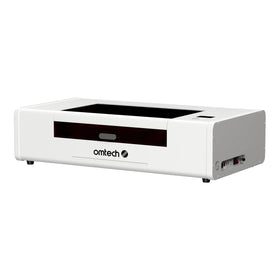
With a 100W CO2 laser like Omtech’s Pronto 45, you get more single-pass cutting, faster cutting speed, and can handle 6–10 mm materials much better. You’re gaining consistency, the edges are cleaner, fewer retries, and less dependence on perfect focus or multiple passes. That’s why this range is so popular for small production setups.
4. 130W+ CO₂ Laser Cutting Speeds
130W+ CO2 laser cutters generally achieve fast cutting speeds up to 10 to 50 mm/s, and sometimes higher on thin materials. Higher wattage means faster cuts and fewer passes, which significantly reduces total job time.
130W+ CO₂ Laser Cutting Speeds for Different Materials
| Material | Approximate Cutting Speed |
| Plywood |
30–50 mm/s |
| Hardwood | 10–30 mm/s |
| hick material | (10–20 mm) |
Compared to the 60W model, a 100W CO₂ laser machine like OMTech’s Pronto 65 gives you more single-pass cutting, faster speeds on the same material, and handles 6–10 mm materials much better.
CO₂ Laser Cutting Speed Chart (40W-130W Lasers)
| Power | Typical Cutting Speed | Feel |
| 40W | 5–20 mm/s | Entry-level, slower |
| 60W | 5–25 mm/s | Hobby/light work |
| 80–100W | 10–35 mm/s | Balanced sweet spot |
| 130W | 10–50 mm/s | Production-level |
Factors That Affect CO2 Laser Cutting Speed
1. Laser Power (Wattage)
The laser power of a laser cutting/engraving machine refers to the strength of your laser beam. More power cuts through material faster and in fewer passes. The simple rule of thumb is:
- 60W: for hobby/light production, best for slower, thinner materials
- 130W: production-level, best for faster, thicker materials
If speed matters, go for at least 60W–100W for wood cutting. Lower-wattage machines will slow you down, especially on thicker materials.
Explore more on the role of laser power when choosing a laser engraving machine.

2. Material Type and Thickness Being Used
The kind of material you’re cutting (e.g., plywood, MDF, acrylic) and how thick it is also affects the cutting speed of a laser cutting machine.
- Softer materials cut faster
- Thicker materials require slower speeds or multiple passes
Choosing a machine that can handle your most frequently used material thickness in a single pass saves a ton of time. Another approach, of course, is to select only the suitable materials for your laser engraving machine.
3. The Cut Complexity (Design) of the Machine
The level of detail in your design also affects the cutting speed of a CO2 laser cutting machine.
Intricate designs with lots of curves and small details take longer than simple straight cuts.
Machines with smooth motion systems (good stepper motors or servo motors) help maintain speed even on complex designs.
4. The Machine’s Speed Settings
The speed settings of a laser cutter/engraver determine the speed at which the laser head moves. Higher speed reduces cutting time, but only if the laser power is sufficient to keep up.
Again, it is not always about more speed. Go for a machine that allows fine control over speed and power settings so you can dial in the perfect balance.
5. The Quality of the Air Assist System
Clears debris and smoke, allowing the laser to cut more efficiently and sometimes faster. Look for a machine with a reliable air assist setup which helps maintain clean cuts at higher speeds.
6. Optics Quality (Mirrors and Lenses)
The components that guide and focus the laser beam. Dirty or low-quality optics reduce beam strength, forcing slower speeds. High-quality optics that are easy to clean and maintain are favourable and help the machine work faster

7. Machine Stability and Build Quality
The rigidity and construction of the laser engraver could also affect its cutting speed. A stable machine can move faster without losing accuracy. A solid frame and smooth motion system allow the machine to cut at higher speeds without vibration or errors.
Why Speed Isn’t Everything in Laser Cutting
While laser cutting speed is definitely important, it is not everything when it comes to laser cutting. You can't just crank up the speed and go about your laser cutting. That would backfire and damage your results in any of the following ways:
- The cuts will be incomplete (meaning you’ll need to rework)
- There will be burn marks or inconsistent edges
- If the design is intricate, you may notice a loss of detail in some parts.
- You might end up wasting a lot of material.
How to Determine The Proper Speed for CO2 Laser Cutting
To determine the proper speed for laser cutting, start with the recommended settings for your material. Then, run test cuts on scrap and adjust speed and power gradually until you get a clean cut in one pass
Keep in mind that the goal isn’t maximum speed, it’s optimal speed. That’s where efficiency really happens.

Tips to Increase CO2 Laser Cutting Speed Without Losing Efficiency
If you want faster results without sacrificing quality, focus on optimisation, not shortcuts.
- Fine-tune your settings: Dial in the perfect balance between speed and power for each material. Once you find it, save those settings for future jobs.
- Keep your mirrors and lens clean: Dust and residue weaken your laser beam. A clean optical path ensures maximum power output, which means faster cutting.
- Ensure perfect alignment: Misaligned mirrors reduce efficiency and force slower speeds. Proper alignment ensures the laser hits with full power every time.
- Maintain the correct focal point: If your focus is off, the laser loses cutting power. Keeping the correct focal distance gives you stronger, faster cuts.
- Use air assist effectively: A good air assist setup reduces charring and helps the laser cut cleanly at higher speeds.
- Use quality materials: Low-quality wood or inconsistent materials slow you down. Better materials cut faster and more predictably.
- Reduce unnecessary movements: Optimise your design layout to minimise travel distance between cuts. Less movement means faster job completion.
Final Thoughts on Laser Cutting Speeds
Laser cutting time depends on more than just your machine’s speed setting. Power, material, setup, and maintenance all play a role in how fast and how well you can cut.
If you focus on finding the right balance and keeping your machine dialled in, you’ll not only work faster, but you’ll also get cleaner results, waste less material, and run a much more efficient operation overall.
You may be interested in laser cutting vs plasma cutting, and which one suits which kind of business.