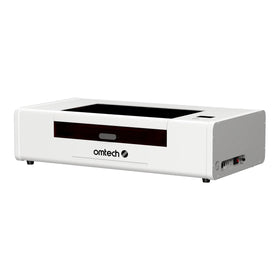








4+ Items and Materials To Put Under Your Laser Engraving Machine
There are several safe, heat-resistant, and non-reflective materials that you can put under a laser engraving machine or cutting bed that will allow you to engrave safely and protect your machine.
However, that does not mean that you can randomly choose any of these materials. It is one thing to know which materials are generally safe to put under a laser engraving machine, but another to know which of them will best suit the type, make, and model of laser engraver you have. When deciding what to put under your laser engraver, your objective should be to choose a material that is:
- Compatible with your laser type
- Suitable for your project
- Safe to engrave or cut.
Also, you must consider the material’s thickness, surface finish, and size, as well as the results you want to achieve. Then ensure the material fits your machine’s working area and produces minimal hazardous fumes when processed.

4 Most Common Materials To Put Under Your Laser Engraver
- Ceramic or slate tiles: Ceramic or slate tiles work well under a laser engraver because they are fireproof and safe. A slate tile won't burn if the laser hits it. They're also affordable: you can find them at hardware stores like Lowe's for about $1 to $5.
- An aluminum sheet or metal tray: Aluminum sheets and metal trays are standard non-galvanized aluminum or steel sheets that protect the work surface and allow heat to dissipate. They are very safe and give you extra solidity for heavier laser engraving machines.
- A honeycomb metal bed (with a metal backer plate): A honeycomb bed is great to put under a laser engraver, especially if you do a lot of laser cutting (as opposed to engraving). The bed is designed to let the smoke and debris vent through the bottom, and it usually comes with a protective steel plate underneath, which really helps keep everything safe.
- Cement board or plywood: If you have really thick plywood (1/2-inch or more), you can put it under your laser engraver as a temporary solution. It will char over time, but it works in the short term while you look for more permanent solutions. Also, a cement block is not a bad idea: it is solid and reasonably heat resistant.
Which of these four materials you end up putting under your laser engraver will depend on the type of laser engraver you have (CO2, diode, or fiber), whether you are mainly cutting or engraving, the kinds of materials you work with, as well as your budget and which one is most convenient for you.
How to Choose The Best Material to Put Under Your Laser Engraver
Your goal, when deciding what best to put under your laser engraving machine, should be to find a surface that is stable, level, heat-resistant, and well-ventilated. It should also be such that it is able to support the laser engraving machine safely, minimize vibrations, and provide enough space for all your other materials and accessories. Here are the top materials people put under their laser engravers
1. Honeycomb Bed + Steel Shield: The Standard Setup
If you have a standard desktop laser engraver, the ideal material to put under it is a honeycomb panel with an aluminum or steel plate. This setup works because the panel and the plate work off each other, allowing the smoke to escape and ensuring the safety of your desk.
- The honeycomb elevates your material, allowing smoke and fumes to escape downward, which drastically reduces backburn, soot, and charring on the bottom of your workpieces.
- The metal plate catches the final pass of the laser beam to protect your desk.
If you have the budget for it, this is the safest and most recommended solution for what to put under your laser engraver. It is complete, reliable, and effective.
Crucial Safety Warning When Using This Method:
For this setup, you must use metal plates and not galvanized steel sheets. It is dangerous to use galvanized steel sheets: when the zinc coating on a galvanized metal is cut through by a laser, it releases highly toxic fumes that can cause "welder's flu". Stick to raw aluminum or steel.
2. Cheap Materials and Fixes That Work on a Budget
If you have already spent a lot on your laser engraving machine and accessories, and are just looking for a cheap but safe material you can put under it temporarily, there are some really affordable materials you can grab from a hardware store. Consider the following:
- Large ceramic tiles. You can buy a few large, smooth 12x24 or 24x24 ceramic or porcelain tiles for a few dollars. They are completely fireproof, heavy enough to stay in place, and at worst, the laser will just lightly etch the glaze without cutting through.
- Cement board / HardieBacker: This is another highly recommended non-flammable, inexpensive material you can put under a laser engraver. It won't catch fire, is easy to replace, and you can easily draw or etch grid alignment lines directly onto it.
- Drywall / Plasterboard: A simple scrap piece of drywall acts as a decent sacrificial fire barrier.

3. Materials That Control Reflection and Flashback
Flashback is one of the major hazards in laser engraving, and the material you put under your laser engraver can help you deal with it. So, flashback happens when you are laser engraving on top of bare metal sheets, and the beam bounces off the bottom metal and ruins the underside of your project.
If you do a lot of metal engraving, you may also want to consider this when choosing what to put under your laser engraver. Here are some materials that work:
- Sacrificial wood: What some metal engraving experts do is place a thick sheet of scrap plywood beneath their projects to gently absorb and scatter the beam. The only challenge with this method is that, while it works great, it will eventually char and need replacing. This is why it is called “sacrificial”.
- Graphite coating: This is another method that, though not many people use, some experts have sworn that it works when you are trying to laser-cut a solid metal plate safely without a honeycomb. Coat an aluminum sheet with spray graphite to create a matte, non-reflective finish that stops back-reflections.
- Magnets and pin standoffs: Instead of laying material flat on a metal sheet, some people also use small metal stilts, steel nuts, or neodymium magnets as standoffs to lift the material off the base plate. This provides necessary airflow and keeps the beam from bouncing straight back into the workpiece.
What To Put Under a Laser Engraver: Diode vs. CO2 vs. Fiber Lasers
A critical factor to consider when deciding on what to put under your laser engraver is the kind of laser engraver it is. Different laser engravers have different wavelengths, and ideally, you want to choose a base plate that safely absorbs or handles the specific wavelength of your machine.
If you put a material under your laser engraving machine that does not absorb the specific wavelength of the machine, it will very likely reflect it, which can not only be ineffective, but also dangerous.
1. Diode Lasers (Wavelength: 450nm Blue Light)
The best materials to put under a diode laser engraver are aluminum honeycomb or ceramic tiles.
- Aluminum honeycomb with a steel sheet is the absolute standard. It prevents smoke stains on wood and handles accidental pass-through easily.
- Ceramic Tiles are a more affordable but effective option. The blue light cannot pierce or cleanly cut the mineral ceramic structure, safely absorbing the beam.
These two materials work because diode lasers emit visible blue light with a wavelength that is highly absorbed by wood, leather, and dark plastics, but it passes right through clear materials and bounces off shiny, bare metals.

2. CO2 Lasers (Wavelength: 10,600nm Long-wave Infrared)
For a CO2 laser engraver, the best materials to put under it are anodized aluminum honeycombs, steel plates (coated in graphite), or cement boards.
- Anodized or matte-coated aluminum honeycombs work because the matte black or dark anodized coating on the honeycomb structural walls scatters and dampens the infrared beam safely.
- Putting a steel plate coated in spray graphite under a laser engraver is a popular DIY trick that has been shared in laser engraving communities, including on Reddit. The raw steel plate catches the beam, while the matte graphite layer eliminates dangerous flashback reflections.
- Cement boards and HardieBackers are completely fireproof and highly effective at absorbing stray CO2 energy without smoking or reflecting.
Remember, CO2 lasers are incredibly versatile monsters that can cut wood, clear acrylic, and glass, but they operate in the far-infrared spectrum, meaning wood or rubber mats will instantly ignite if hit directly.
However, raw metals reflect CO2 beams heavily. A powerful CO2 beam hitting a bare, flat steel sheet can shoot a dangerous, invisible infrared reflection sideways across your room or right back into the expensive laser head.
3. Fiber Lasers (Wavelength: 1064nm Near-Infrared)
Fiber lasers are built specifically to mark and cut metals and dense engineered plastics. They completely ignore organic materials like wood or clear acrylic. So, you can safely put the following materials under a fiber laser engraver:
- Sacrificial wood or MDF board: Remember wood absorbs 1064nm fiber wavelengths incredibly poorly; a fiber laser will mostly ignore a piece of wood or scrap MDF underneath your metal workpiece. It will lightly char, but it won't reflect the beam and is easily replaceable.
- Heavy ceramic or brass blocks: If you have a galvo fiber laser, you can put thick brass or ceramic fixtures under it. They dissipate the high heat generated by the fast scanning speeds without completely warping or blinding the user with mirror-like reflections.
Materials To Put Under a Laser Engraver: Diode vs. CO2 vs. Fiber
|
Laser engraver type |
What to put underneath |
Best suited for |
Important considerations |
|
Diode laser |
Honeycomb bed with a suitable metal backer plate; ceramic tile or cement board may work for certain setups |
Engraving and cutting wood, plywood, and other compatible materials |
Ensure the setup is compatible with your laser and does not create fire or reflection hazards. |
|
CO₂ laser |
Honeycomb bed with a suitable metal backer plate for cutting; a stable, level surface for engraving |
Cutting and engraving wood, acrylic, and other compatible non-metallic materials |
Keep the workpiece level and allow sufficient clearance beneath it. Use proper ventilation to remove smoke and fumes. |
|
Fiber laser |
A stable, level, manufacturer-approved work surface or fixture |
Marking and engraving metals and other compatible materials |
Do not assume a material commonly used beneath diode or CO₂ lasers is safe for a fiber laser. Follow the machine manufacturer's guidance. |
Key takeaways:
- For many diode and CO₂ laser cutting applications, a honeycomb bed paired with a suitable metal backer plate is a practical starting point.
- For engraving, a stable, level surface can help keep the workpiece correctly positioned.
- Ceramic tiles and cement boards may be alternatives for certain setups, but compatibility depends on the machine and application.
Safety note: Avoid galvanized steel as an improvised backing material, and never use an underlayment without checking the manufacturer's recommendations. Proper ventilation and fire precautions are essential for all laser types.
What To Put Under a Laser Engraver When Engraving vs. Cutting
Whether you are laser cutting or engraving also matters when you are deciding what to put under your laser engraver because it dictates how the laser beam behaves once it passes through or hits your material. Here are two important rules to keep in mind:
- If you are laser cutting, there must be an air gap beneath the material.
- If you are engraving, you need a flat, perfectly level surface.
Which Option Should You Choose?
| Operation Type | Best Underlayment Option | Why |
| Strictly/Mostly Cutting | Aluminum Honeycomb Bed | Provides the perfect compromise. |
| Strictly/Mostly Engraving | Solid Flat Bed + Hold Down Magnets | A flat aluminum or steel plate is preferred over a honeycomb for dedicated engraving. |
| Hybrid (Cutting and Engraving) | Honeycomb + Removable Steel Pin Matrix | If you do both, use a honeycomb bed but buy laser pin standoffs or "punk spikes". You place these tiny metal pins into the honeycomb mesh to lift your wood completely off the grid. |
Why It Matters: Airflow vs. Alignment
Understanding why this distinction matters prevents ruined workpieces, nasty smoke stains, and costly fires. When you are laser cutting, the laser burns all the way through the material you are working on.
So, what happens if your material is resting flat on a solid surface (like a steel plate or tile)? The trapped smoke, intense heat, and laser beam have nowhere to go: eventually, they get forced sideways under your workpiece, which will cause the material to char and can potentially ignite a fire.
When you are engraving, the laser only shaves off the top layers of the material (rastering). The beam rarely pierces through to touch the base layer underneath. However, engraving requires the material to stay perfectly flat. Even a microscopic wobble or sag in thin wood or leather will pull the surface out of the laser lens's tight focus, resulting in a blurry, uneven engraving
Important Safety Warnings: Choosing What To Put Under a Laser Engraver
- Avoid galvanized steel: Whatever you do, do not use cheap galvanized sheet metal (like ductwork from hardware stores). There is a risk of "Welder's Flu".
- Watch for back reflections: Remember that fiber or high-powered lasers can reflect off bare aluminum or metal beds back into the laser or material; using a honeycomb grid, ceramic tile, or a proper underlayment helps absorb or scatter the beam safely.
- Ventilation is mandatory: No matter what you put underneath, laser engraving creates hazardous smoke and particles that require an inline fan or direct window exhaust.
Final Thoughts
Choosing what to put under your laser engraver depends on your laser type, the materials you process, and whether you primarily engrave or cut.
- A honeycomb bed with a suitable metal backer plate is a practical starting point for many cutting applications, while a stable, level surface can help maintain consistent engraving results.
- Ceramic tiles and cement boards may offer affordable alternatives for certain setups, but every material must be compatible with your machine and intended use.
- Avoid galvanised steel, manage hazardous fumes with proper ventilation, and follow your laser manufacturer's safety instructions.
Ultimately, the right underlayment should protect your work surface, support reliable results, and help you operate your laser engraver safely.
You might also be interested in 3D laser cutting, and it works.