




MOPA vs. Non-MOPA Laser Engravers For Metal
When it comes to choosing between a MOPA and non-MOPA laser engraver for metal, it mostly comes down to the type of metal engraving you want to do and the results you expect. MOPA technology is great for metal laser engraving when your goal is to achieve more precision and/or color engraving. But MOPA laser engravers are generally more expensive than regular non-MOPA fiber lasers, and color is not always needed for every metal engraving project. So, it all comes down to what kind of metal engraving you do, and what your personal preferences are:
- If you mainly need to engrave serial numbers, logos, barcodes, and other permanent markings, a decent non-MOPA fiber laser may provide everything you need.
- But if you want to produce colored marks on stainless steel, create specialized surface effects, or have greater control over how the laser interacts with the metal, a MOPA fiber laser is worth the investment.
To make the right decision, you need to understand what separates these two laser technologies and how those differences affect real-world metal engraving.

MOPA vs. Non-MOPA Fiber Laser Engravers for Metal: Key Differences
When it comes to metal laser engraving, the main advantage of using a MOPA over a non-MOPA fiber laser lies in pulse width control: how much control you have over the laser's pulse duration and, consequently, how you can deliver energy to the material.
1. MOPA Guarantees Pulse Width Control
With a MOPA fiber laser, you can adjust the pulse duration (usually from 2 ns to about 500 ns) without changing the frequency. This is what allows you to have more control over how much heat is delivered to the metal. With a non-MOPA (Q-Switched) fiber laser, you have no such flexibility.
2. MOPA Gives You Color Engraving
A MOPA laser engraver can produce a wide spectrum of vibrant colors on stainless steel and can also make deep black marks on aluminum or hard plastics. Again, this is another advantage of having flexible pulse width control.
With a non-MOPA fiber laser, color engraving on metal is very limited and close to nonexistent. Some models can achieve some basic dark or temper colors on stainless steel at specific frequencies, but the color range is far more limited and harder to dial in consistently.
3. Suitability For Delicate or Thin Metal
MOPA fiber lasers are also more suitable for working on thin/fragile metals like trading cards or foil. Because of their shorter pulse widths (e.g., down to 4 ns), they can deliver high power, but in ultra-brief bursts. So the residual heat transfer is very much reduced, which in turn prevents thin metals from warping or burning.
With a non-MOPA, the heat retention is much higher: it can easily warp or scorch thin or sensitive metal substrates.
4. Deep Engraving and Standard Cutting
MOPA fiber laser engravers work well for deep metal engraving. However, there is no real benefit to using a MOPA fiber if your goal is heavy material removal. Standard fiber lasers are just as capable (and often more cost-effective) for standard deep metal engraving, serial numbering, or basic marking where color and micro-pulse control are unnecessary.
5. Price and Ease of Use
MOPA fiber lasers are understandably more expensive than non-MOPA fiber lasers. Generally, a MOPA fiber would cost 20% to 30% more than a standard fiber laser and comes with a steeper learning curve for tuning parameters. Non-MOPA fiber lasers are more budget-friendly and simpler if you are a beginner who only needs straightforward metal etching or deep cutting.

When Do You Need a MOPA Fiber Laser Engraver for Metal Engraving? 5 Ideal Scenarios
In general, you need a MOPA fiber laser for metal engraving when you want to produce detail and color that a conventional non-MOPA machine cannot deliver as effectively.
The additional cost of a MOPA fiber laser makes sense if your customers expect specialized finishes, if your products require greater control over heat input, or if you want to offer a wider range of metal-marking services.
Here are five scenarios where you absolutely need a MOPA fiber laser:
1. You Want to Produce Colors on Stainless Steel
Color marking is one of the most compelling reasons to choose a MOPA fiber laser. If color marking is a core part of your business model, the additional flexibility of a MOPA laser can be worth paying for.
However, not every MOPA machine supports every color-marking application equally well. You should verify its pulse-duration range and test the results on your intended materials before purchasing.
2. You Work with Anodized Aluminum
Anodized aluminum is commonly used in nameplates, electronic housings, identification tags, and branded products.
A MOPA laser provides greater flexibility for adjusting marking parameters, which can be useful when producing high-contrast marks on anodized surfaces while controlling the effect on the underlying material.
If your business regularly processes different anodized aluminum products, this additional control can help you accommodate a wider range of finishes and marking requirements.
3. You Need Greater Control over Heat Input
Some metal-marking applications require careful management of thermal effects. This may be particularly important when processing delicate components, thin materials, or products with surface finishes that could be affected by excessive heat.
MOPA technology allows you to adjust pulse duration within the machine's available range, giving you another way to control how energy interacts with the material.
4. You Want to Offer Specialized Metal Marking Services
If your business serves multiple industries or offers customized products, you may benefit from having more control over the final appearance of your work.
For example, a workshop that marks stainless steel accessories, anodized aluminum nameplates, and customized metal gifts may value the ability to switch between different marking effects.
A MOPA laser can help expand the range of applications you offer without requiring a separate machine for every type of surface effect.
5. You Expect Your Business to Grow into More Specialized Work
Your current workload may consist mainly of simple logos and identification codes, but your future customers may request color marking, specialized finishes, or more demanding surface treatments.
If you have a clear plan to expand into these applications, investing in a MOPA machine now may be more economical than purchasing a non-MOPA machine and upgrading later.
What are The Best MOPA Fiber Laser Engravers for Metal Engraving?
A good MOPA fiber laser engraver should offer an appropriate power rating, a useful pulse-duration adjustment range, dependable marking performance, and software that gives you practical control over the parameters that matter for your applications.
1. 30W-50W MOPA Fiber Lasers: Best for Detailed Metal Marking and Personalized Surface Effects
For a small business, a 30–60W MOPA fiber laser is the most reasonable starting point for detailed marking, personalized products, and specialized surface effects. Whether you are working with stainless steel or metal, this MOPA laser machine not only handles all these materials with ease but also shines at creating stunning color markings.
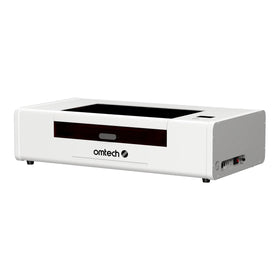
The OMTech MOPA 30W Split Fiber Laser Engraver features a 6.9" x 6.9" working area that supports diverse projects, managing everything from large production runs to small personalized creations.
2. 60W+ MOPA Fiber Lasers: Best for Deep Laser Engraving and Higher Volume Metal Engraving
Higher-powered MOPA fiber lasers are more suitable when your work involves deeper engraving or demanding production volumes. The OMTech MOPA 60W split fiber laser engraver has a 6.9" x 6.9" working area.
With a powerful 60W output combined with high-speed engraving at 10,000mm/s, this machine can easily handle small to medium projects, catering to various creative needs and allowing your imagination to flourish
Most importantly, request sample results on the actual materials you intend to process. A good MOPA machine should deliver the marking effects you need consistently, not merely advertise a wide range of adjustable settings.

When Do You Need a Non-MOPA Fiber Laser Engraver for Metal Engraving?
You need a non-MOPA fiber laser when your primary objective is to produce reliable, permanent metal markings and you do not require the specialized surface effects that justify the additional cost of MOPA technology.
In fact, even if you can afford a more expensive MOPA machine, choosing a non-MOPA model may be the smarter business decision if its capabilities already match your workload. Here are five scenarios where you need a non-MOPA fiber laser even if you can afford a more expensive MOPA model:
1. You Primarily Engrave Logos, Serial Numbers, and Barcodes
If you are a metal-engraving business that focuses on practical identification rather than decorative surface effects, you generally do not need a MOPA fiber laser. A standard Q-Switched fiber laser is sufficient if you are:
- A manufacturer who only needs to mark serial numbers on components,
- Own or run a workshop that only engraves identification codes on tools,
- Own or run a metal engraving business that adds logos to metal products.
These applications generally do not require color marking or extensive pulse-duration control. With a decent standard fiber laser, you can produce clear, permanent marks for these tasks with consistency without breaking the bank for a MOPA.
2. You Need to Keep Initial Costs Down
If you are just starting in a metal engraving business, you probably don't need to splash out on a MOPA fiber laser engraver just yet. Remember, for a startup, purchasing equipment is only one part of the investment. You may also need to budget for fixtures, software, materials, safety equipment, marketing, and other operating expenses.
If a non-MOPA fiber laser meets your production requirements, then go for it. Choosing it can free up money for other parts of your business.
3. You Want a Straightforward Workflow
If you mainly process the same types of metal parts using established marking settings, a conventional non-MOPA machine may be easier to integrate into your workflow.
Once you have optimized the parameters for a particular material and marking requirement, you can reuse those settings for repeat jobs, provided the material and processing conditions remain consistent.
This can be particularly useful for businesses producing batches of components or marking standardized products.
4. You Prioritize Standard Metal Marking over Specialized Effects
If your customers primarily request black or white marks where achievable, conventional identification marks, logos, or simple decorative designs, a non-MOPA laser may provide all the necessary functionality.
The right choice depends on the required finish, because the exact result will vary with the metal, surface condition, and laser settings.
If specialized colors or particular surface effects are not part of your offering, MOPA's additional flexibility may not provide enough value to justify the higher price.
5. You Want to Invest in the Right Capabilities, Not the Most Features
A more expensive machine is not automatically a better business investment. For example, a business that engraves the same type of stainless steel component every day may benefit more from a reliable non-MOPA machine with appropriate wattage, good scanning performance, and efficient workholding than from a MOPA machine with advanced pulse controls it rarely uses.
What are The Best Non-MOPA Fiber Laser Engravers for Metal Engraving?
A good non-MOPA fiber laser engraver should provide dependable metal-marking performance, appropriate wattage, stable scanning, and straightforward software controls.
1. 30-50W Fiber Lasers: Best For General Metal Marking
For routine logos, serial numbers, barcodes, and general-purpose marking, a 30–50W machine may be sufficient. The OMTech Galvo 30W is a compact and integrated fiber metal engraving machine in this category. It has a sizeable 5.9" x 5.9" working area, 30W of laser power, and a speedy engraving rate of 10,000 mm/s.
With LightBurn compatibility, you can engrave not only on stainless steel and metal, but also on brass, carbide, granite, and plastic, to meet all your DIY needs and bring your one-of-a-kind handmade ideas to life.
2. 50-60W Fiber Laser Engravers: Best For Higher Volume Metal Engraving
If you process larger volumes or require more demanding engraving, a 50–60W or higher-powered model may be worth considering.
Look for a suitable marking field, reliable focusing and positioning, compatible rotary attachments if needed, and accessible technical support. Safety features and documentation should also meet the requirements of your intended working environment.
The OMTech Galvo 50W is another compact and integrated fiber laser marker for metal with a 5.9" x 5.9" (150x150 mm) working area. With 50W of power and a quick engraving speed of 10,000 mm/s, it is perfectly suited for projects of any scale and helps you easily execute your creative ideas
Both OMTech non-MOPA fiber laser machines should perform your most common jobs reliably without making you pay for capabilities your business does not need.
MOPA vs. Non-MOPA Laser Engraver For Metal: Which Should You Choose?
| Decision Factor | MOPA Fiber Laser | Non-MOPA Fiber Laser |
| Best overall use | Specialized metal marking and applications requiring greater control over surface effects | General-purpose metal marking and engraving |
| Best for color marking | Yes, particularly on compatible stainless steel surfaces | Generally less suitable for controlled color marking |
| Best for anodized aluminum | Useful when a wider range of marking effects is required | Suitable for many conventional marking tasks |
| Pulse-duration control | Adjustable within the machine's supported range | Typically more limited |
| Standard logos and serial numbers | Excellent, although some capabilities may be unnecessary | Excellent for many routine applications |
| Deep engraving | Suitable with appropriate power and configuration | Also suitable with appropriate power and configuration |
| Production flexibility | Better for varied applications requiring different surface effects | Better suited to consistent, conventional marking workflows |
| Ease of use | May require more experimentation to optimize specialized effects | Often straightforward for routine marking |
| Initial investment | Usually higher | Usually lower |
| Best choice for startups | When specialized marking is central to the business model | When standard marking meets customer requirements |
| Best choice for established businesses | When advanced marking capabilities create additional value | When conventional marking provides the required results efficiently |
| Main limitation | Additional cost and potentially greater parameter complexity | Less flexibility for specialized surface effects |
Final Thoughts on MOPA vs Non-MOPA Laser Engravers For Metal
Choosing between MOPA and non-MOPA fiber lasers is ultimately about understanding what your metal-engraving projects demand.
A MOPA fiber laser is worth considering when you need color marking on compatible metals, greater control over heat input, or flexibility for specialized marking effects. These capabilities can help you expand your services and meet more demanding customer requirements.
A non-MOPA fiber laser is often the better choice when you primarily need permanent logos, serial numbers, barcodes, and other conventional metal markings. It can deliver the performance required for many everyday applications without the additional expense of features you may never use.
Choose MOPA when its additional control creates real value for your work. Choose non-MOPA when conventional metal marking is all you need. The best machine is the one that delivers the results your customers expect at a cost your business can justify.