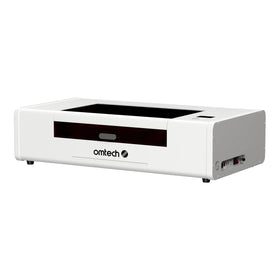








Laser Cutters for Schools
Bring STEM, Design, and Digital Fabrication into the Classroom
Turn student ideas into real, tangible projects with OMTech laser cutters for schools.
From middle school makerspaces and high school CTE programs to college engineering labs, laser cutting technology gives students a practical way to explore design, manufacturing, mathematics, engineering, art, and entrepreneurship.
OMTech helps schools build accessible digital fabrication programs with reliable laser equipment, classroom-ready project ideas, training resources, and purchasing support.
Explore Laser Cutters for Education
Talk to an Education Specialist

Why Schools Are Adding Laser Cutters to Their Classrooms
Modern education increasingly emphasizes project-based learning, technical skills, and real-world problem-solving. A laser cutter allows students to move beyond screens and worksheets by turning digital designs into physical objects.
Students can design a project in CAD or vector software, prepare the material, operate the laser under supervision, evaluate the result, and improve their design through multiple iterations.
This process supports both technical learning and creative exploration.
Schools use laser cutters to teach:
- STEM and STEAM concepts
- Engineering design
- Computer-aided design
- Digital fabrication
- Measurement and geometry
- Manufacturing processes
- Product development
- Art and graphic design
- Woodworking and construction
- Robotics and electronics
- Entrepreneurship
- Career and technical education
A single laser cutter can support multiple departments, grade levels, and educational programs throughout the school year.
One Machine. Multiple Subjects.
STEM and Engineering
Laser cutters help students understand how digital designs become manufactured products.
Students can create bridges, gears, mechanical systems, structural models, engineering prototypes, and science demonstration tools while learning about measurement, tolerances, materials, and design constraints.
Example projects include:
- Model bridges
- Gear systems
- Mechanical linkages
- Marble runs
- Solar car components
- Wind turbine models
- Simple machines
- Physics demonstration tools
Career and Technical Education
Laser cutting introduces students to processes used in modern manufacturing, product development, signage, packaging, woodworking, and industrial design.
Students gain experience with:
- Design files
- Material selection
- Production planning
- Machine setup
- Quality control
- Prototyping
- Batch production
- Workplace safety
- Cost estimation
These skills can support CTE pathways in manufacturing, architecture, construction, engineering, graphic communications, and entrepreneurship.
Makerspaces and Innovation Labs
A laser cutter can become one of the most frequently used tools in a school makerspace.
Unlike equipment limited to one subject, a laser cutter can support projects from engineering, science, art, robotics, architecture, and business classes.
Students can quickly produce parts, test ideas, identify design problems, and create improved versions without waiting for outsourced fabrication.
Popular makerspace projects include:
- Custom signs
- Desk organizers
- Puzzle boxes
- Model buildings
- Educational games
- Robot components
- LED displays
- Decorative artwork
- School merchandise
- Personalized gifts
Art and Design
Laser cutters combine traditional art skills with modern digital tools.
Students can explore composition, typography, illustration, pattern design, material behavior, and three-dimensional construction.
Art and design projects may include:
- Layered wall art
- Engraved illustrations
- Stencils
- Printmaking plates
- Jewelry
- Architectural sculptures
- Decorative boxes
- Typography projects
- Mixed-media artwork
Students learn that technology is not separate from creativity. It can become another tool for artistic expression.
Mathematics and Geometry
Laser cutting gives students a practical reason to apply measurement and geometry.
Projects can require students to calculate:
- Length and width
- Area and perimeter
- Scale
- Angles
- Ratios
- Kerf compensation
- Material thickness
- Tolerances
- Part quantities
Instead of solving only abstract problems, students can see how accurate measurements affect whether a physical design fits together correctly.
Robotics and Electronics
Laser cutters can produce custom frames, mounting plates, enclosures, control panels, sensor brackets, and structural components for robotics projects.
Students can move beyond preassembled kits and begin designing their own robot parts.
Applications include:
- Robot chassis
- Electronics enclosures
- Sensor mounts
- Control panels
- Cable management parts
- Competition signage
- Prototype mechanisms
- Custom project displays
Entrepreneurship and School Fundraising
Laser cutters can also support business, marketing, and entrepreneurship education.
Students can develop a product, calculate material and production costs, create branding, plan a marketing campaign, and sell finished items through a school store, event, fundraiser, or student enterprise.
Possible products include:
- School ornaments
- Awards
- Keychains
- Name tags
- Event signs
- Team plaques
- Graduation gifts
- Personalized notebooks
- Classroom decorations
- School-branded merchandise
This gives students experience with the complete product lifecycle, from concept to customer.
What Can Students Make with a Laser Cutter?
Laser cutting projects can be adapted for different grade levels, subjects, and skill levels.
Beginner Projects
- Engraved bookmarks
- Student name tags
- Simple keychains
- Classroom signs
- Geometric puzzles
- Holiday ornaments
- Acrylic badges
- Coasters
Intermediate Projects
- Layered maps
- Desk organizers
- Puzzle boxes
- Model houses
- Mechanical toys
- LED signs
- Board games
- Architectural models
Advanced Projects
- Functional prototypes
- Robotic systems
- Complex mechanical assemblies
- Scale engineering models
- Product packaging
- Furniture prototypes
- Student-designed retail products
- Competition-ready projects
Teachers can begin with simple engraving exercises and gradually introduce more advanced design, assembly, and manufacturing concepts.
Suitable Materials for School Projects
Laser cutters can process a wide range of materials commonly used in educational projects.
Frequently used materials include:
- Plywood
- Solid wood
- Acrylic
- Cardboard
- Paper
- Cork
- Fabric
- Leather
- Rubber designed for laser processing
- Laser-safe laminates
Material compatibility depends on the laser system, material composition, thickness, ventilation setup, and manufacturer guidance.
Schools should establish an approved-material list and never process unknown materials. PVC, vinyl, and other materials that may release harmful fumes should not be placed in a laser cutter.
Choosing the Right Laser Cutter for Your School
The best laser cutter for a school depends on how the machine will be used, where it will be installed, and how many students or departments will share it.
Consider the Following Factors
Intended Applications
A machine used primarily for small classroom projects may have different requirements from a machine supporting a district-wide CTE manufacturing program.
Consider whether students will mainly:
- Engrave small objects
- Cut plywood and acrylic
- Produce architectural models
- Create large signs
- Build engineering prototypes
- Manufacture products in batches
Working Area
A larger work area allows students to create bigger projects or arrange multiple smaller parts in one production run.
Schools producing architectural models, signage, furniture components, or batch projects may benefit from a larger bed.
Laser Power
Higher laser power can improve cutting capability and reduce processing time on suitable materials.
The right power level should be selected based on the materials, thicknesses, project volume, and expected daily use.
Enclosure and Safety Controls
For educational environments, schools should prioritize enclosed machines, appropriate access controls, emergency-stop functions, ventilation, supervision procedures, and clearly documented operating rules.
Ventilation and Filtration
Laser cutting produces smoke, particles, and odors that must be managed properly.
Depending on the installation environment, schools may use:
- Outdoor exhaust
- Dedicated ducting
- Approved filtration equipment
- A combination of exhaust and filtration
The room, building requirements, local regulations, and materials being processed should all be considered before installation.
Software Compatibility
Schools should evaluate whether the machine can work with the design and production software used in their program.
Students may create files using programs such as:
- Adobe Illustrator
- AutoCAD
- CorelDRAW
- Inkscape
- Fusion
- SketchUp
- Other CAD or vector design platforms
The software workflow should be age-appropriate and aligned with course objectives.
Training and Support
Teachers need more than a machine. They need a clear process for setup, operation, maintenance, troubleshooting, and classroom management.
Before purchasing, schools should consider:
- Initial staff training
- Installation guidance
- Operating documentation
- Maintenance requirements
- Technical support
- Replacement parts
- Curriculum resources
Recommended OMTech Laser Cutters for Schools
OMTech offers laser systems for different education environments, from compact makerspaces to larger CTE and fabrication labs.
Compact Classroom and Makerspace Systems
Best suited for:
- Smaller classrooms
- Libraries
- Introductory STEM programs
- Art rooms
- Entry-level makerspaces
- Schools with limited floor space
These systems can support name tags, classroom signs, models, puzzles, small prototypes, and creative projects.
Explore Compact Laser Cutters
Mid-Size School Laser Cutters
Best suited for:
- Middle and high school makerspaces
- STEM labs
- Art and design departments
- Architecture programs
- Student enterprise programs
- Shared departmental use
A larger working area gives students more flexibility while remaining manageable for many school fabrication spaces.
Explore Mid-Size Laser Cutters
CTE and High-Volume Education Systems
Best suited for:
- Career and technical education
- Vocational schools
- College fabrication labs
- Engineering departments
- Manufacturing programs
- High-volume student production
These machines are designed for programs that require greater cutting capacity, larger projects, frequent use, or batch production.
Explore CTE Laser Systems
Classroom Safety Comes First
Laser cutters can be valuable educational tools when schools establish appropriate equipment, installation, training, and supervision procedures.
A classroom laser safety program should include:
- Trained adult supervision
- Approved-material lists
- Ventilation or filtration
- Fire safety equipment
- Emergency procedures
- Machine-specific operating instructions
- Regular inspection and maintenance
- Controlled machine access
- Clear student behavior rules
- Safe material storage
Students should never operate laser equipment without authorization and supervision.
Teachers should also inspect materials before every project and avoid leaving an operating laser unattended.
A Suggested Classroom Workflow
A structured workflow helps teachers manage student projects safely and efficiently.
1. Define the Project
Students review the problem, project requirements, learning goals, materials, and constraints.
2. Create the Design
Students prepare a vector or raster design using approved software.
3. Review the File
The teacher or lab manager checks dimensions, line settings, layout, spelling, and material use.
4. Prepare the Material
Students identify the approved material, confirm thickness, and place it correctly in the machine.
5. Confirm Machine Settings
The operator selects appropriate power, speed, frequency, and processing settings for the material and project.
6. Run the Project
The machine operates under trained adult supervision.
7. Inspect the Result
Students evaluate cut quality, engraving clarity, dimensions, assembly, and overall function.
8. Improve the Design
Students document problems and revise the project where necessary.
This cycle supports design thinking, reflection, and iterative problem-solving.
Curriculum Integration
Laser cutting can support existing curriculum rather than becoming a standalone technology activity.
Science
- Structural testing
- Energy systems
- Model ecosystems
- Scientific instruments
- Anatomy models
- Physics demonstrations
Technology
- CAD
- Digital fabrication
- Electronics
- Robotics
- Manufacturing systems
- Product design
Engineering
- Prototyping
- Design constraints
- Structural analysis
- Mechanical systems
- Testing and iteration
- Material selection
Art
- Illustration
- Typography
- Sculpture
- Pattern design
- Mixed media
- Product aesthetics
Mathematics
- Measurement
- Geometry
- Scale
- Ratios
- Area
- Tolerances
Business
- Product costing
- Branding
- Packaging
- Marketing
- Pricing
- Production planning
Teacher-Ready Project Resources
A successful school laser program requires projects that teachers can realistically deliver within available class time.
OMTech education resources can help instructors plan projects with:
- Learning objectives
- Grade-level recommendations
- Estimated project time
- Material lists
- Design files
- Machine preparation steps
- Safety reminders
- Assessment criteria
- Troubleshooting guidance
- Extension activities
Possible curriculum projects include:
- Laser-cut chessboard
- Model bridge challenge
- Custom school sign
- Architectural model
- Gear mechanism
- Student-designed board game
- LED acrylic display
- Personalized award
- Product packaging prototype
- School fundraiser project
Explore Laser Cutter Lesson Plans
Support for School Purchasing
School purchasing processes are often different from standard consumer purchases.
OMTech can help education customers evaluate equipment requirements and prepare for institutional purchasing.
Depending on applicable policies and availability, schools may need support with:
- Formal quotations
- Purchase order documentation
- Vendor information
- Product specifications
- Shipping estimates
- Tax-exempt purchasing documentation
- Multi-machine orders
- District-level purchasing
- Grant documentation
- Installation planning
Request a School Quote
Funding a School Laser Cutter
Laser cutters may qualify for funding through school, district, state, federal, nonprofit, workforce-development, or community programs.
Potential funding sources may include:
- STEM education grants
- CTE funding
- Perkins-related funding
- Makerspace grants
- Career-readiness initiatives
- Workforce-development programs
- School foundations
- Parent-teacher organizations
- Local business sponsorships
- Community foundations
- Capital equipment budgets
Funding eligibility and requirements vary by program. Schools should verify all current rules directly with the funding organization.
When preparing a funding request, explain how the laser cutter will support:
- Student learning outcomes
- Multiple departments
- Career readiness
- Technical skill development
- Project-based learning
- Industry-relevant experience
- Community engagement
- Measurable student participation
Explore Education Funding Resources
Why Schools Choose OMTech
Equipment for Different Education Environments
OMTech offers laser systems suitable for compact makerspaces, shared classroom labs, CTE programs, and larger fabrication environments.
Broad Project Possibilities
Students can use laser technology for STEM, engineering, art, architecture, robotics, woodworking, entrepreneurship, and more.
Scalable Programs
Schools can begin with introductory projects and gradually build more advanced digital fabrication coursework.
Practical Skill Development
Laser cutting connects classroom learning with CAD, design, manufacturing, product development, and technical careers.
Purchasing Support
Education customers can request assistance with equipment selection, quotations, and planning for their school environment.
Learning Resources
Project ideas, educational content, setup guidance, and operating resources can help teachers build confidence and introduce laser technology more effectively.
Are laser cutters safe for students?
Laser cutters can be used in educational environments when schools select appropriate equipment, install it correctly, train staff, control student access, use approved materials, provide proper ventilation, and require active adult supervision.
A laser cutter should never be treated as an unsupervised classroom appliance.
What age can students begin using a laser cutter?
There is no universal age requirement for every school or laser system. Student access should depend on the machine, project complexity, school policy, local requirements, teacher supervision, and student readiness.
Younger students may participate in design activities while a trained teacher operates the machine. Older students may gradually take on more responsibility after completing safety and operating instruction.
What is the best laser cutter for a school?
The best system depends on the available space, project size, material requirements, daily production volume, ventilation options, budget, and student age group.
A compact enclosed machine may suit a library or introductory makerspace, while a high school CTE program may need a larger and more powerful system.
Can a laser cutter support multiple school departments?
Yes. One machine can potentially support engineering, STEM, art, robotics, architecture, woodworking, mathematics, business, and extracurricular programs.
Schools should create a shared-use schedule and designate trained staff members responsible for machine access and maintenance.
What materials can students use?
Common school project materials include approved plywood, wood, acrylic, cardboard, paper, cork, fabric, leather, and laser-safe laminates.
Schools should follow machine and material manufacturer guidance. Unknown plastics and materials containing PVC or vinyl should not be processed.
Does a school laser cutter need ventilation?
Yes. Smoke, particles, and odors must be properly controlled.
Schools may need outdoor exhaust, approved filtration, or another suitable ventilation solution depending on the building, machine, materials, and local requirements.
How much training do teachers need?
Training needs depend on the equipment and the teacher's prior experience.
Staff should understand machine setup, focusing, material settings, file preparation, ventilation, fire prevention, routine maintenance, troubleshooting, and emergency procedures before supervising student use.
What software do students need?
Students generally need vector, graphic design, or CAD software to create project files, along with compatible laser control software.
Schools should choose software based on student age, curriculum, device compatibility, licensing, and the type of projects being taught.
Can schools use purchase orders?
Education purchasing options may vary. Schools should contact the OMTech education team to discuss current quotation, purchase order, tax-exempt, and institutional purchasing requirements.
Can schools apply for grants to purchase a laser cutter?
Potentially. Laser equipment may fit STEM, CTE, makerspace, workforce-development, career-readiness, school-foundation, or local community grant programs.
Eligibility depends on the specific funding program and its current requirements
How long does installation take?
Installation time depends on the machine, room readiness, delivery access, electrical requirements, ventilation system, filtration setup, software configuration, and staff training.
Schools should complete a site-readiness review before delivery.
Can students use laser cutters for school fundraising?
Yes. With school approval, students may create ornaments, signs, awards, keychains, gifts, event products, and branded merchandise.
These projects can support entrepreneurship education while helping raise funds for student programs.
Build a Digital Fabrication Program at Your School
A laser cutter is more than a piece of equipment. It can become a shared learning platform for design, engineering, creativity, manufacturing, and career preparation.
Whether you are planning a new makerspace, expanding a CTE program, upgrading an engineering lab, or adding hands-on tools to a STEM classroom, OMTech can help you evaluate the right laser system for your school.
Talk to an OMTech Education Specialist
Tell us about your students, available space, curriculum, project goals, and budget. Our team will help you explore suitable equipment and prepare for the next step.
Request an Education Quote
Download the School Purchasing Guide