







How to Choose the Best Heat Press for DTF Transfers
When choosing a heat press for Direct-to-Film (DTF) transfers, the most important thing to keep in mind is that the quality and key features of the heat press matter more than the brand name. There are specific criteria you should use to select a heat press for DTF transfers, and any heat press that meets these criteria will work well for DTF, regardless of brand or price.
This matters because many buyers assume that a heat press that is fancy, expensive, or from a top brand must automatically be the best choice for DTF transfers. In reality, the priority when buying a heat press for DTF should be consistent edge-to-edge heat distribution and heavy, uniform pressure.
Here's why this matters: DTF printing works by melting a plastic adhesive powder into the fabric fibers. If the heating is uneven or the pressure is too weak, the transfer will start peeling or cracking after just a few washes.
Before you shop, ask yourself these three questions:
- What is your approximate budget?
- How many garments do you plan to press per week?
- What types of items are you focused on (e.g., standard T-shirts, heavy hoodies, or small sleeve/hat logos)?

How To Choose the Best Heat Press for DTF Transfers: Key Criteria
1. Style/Design: Swing-Away vs. Clamshell vs. Pneumatic
The first step in choosing a heat press for DTF transfers is deciding which press design will work best for you. There are three major heat press styles: swing-away, clamshell, and pneumatic.
Most people recommend swing-away presses for DTF transfers, but the right choice ultimately depends on your print volume, budget, and available space.
i. Swing-Away Heat Press Machines (Highly Recommended)
Within the DTF printing community, the consensus is that swing-away presses are best for DTF transfers. "Swing-away" simply means the top platen swings completely out of the way before it comes down, applying perfectly vertical downward pressure.
This style is great for DTF because it prevents the transfer sheet from shifting and ensures a flat, even press across thick garments like hoodies.
ii. Pneumatic/Automatic Heat Press Machines (Best for Production)
If you're running a high-volume shop, a pneumatic heat press (such as a dual-platen setup) is the better option. These presses use compressed air to apply maximum, consistent pressure automatically, which saves your back and arms from the fatigue of manual pressing.
iii. Clamshell Heat Press Machines (Best for Limited Space/Budget)
If you're on a limited budget, a clamshell-style heat press is probably your best option, even for DTF transfers. "Clamshell" refers to the way the press opens like a jaw, with the top platen hinged at the back.
The advantage of clamshell presses is that they're affordable and space-saving, but they apply pressure at an angle rather than straight down.
Cheaper clamshell models ( there are many available online) tend to perform worse for DTF printing specifically: they often pinch the back edge of thick garments, which causes pressure to be applied unevenly, with more force at the front than the back.
Key Takeaways: Swing-Away vs. Automatic vs. Clamshell Heat Presses for DTF Transfers
- Choose a swing-away heat press if you have enough space and are working at a small to medium scale.
- Choose a pneumatic (automatic) heat press if you print large volumes on a commercial scale.
- Choose a clamshell heat press if you're a beginner, only do a few transfers a day, or are short on space.
2. Size Matters: 15x15 Inches vs. 16x20 Inches
i. 15x15-Inch Heat Press: Best for Beginner or Hobbyist DTF Printing
If you're new to DTF printing and working with smaller clothing items or lighter materials, it's better to start with a 15x15-inch heat press. It's more affordable and gives you enough room to practice on simpler projects while you build experience before moving up to a larger press.
15x15 inches is generally considered the minimum size for a beginner; the ideal size for DTF printing at home. It works fine for standard T-shirt graphics and other simple DTF projects. The main limitation is that it's difficult to align and press adult XL+ sweatshirts and hoodies cleanly on a platen this size, though that's usually not a major concern if you're just starting.
ii. 16x20-Inch Heat Press: Best for Commercial DTF Printing
If you're doing commercial or professional DTF printing, a 16x20-inch heat press is the better choice. This size is widely considered the industry sweet spot.
It accommodates large gang sheets (sheets that hold multiple designs printed together to save material and press time), lets you press oversized clothing in a single pass, and ensures the heating element extends well past the edges of your design for more even heat coverage.
Key Takeaway: 15x15 vs. 16x20-Inch Heat Presses for DTF Transfers
- Go for a 16x20-inch press if you plan to press hoodies or extra-large shirts.
- A 15x15-inch press works fine for smaller runs, but keep in mind you may eventually need to upgrade to a larger platen as your volume grows.
3. Crucial Features to Look For
- Threadable lower platen: Make sure the lower bed allows you to "dress" the press by sliding the shirt completely over it. This isolates a single layer of fabric, preventing zippers, thick seams, or pockets on the back of the garment from disrupting even pressure.
- Over-the-center pressure adjustment: Look for machines with the pressure adjustment knob located at the dead center of the press. This distributes the manual clamping force evenly across the entire plate rather than concentrating it at the front or back edge.
Best Heat Presses for DTF Printing: Models and Brands
| Tier | Best For | Recommended Model(s) | Price Range | Why It Works |
| Budget / Side Hustle | 1–5 shirts a day, testing the waters | OMTech Smart, Vevor, HTVRont | $150–$300 | Great value to start. Temperatures can fluctuate, so it's worth buying a digital thermometer gun to verify actual platen heat. |
| Mid-Range / Prosumer | Growing small business, consistent daily use | GeoKnight (DK20A), Creworks, A2Z by Hotronix | $500–$1,200 | Built like tanks with heavy-duty heating elements. They hold precise temperatures and last for years without warping. |
| Commercial / High Volume | Industrial production, thousands of presses | Hotronix Auto Clam, Practix Mfg | $1,500+ | Essential for scaling up, but overkill unless your primary business revenue depends directly on garment production. |
- Commercial heat presses like Hotronix or GeoKnight's DK20A are long-term investments that maintain flawless edge-to-edge heat recovery. However, at $1,500–$2,000+, they're overkill for hobbyists.
- If you're a casual user or side hustler pressing a couple of items a day, budget brands like OMTech and Vevor are affordable entry points around $200 that get the job done without breaking the bank.
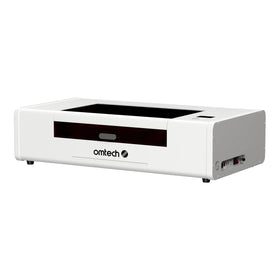
A Closer Look at the OMTech 15" x 15" Smart Auto Heat Press
The OMTech 15" x 15" Smart Auto Heat Press is designed to be an affordable, high-quality option for beginners working on DTF transfers.
What makes this heat press especially good for DTF transfers is its built-in laser guidance, which helps you position designs accurately before pressing, making it easier to align graphics on T-shirts, tote bags, and other blanks while reducing costly placement errors.
Key features include:
- A 15" x 15" dual-tube heated platen that delivers even heat across the entire surface, for smooth, professional transfers with no cold spots or uneven edges.
- Heating up to 400°F for consistent results.
- Built-in laser guidance for accurate design positioning before pressing.
- A pull-out drawer that keeps your hands safely away from the heating area during operation.
- Auto shut-off after 10 minutes of inactivity, making it a safer choice for daily use in home or studio setups.
The OMTech 15" x 15" Smart Auto Heat Press is currently on sale at $299, and OMTech also offers cost-effective bundles pairing this press with the OMTech Aurora D1 DTF Printing Machine, DTF white ink, and a DTF oven dryer, with special discounts and extra support for small DTF printing businesses.
Tips for Choosing and Using the Best Heat Press for DTF Transfers
- Avoid handheld craft presses for DTF. Machines like the Cricut EasyPress are generally discouraged for DTF printing, especially by professionals, because they lack the mechanical leverage needed to deliver heavy, sustained pressure.
- Buy the necessary accessories. A heat press pillow helps you press over thick collars and seams without them affecting the rest of the garment, and a silicone or Teflon sheet protects the film while helping give the final print its texture.
- Always follow the "second press" rule. DTF transfers typically require two presses: first with the film on (usually around 300°F for 10–15 seconds), then peel the film off cold or hot depending on the manufacturer's instructions, and finally press a second time for about 5 seconds with a parchment or Teflon sheet to fully cure the design into the fabric.
Heat Press vs. Cricut Press for DTF Transfers: Which Is Better?
A traditional swing-away or clamshell heat press is generally much better suited to DTF transfers than a Cricut EasyPress, mainly because it can provide the automatic, heavy, even pressure that DTF adhesive requires to bond correctly. Manual Cricut presses generally can't deliver that pressure consistently.
That said, DTF transfers with a Cricut press are still possible, and if you're working under financial or space constraints, it might work for some use cases. The key is understanding the differences between what a heat press and a Cricut press each offer for DTF printing, and the trade-offs of choosing one over the other.
Cricut Press vs. Traditional Heat Press for DTF
| Feature | Cricut EasyPress / Autopress | Traditional Heat Press (Clamshell / Swing-Away) |
| Pressure | Manual body weight or light motorized pressure; inconsistent for DTF | Heavy, adjustable, mechanical/pneumatic pressure |
| Price | High ($150–$500+, brand-locked) | Moderate to low ($150–$300 for solid starter units) |
| Consistency | Good heat, but lacks uniform clamping pressure | Even heat and locked pressure across the whole platen |
| Workspace | Compact and easy to store | Larger, heavier footprint required |
Two Main Reasons More People Choose a Heat Press Over a Cricut Press for DTF Printing
- DTF transfers require a lot of heat and pressure. DTF uses a heavy powder-adhesive layer that fails or peels prematurely without firm, even mechanical pressure. A Cricut EasyPress can work if you press down very hard (or use the automated Cricut Autopress), but it still functions more like a heavy iron than a dedicated press.
- The value and cost trade-off. Cricut-branded machines tend to carry a high price relative to what they can actually do for DTF work. Many users find that budget-friendly heat presses, or even standard 15x15-inch commercial clamshell presses, offer auto-open functionality and true clamping pressure for a fraction of the cost.

Does That Mean Buying a Cricut Press for DTF Is Automatically a Bad Decision?
Not necessarily. If you already own an EasyPress 2 or 3 and only do occasional small left-chest logos or hobby shirts, it can still get the job done; you'll just need to extend the press time slightly and use a firm pressing mat. For full-front designs or batch processing, though, a swing-away or clamshell press is still the better choice.
Final Thoughts on Choosing the Best Heat Presses For DTF Machines
Choosing the best heat press for DTF transfers comes down to matching the machine's pressure, heat consistency, and size to how you actually plan to use it: not to brand reputation or price alone. Beginners and hobbyists can get great results from an affordable 15x15-inch swing-away or clamshell press like the OMTech Smart Auto Heat Press, while growing shops should plan for a 16x20-inch platen and, eventually, pneumatic pressure as volume increases.
Whatever machine you choose, prioritizing even heat distribution and strong, uniform pressure will do more for your transfer quality than any brand name.
You may also be interested in this complete guide on how to print DTF on black shirts, and many other DTF applications that are open to you when you have the right heat press for DTF.