







The Laser Systems Modern Factories Are Using Right Now
Walk through a mid-size metal shop today. Chances are good you'll see a fiber laser running somewhere. Maybe marking serial numbers on parts. Maybe cutting steel sheet. Maybe both, on two separate machines, going all day.
That wasn't common ten years ago. It is now.

Industrial laser systems didn't replace every other process. But they did take over a lot of marking, cutting, and tracing jobs that used to need ink, stamps, or manual tools. The shift happened because the math made sense. Faster. Cleaner. No consumables for most jobs. Easy to retrain staff on.
This piece covers what factories are actually running, why certain laser systems win out over others, and where smaller shops fit into all of this.
Fiber Laser Systems: The Factory Standard for Metal
Ask any production floor manager what laser system they use for metal, and the answer is almost always fiber. Fiber laser systems hit metals at a wavelength that the surface absorbs well. The mark is permanent. The process is fast. There's no ink, no pad, no chemical involved.
What factories use fiber lasers for:
-
Serial number and part ID marking
-
Data matrix codes and barcodes
-
Regulatory compliance marks (medical, automotive, aerospace)
-
Logo and branding on finished components
-
Traceability marking before painting or coating
The speed matters a lot in production. A part sitting at a fiber laser marking station for two seconds versus fifteen seconds changes throughput significantly over a full shift. Modern fiber laser marking systems mark at speeds that older technologies couldn't match without sacrificing readability.
OMTech's fiber laser machines collection covers the range from desktop galvo units to higher-powered production markers. The galvo head design on these machines is what makes them fast. The mirror moves, not the workpiece. No repositioning. Just mark and move.
Small Batch Laser Production: A Different Problem
Big factories have big lasers and big budgets. That's not the only story here.
Small batch laser production is where things get interesting. A shop running 50 custom knife handles a day doesn't need the same setup as a factory stamping 10,000 parts per hour. Different scale. Different requirements.
For small batch work, the priorities shift. Setup time matters more. If switching between job files takes ten minutes, that's a real cost on a 50-piece run. Machines with fast software, autofocus, and reliable file import handle this much better than older setups where you manually adjusted focus every time.
Fiber markers with galvo heads shine here. Load the file. Focus. Mark. Done. No complicated jigging for most jobs. The Galvo Fiber 20/30/50W Autofocus Laser Marking Machine is built for exactly this kind of flexible, fast-switching work. Small metal shops, jewelry operations, and custom fabricators use it because it doesn't demand a dedicated operator for every run.
The other thing about small batch production: variety. You're not marking the same thing all day. One hour it's aluminum dog tags. Next hour it's stainless tool handles. A good fiber laser system handles both without changing settings dramatically. Adjust power and speed slightly. That's usually all it takes.
Laser Marking Systems: Traceability Is the Real Driver
A lot of people outside manufacturing don't realize how much regulation drives laser adoption. Industries like aerospace, medical devices, and automotive have strict rules about part traceability. Every component needs a mark. That mark has to survive the part's full life cycle. Paint. Heat. Chemicals. Physical wear.
Ink stamps fail. Labels fall off. Laser marks don't.
That's why laser marking systems became standard in regulated industries first. It wasn't about aesthetics. It was about compliance. A part leaving a factory without a readable, permanent ID is a liability. Laser marking removes that risk.
According to Wikipedia's overview of laser engraving, laser marking leaves a permanent change to the surface that doesn't compromise the structural integrity of the material. That matters in aerospace. You can't mechanically engrave deep into a titanium component and expect it to perform the same way. Laser marking keeps the surface intact.
CO2 Systems Still Run the Non-Metal Side
Fiber gets the spotlight for metal, but CO2 laser systems handle everything else. Plastics, wood, acrylic, rubber, fabric, foam. Any factory doing packaging, signage, apparel labels, or non-metal product engraving likely runs CO2.
A garment factory might laser-cut fabric panels. A packaging plant might engrave batch codes into cardboard. A sign shop cuts acrylic all day. All of these use CO2.
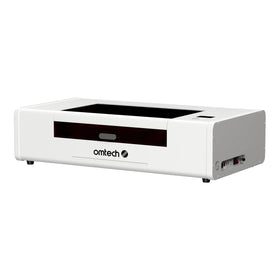
The Pro 2440 80W/100W CO2 Laser Engraver Cutting Machine fits smaller production environments well. It's not a tiny desktop machine. Real work area. Built-in water chiller. Autofocus takes the guesswork out of material height changes between runs.
For higher output, the Pro 3655 130W CO2 Laser Engraver Cutter gives a larger bed and more power for cutting thicker stock faster. Sign shops running production volume on MDF or acrylic are the main buyers here.
Laser Sustainability in Manufacturing: Less Waste, Fewer Consumables

This doesn't get talked about enough. Laser systems are actually cleaner than a lot of the processes they replace.
No ink. No pads. No solvents. No setup waste from misaligned stamps. The beam hits exactly where you tell it. If the file is right, the mark is right. First time, every time.
Laser sustainability in manufacturing shows up in a few real ways:
No consumable ink or fluid. Inkjet and pad printing systems need ink, cleaning solution, and pad replacements. Fiber lasers don't. The laser source itself lasts 100,000 hours or more. That's a decade of daily use before the source even needs attention.
Less scrap from marking errors. Manual marking and older printing methods produce rejection rates from misaligned or smudged marks. Laser marking rejects nearly nothing when the system is set up correctly.
Lower energy per mark than some alternatives. Fiber lasers convert electrical energy to laser energy efficiently. Not zero energy, but less waste than many heat-based or chemical-based marking processes.
Small factories switching to fiber laser marking systems often find the payback period shorter than expected, partly because ongoing consumable costs drop significantly.
What Smaller Shops Are Actually Running
Not every business needs a factory-scale system. A lot of the growth in laser adoption is happening at smaller operations. Five employees. One machine. Running jobs between other work.
Custom gift shops. Metal fabricators adding personalization services. Knife makers. Gun shops doing compliance marking. Jewelry businesses. These shops aren't running 10,000 parts a day. They're running 20 to 200 pieces, often with variety between each order.
For these buyers, a compact fiber laser system that's fast to set up, easy to operate, and doesn't require a dedicated technician is the right fit. OMTech's fiber laser marking systems are designed with exactly this kind of operator in mind. Not just industrial engineers. Real people running real small businesses.
FAQs
What are industrial laser systems used for in factories?
Mostly marking and cutting. Serial numbers, barcodes, data matrix codes, part IDs, logos. Metal cutting for fabrication. Non-metal cutting for signage, packaging, and textiles. The specific application depends on the industry.
What's the difference between fiber and CO2 laser systems?
Fiber handles metal. CO2 handles non-metal materials like wood, acrylic, and fabric. Different wavelengths. Different absorption by different materials. You match the laser type to the material.
Are laser systems practical for small batch production?
Yes. Galvo-based fiber lasers in particular are fast to set up and switch between jobs. Small batch runs are actually where they perform really well because there's minimal changeover time between different files or parts.
How long do industrial fiber laser sources last?
Most fiber laser sources are rated for 100,000 hours. That's years of daily production use. Much longer than CO2 tubes, which typically last 1,000 to 3,000 hours.
Do laser marking systems need special operators?
Not really. Modern systems with autofocus and software like EzCad2 or LightBurn are designed for practical use. Most operators learn the basics in a few days.