





Thinking About Buying a Laser Etching Machine? Read This First
People mix up laser etching and laser engraving all the time. Even people who own machines get it wrong. So before you spend money, let's clear it up fast.
A laser etching machine melts the surface. That's it. The beam heats the material. The surface bubbles up slightly. You get a mark that you can feel with your finger. It sits above the surface, not below it.
Engraving cuts deeper. Etching stays shallow. Both use laser heat. Different results.
For most metal marking jobs, etching works great. Fast. Clean. Permanent. Doesn't eat through your material.

Laser Etching vs Laser Engraving: What's the Actual Difference?
Okay, so here's the simple version.
Etching: beam melts the top layer. Mark is raised slightly. Fast process. Works well on metal.
Engraving: beam removes material. Mark is cut into the surface. Goes deeper. Takes more passes sometimes.
Neither is better. They're for different jobs. A knife maker might engrave a blade. A parts factory might etch serial numbers onto steel casings. Both need laser machines. Just different settings.
Some machines do both. Fiber lasers handle etching really well on metal. You just adjust power and speed.
Laser Etching on Stainless Steel

Stainless steel is probably the most common use case for laser etching machines. It's everywhere. Kitchen tools. Medical parts. Industrial equipment. Auto components.
Fiber lasers do this clean. The beam hits the steel surface fast. The mark turns dark gray or black. No coating needed. No chemical involved. Just the laser.
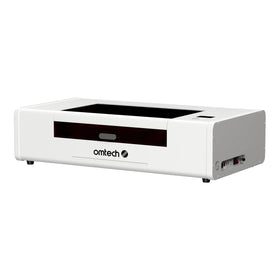
The Galvo Fiber 20/30/50W Autofocus Laser Marking Machine handles stainless steel etching well. The autofocus feature speeds up setup. You load the part, hit go, done. Good for shops running batches.
Laser etching stainless steel also holds up over time. Heat. Chemicals. Washing. The mark doesn't fade. That's why food and medical industries use it so much. Permanent traceability without labels that fall off.
What About 2D Code Laser Marking?
This one's big in manufacturing. Really big.
A 2D code is a data matrix. Tiny grid of squares. Looks like a square barcode. Each code holds a lot of information in a small space. Serial numbers. Batch data. Part IDs. Expiry dates.
Factories mark these onto parts with fiber laser etching machines. The mark is small but scannable. Even on curved surfaces. Even after years in the field.
The Galvo Fiber 30W Integrated Marker Engraving Machine works well for 2D code marking. Small work area but precise. Hits stainless, aluminum, and coated metals cleanly.
If you track parts through a production line, 2D code laser marking saves a lot of headache. No stickers. No ink. The mark is part of the metal.
Laser Etching Machine for Metal: Which Type Do You Need?
Not all fiber lasers etch the same way. Power, pulse settings, and frequency all matter.
Standard fiber lasers etch in black and gray on most metals. Fine for serial numbers, logos, and part IDs.
MOPA fiber lasers give you more control. You can change the pulse width. That changes how the surface reacts. You can get different shades. Even color on stainless steel, if you dial in the settings right.
The MOPA 60W Autofocus Fiber Laser Marking Machine is worth looking at if you want that flexibility. Good for shops doing custom work where the finish matters, not just the mark.
For straight industrial etching with no color needed, a standard fiber laser engraving machine is usually enough. Less complex. Easier to operate. Lower starting cost.
Power: How Much Do You Actually Need?
20W works for most light metal marking. Thin stainless. Aluminum. Anodized surfaces.
30W is more common for production use. Faster cycle times. Works on harder metals more confidently.
50W and above is for high volume. Deep marks. Harder alloys. If you're running a factory line all day, 50W makes sense.
Most small shops and custom engravers start at 20W or 30W and find it plenty. You can always mark slower for depth if you need it. More watts isn't always better if your parts are thin.
The Galvo 50W Autofocus Fiber Laser Marking Machine sits at the higher end for production use. Fast. Handles stainless and aluminum at speed.
Laser Engraving Stainless: Quick Notes
People search "laser engraving stainless" and "laser etching stainless steel" and mean the same thing most of the time. Both refer to making a permanent mark on steel with a laser.
The result looks similar. Dark mark. Clean edges. Permanent.
The practical difference: etching is faster and shallower. Engraving takes more time but goes deeper. For most stainless applications, etching at the right power setting is enough.
Surgical tools use etching. Watchmakers use engraving. Know your depth requirement before you pick settings.
What Else Can a Laser Etching Machine Mark?
Stainless steel gets all the attention, but fiber laser etching machines work on a lot of metals.
-
Aluminum: marks fast, turns dark
-
Brass: good for trophies and plaques
-
Titanium: popular in medical and aerospace
-
Copper: tricky but doable with the right settings
-
Coated metals: the coating burns off cleanly
They won't work on wood or acrylic. That's a CO2 laser job. If you do both, look at the Solis Duo 50W Fiber 40W Diode Dual Laser Engraver. It runs both laser types in one machine. Unusual setup, but useful if your material list is mixed.
According to Wikipedia's overview of laser engraving, the wavelength of the laser determines what materials it can process effectively. Fiber runs at 1064nm. That's what metals absorb well. CO2 runs at 10,600nm. Better for organics and plastics.
What Accessories Do You Need?
Rotary attachment: needed for round parts like rings, pipes, or cylinders. Flat surface marking is easy. Curved is harder without it.
Marking spray: sometimes used on materials that don't absorb fiber laser well. Spray a thin coat, laser marks it, wipe clean. Not always needed but good to have.
Software: most OMTech fiber machines work with EzCad2 software out of the box. LightBurn software also works with some models and gives you more design flexibility.
FAQs
What's the difference between laser etching and laser engraving on metal?
Etching melts the surface slightly. The mark is shallow and raised. Engraving removes material and cuts deeper. Both are permanent. Etching is faster for most metal marking jobs.
What laser machine is best for stainless steel?
A fiber laser etching machine. Standard 20W to 50W fiber lasers handle stainless steel cleanly. MOPA models give you color options if you need them.
Can a laser etching machine do 2D codes?
Yes. Fiber lasers are commonly used for 2D data matrix codes in manufacturing. The marks are small, precise, and scannable even after heavy use.
Do I need a chiller for a fiber laser etching machine?
Most fiber laser markers are air-cooled. No external chiller needed. That's one advantage over CO2 machines, which often need a water cooling setup.
What wattage fiber laser do I need for metal etching?
20W to 30W covers most small shop needs. 50W fits higher-volume production. Start lower if you're unsure. You can always slow the speed down to increase mark depth.