







The Honest Shop Guide to Laser Cutting Metal: Real Settings for Clean Cuts
Let’s talk about the elephant in the shop: metal. If you started your maker journey with a CO₂ laser workstation, you’ve probably mastered the art of slicing through flawless 10mm acrylic and running high-speed plywood batches. But the moment a local commercial client rolls in and asks for custom-cut stainless steel brackets or industrial iron signage, the stakes change.
I see way too many shop owners bricking their laser engraving machines or wasting hundreds of dollars in ruined scrap metal because they tried to guestimate their metal cutting parameters. Metal doesn't forgive. If your speed is off by even 5mm/s or your gas pressure drops, you aren't just getting dross—you’re chancing a laser reflection that could fry your optics.

Below is the exact, unvarnished parameter breakdown from my shop's private database for cutting iron and stainless steel plates, running at a sustained 95% laser power. If you want to stop guessing and start scaling your metal-cutting revenue, bookmark this chart right now.
The Ultimate Metal Cutting Parameter Reference
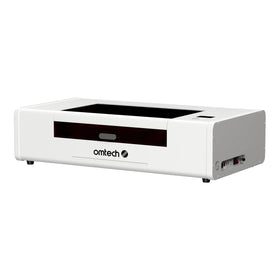
When we step into the world of metal fabrication, we are leaving desktop territory and entering high-yield industrial engineering. To process these materials efficiently, you need to be looking at our heavy-duty industrial workhorses—specifically the OMTech 150W to 260W Cabinet Laser systems.
Here are the maximum and optimal operational metrics to keep your shop running flawlessly:
| Material | Thickness | Max Speed | Optimal Speed | Assist Gas Required | Key Mechanical Notes |
| Stainless Steel | 0.5 mm | 50 mm/s | 40 mm/s | Oxygen / Nitrogen | Flawless edge quality; sharp focus is critical. |
| Stainless Steel | 1.0 mm | 25 mm/s | 20 mm/s | Oxygen / Nitrogen | Steady gantry motion needed to prevent micro-burrs. |
| Stainless Steel | 1.5 mm | 10 mm/s | 8 mm/s | Oxygen / Nitrogen | Striking the perfect balance between speed and thermal buildup. |
| Stainless Steel | 2.0 mm | 18 mm/s | 15 mm/s | Oxygen / Nitrogen | Requires high-wattage configurations (180W–260W). |
| Stainless Steel | 2.5 mm | 25 mm/s | 20 mm/s | Oxygen / Nitrogen | Pushing the peak limits of industrial 180W setups. |
| Stainless Steel | 3.0 mm | 10 mm/s | 7 mm/s | Oxygen / Nitrogen | Absolute maximum threshold for high-power 260W tubes. |
| Iron Plate | 2.0 mm | 8 mm/s | 6 mm/s | Oxygen (0.8 MPa) | Critical: Must use dedicated oxygen assist at 0.8 MPa pressure. |
| Iron Plate | 3.0 mm | 7 mm/s | —— | Oxygen (0.8 MPa) | Maximum threshold for 150W etups; monitor dross closely. |
Hard-Earned Lessons: What You Need Beyond the Parameter Chart
If you think you can just upload these metrics into LightBurn and get a perfect cut on an iron plate immediately, we need to talk about your auxiliary workshop hardware. Cutting metal isn't like cutting wood; the physics of the process demand specialized infrastructure.
1. The Assist Gas Reality (Why Oxygen is Non-Negotiable)
Look at the iron plate settings above. See that note about Oxygen at 0.8 MPa? That isn't a friendly suggestion. When cutting iron or carbon steel, the laser beam isn't doing all the work alone; it initiates an exothermic reaction, and the high-pressure oxygen actually burns through the metal while clearing the molten slag.
If you try to run an iron plate cut using a standard, low-pressure stock aquarium air pump, you will instantly char the metal, ruin the piece, and likely back-smoke your focal lens. You need to connect your laser head to a dedicated oxygen cylinder regulated to a steady 0.8 MPa (116 PSI). If you are doing heavy runs of stainless steel where you cannot afford any edge discoloration or oxidation, you’ll want to invest in a high-pressure Nitrogen setup to achieve that immaculate, mirror-bright silver edge.

2. Upgrading to a High-Flow Air Assist Control Board
Because cutting metal requires switching between high-pressure oxygen and standard air assist (for your non-metal jobs), manual switching is a massive bottleneck. The smartest upgrade I ever made to my rig was installing an OMTech Automatic High-Flow Air Assist Kit. It integrates directly with your controller board, allowing LightBurn to automatically toggle your high-pressure gas valves only when the laser is actively cutting metal, saving you hundreds of dollars in wasted bottled gas during setups and framing.
The ROI Math: Why Metal is Your Fastest Path to Upgrading
I know what some of you are thinking: "An industrial 150W or 260W rig requires a bigger footprint and a larger upfront investment." Yes, it does. But let's look at the actual profit margins.
When you are cutting acrylic keychains or custom wooden cake toppers, you are competing in a saturated market where you are fighting over cents. When you step up to cutting 1.5mm stainless steel corporate signs or 2mm iron brackets for local contractors, you are entering the commercial B2B space. A single sheet of industrial iron scrap might cost you $15 at the local metal supplier. Spend 20 minutes running a high-precision nest of custom brackets at 6mm/s, and you can easily invoice that contractor $350.
A couple of these commercial contracts a month doesn't just pay off the machine; it gives you the capital to scale your business into a multi-machine empire.
Building Your Ecosystem for Unstoppable Production
If you are ready to stop playing around with hobby-grade toys and start taking real commercial metal orders, you need a hardware setup that won't quit when the deadline hits midnight.
Don't skim on the essentials. When you order your high-wattage OMTech Industrial Cabinet Laser, make sure you protect that heavy-duty laser tube by adding the CW-5200 Industrial Water Chiller to your cart. Running a 180 W or 260 W tube at 95% power generates significant thermal load; keeping your coolant locked at a precise 18°C is the only way to guarantee your tube survives its full operational lifespan. Pair that with our specialized metal-cutting focal lenses, and you have an unstoppable production ecosystem that turns raw sheets of metal into pure, high-margin shop revenue.